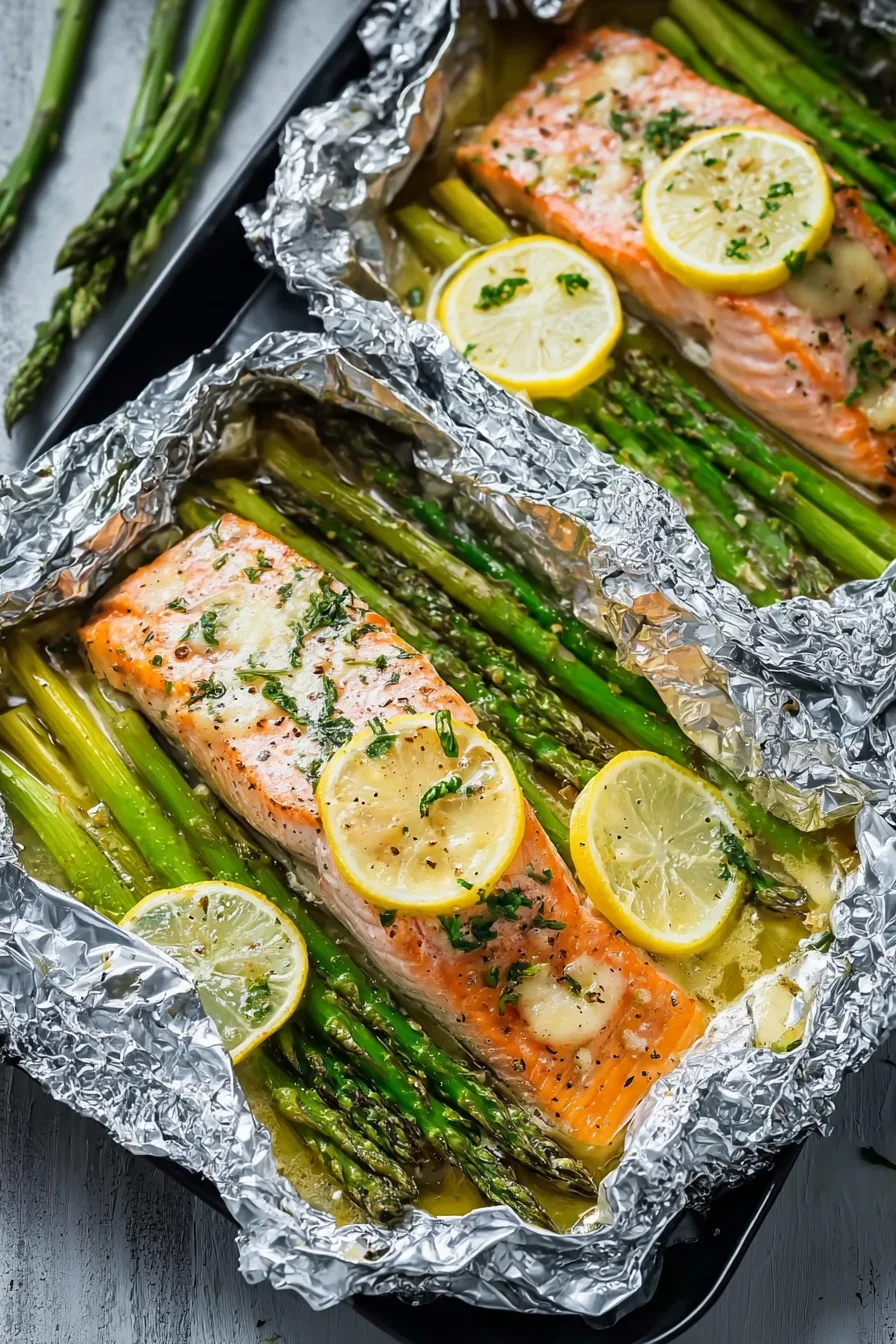
Baked Salmon in Foil Packs with Asparagus (25 Minutes)
- Total time
- 25 minutes
- Makes
- 4 servings
- Net carbs
- 4g
- Calories
- 380
I make this recipe almost every single week. No joke.
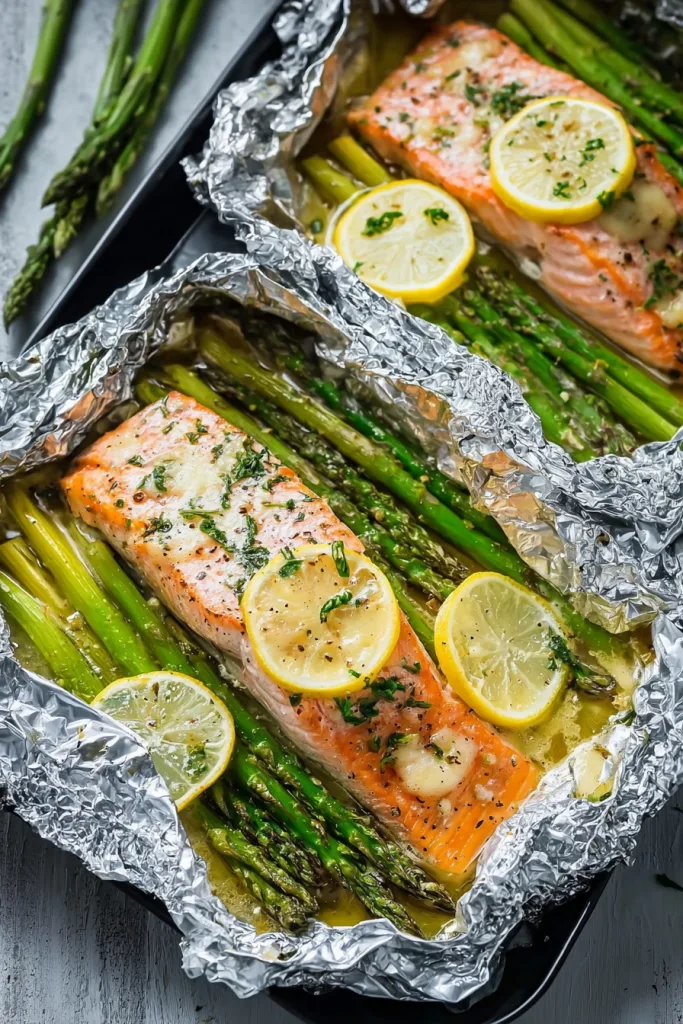
Baked salmon in foil packs with asparagus is one of those dinners that looks like you put in serious effort. But honestly? It’s embarrassingly simple. Everything goes into a sealed foil pocket. The salmon comes out juicy every time. The asparagus hits that perfect tender-but-not-mushy spot. And cleanup is basically nothing.
I stumbled onto this method on a random Tuesday night. I had two salmon fillets sitting in the fridge. A bunch of asparagus that was about a day away from being useless. And absolutely zero motivation to deal with a mountain of dirty dishes afterward. So I wrapped everything in foil and threw it in the oven.
That first attempt genuinely surprised me.
I’ve been refining it ever since.
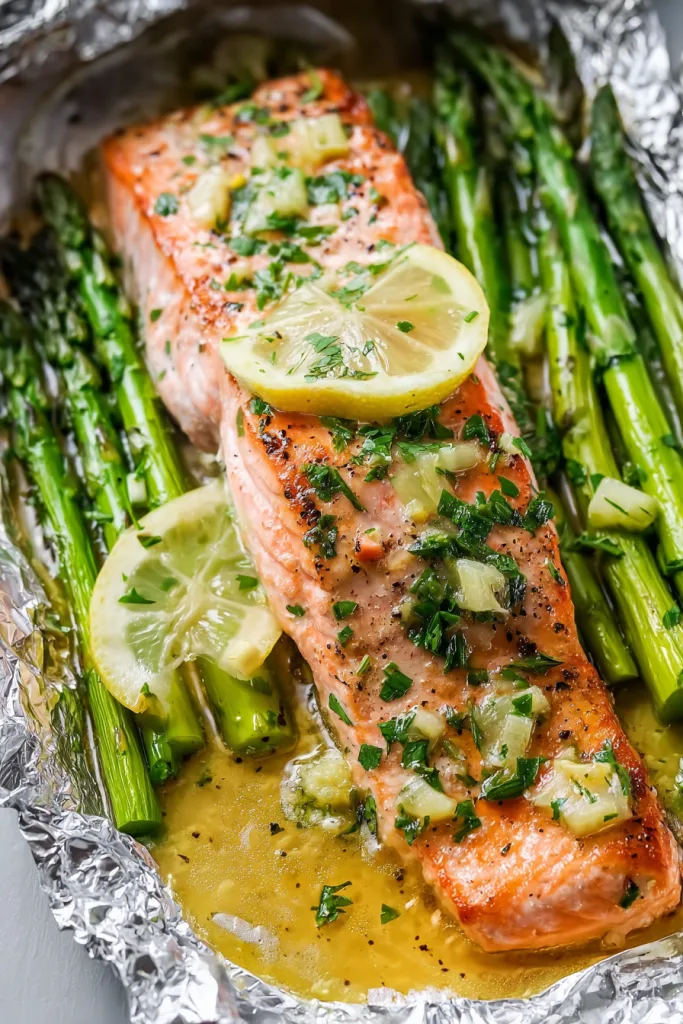
Here’s what makes foil packs so good. The foil traps every bit of steam and cooking juice right around the fish. Garlic and lemon work their way into every single bite. The butter melts slowly into a silky little sauce that collects right underneath the salmon. When you peel those packs open at the dinner table… the smell hits the room before anything else. Everyone stops talking.
The best part? This recipe works with whatever you’ve got on hand.
No asparagus? Broccoli or zucchini both do the job. Want it on the milder side? Skip the hot sauce entirely. Craving a touch of sweetness? A small drizzle of honey over the fillet right before sealing makes a noticeable difference.
It’s naturally low-carb and gluten-free. Loaded with protein and healthy fats. Works perfectly for a busy weeknight or a laid-back dinner with people you want to impress without actually stressing yourself out.
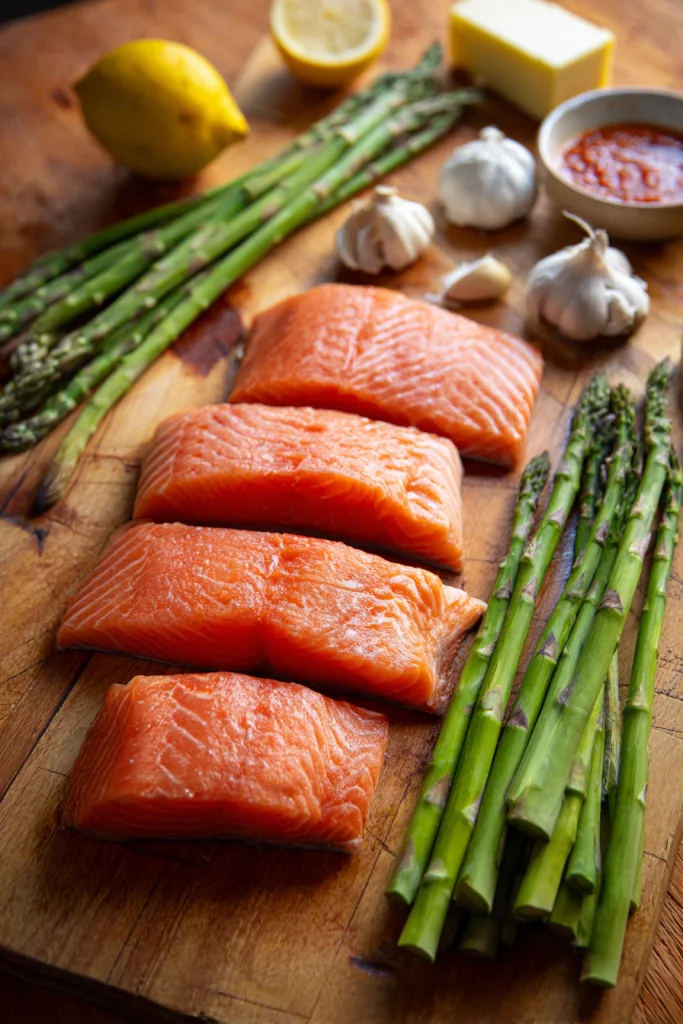
What You’ll Need
| Ingredient | Quantity | Notes |
|---|---|---|
| Salmon fillets | 4 fillets (~6 oz each) | Skin-on or skinless; wild-caught preferred |
| Asparagus spears | 1 lb (450g) | Medium thickness; woody ends trimmed |
| Butter | 4 tablespoons | Cut into small cubes; 1 tbsp per pack |
| Garlic | 4 cloves | Freshly minced; about 4 teaspoons |
| Fresh lemon juice | 2 tablespoons | From about 1 large lemon |
| Hot sauce (Sriracha) | 1 tablespoon | Adjust to your heat preference |
| Vegetable broth | 2 tablespoons | Chicken broth works equally well |
| Fresh parsley or cilantro | 2 tablespoons | Roughly chopped, for garnish |
| Salt | To taste | Kosher salt recommended |
| Black pepper | To taste | Freshly ground for best flavor |
Prep Time: 10 minutes | Cook Time: 15 minutes | Total Time: 25 minutes | Servings: 4 | Difficulty: Easy
A Few Things Worth Knowing Before You Start
On the salmon. Atlantic, Sockeye, Coho, Pink — any variety works here. What actually matters is thickness. Thin fillets under ¾ inch cook fast. Start checking them around the 10-minute mark. Thicker cuts will need a couple of extra minutes. Don’t just set a timer and walk away from the kitchen.
On the asparagus. Medium-thickness spears are the sweet spot. Very thin ones tend to go mushy inside the sealed packet. Very thick ones might not soften all the way through in time. If your spears are on the thicker side — wider than a regular pencil — give them a quick two-minute blanch in boiling water before you start building the packs. Problem solved.
On the hot sauce. The Sriracha brings warmth without taking over the whole dish. It plays really nicely against the lemon and butter. Sensitive to heat? Start with just half a tablespoon. You can always add more once it’s on the plate.
How to Make It
Step 1: Preheat the oven.
Set it to 425°F (220°C). Let it fully come up to temperature before anything goes in. A properly hot oven seals the outside of the salmon fast and keeps all that moisture locked inside. Don’t rush this part.
Step 2: Cut and prepare your foil sheets.
Tear four sheets of heavy-duty aluminum foil. Each one should be roughly 14 by 12 inches. Lay them flat on the counter. If you’d prefer not to cook directly against the foil, lay a sheet of parchment paper on top of each piece first. You still get a good seal. Just a little extra barrier between the food and the metal.
Step 3: Mix the sauce.
In a small bowl, whisk together the vegetable broth, fresh lemon juice, and hot sauce. Give it a quick stir. Set it to the side. You’ll come back to it once the packs are assembled.
Step 4: Lay down the asparagus.
Divide your trimmed asparagus into four equal portions. Place each portion right in the center of a foil sheet, running lengthways along the foil. Spread the spears out a little so they cook evenly rather than steaming in a tight clump. Season with a pinch of salt and a crack of pepper.
Step 5: Place the salmon.
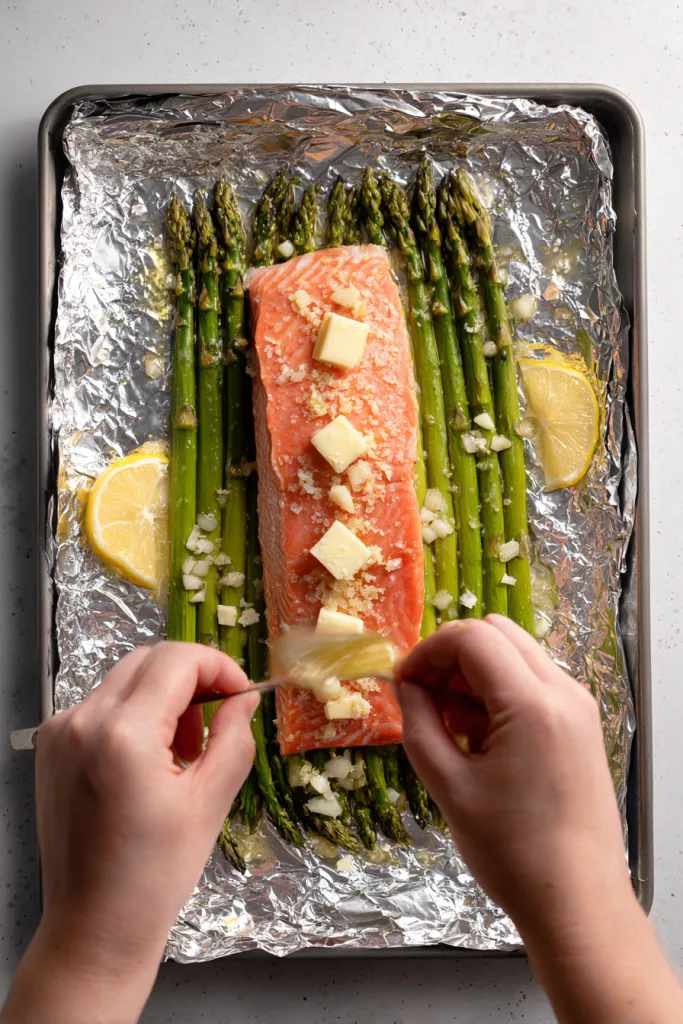
Season both sides of each fillet with salt and freshly ground black pepper. Set one fillet on top of each asparagus bed, skin-side down if you’re working with skin-on fillets. The asparagus acts like a natural rack underneath the fish.
Step 6: Add the garlic, sauce, and butter.
Sprinkle one teaspoon of minced garlic over each fillet. Drizzle the lemon-broth-hot sauce mixture evenly over the salmon and asparagus. Then lay one tablespoon of cubed butter right on top of each fillet. That butter is going to slowly melt into everything underneath it — the broth, the lemon, the garlic — and turn into a proper little sauce all on its own. No extra work involved.
Step 7: Seal the packs.
Bring the long sides of the foil up and fold them together at the top, crimping tightly to seal. Then fold in both short ends the same way. You want a snug, well-sealed packet with just a small pocket of air inside. That air becomes steam. The steam is what cooks everything so gently and evenly. Just don’t wrap the foil so tight that it’s pressing down against the fish itself.
Step 8: Bake.
Place all four packs on a large baking sheet with the sealed side facing up. Slide the tray onto the middle rack. Bake for 9 to 12 minutes depending on fillet thickness. The salmon is ready when it flakes apart easily with a fork and there’s no translucent pink left in the center.
Step 9: Optional broil for a golden finish.
This step is completely optional. But if you want a slightly caramelized, golden edge on the salmon? Carefully peel back the tops of the foil packs and put the baking sheet under the broiler for about 2 minutes. Watch it the whole time. It goes from perfect to overdone quickly. When it works, though, it adds a really satisfying contrast to the soft, tender interior.
Step 10: Serve.
Open each pack with care. The steam trapped inside is seriously hot — peel the foil back slowly and angle it away from your face. Squeeze a little extra fresh lemon over the top. Scatter on some chopped parsley or cilantro. Serve it right away while everything is still steaming.
Tips That Actually Make a Difference
Don’t rush the preheat. A partially heated oven leads to uneven cooking. Give it a full 15 minutes to reach temperature before those packs go in.
Check thickness before you set any timer. A slim supermarket fillet could be perfectly done at 9 minutes flat. A thick center-cut piece might need 14 or 15. Always start checking on the early side rather than the late side.
Seal firmly — but leave some breathing room. The steam buildup inside the pack is what makes this method work. If the foil is loose or has gaps, the steam escapes and the salmon dries out fast.
Blanch the thick stuff first. Spears wider than a pencil need a head start. Two minutes in boiling water, then drain and dry before building your packs. This simple step means the asparagus and salmon finish cooking at exactly the same time.
Use heavy-duty foil. Regular foil tears during folding or when you’re moving the hot packs around. Heavy-duty holds its shape, seals better, and gives you much more control.
Let the butter do its thing. The butter melting down into the broth and lemon juice creates a sauce you didn’t have to think about. Don’t try to swap it out for cooking spray. It’s not even close to the same result.
Make Ahead and Storage
| Details | |
|---|---|
| Make ahead | Assemble packs up to 4 hours early, store flat in the fridge |
| Refrigerator | Airtight container, up to 2 days — remove from foil before storing |
| Freezer | Sealed container, up to 1 month |
| Reheating | Low heat in a covered pan with a splash of broth, or oven at 300°F for about 8 minutes |
| What to avoid | Microwave reheating — it dries the salmon out almost every time |
What to Serve Alongside
These foil packs are genuinely a complete meal on their own. But a simple side dish takes the whole thing up a notch. Here are the pairings I keep coming back to:
- Cauliflower rice or steamed jasmine rice — soaks up that buttery lemon sauce better than almost anything else
- A crisp green salad with a light vinaigrette — the acidity cuts right through the richness of the butter sauce
- Roasted baby potatoes — toss them in olive oil and garlic and slide them into the oven alongside the foil packs
- Warm flatbread — genuinely excellent for mopping up every last bit of sauce from the bottom of the pack
Flavor Variations Worth Trying
The base recipe holds up brilliantly on its own. But here are four variations I’ve gone back to again and again after testing them:
Parmesan crust. Sprinkle 2 tablespoons of freshly grated Parmesan over each fillet before sealing the pack. Open the packs at the end and broil for 2 minutes until the topping is golden. One strong recommendation here — only use freshly grated cheese. The powdered, pre-ground version genuinely dulls the natural flavor of the salmon. It’s a more noticeable difference than you’d expect.
Honey garlic. Replace the hot sauce with one teaspoon of honey per pack. It softens the sharpness of the lemon and adds a quiet, gentle sweetness to the whole thing. Kids tend to love this version especially.
Herb-forward. Swap the hot sauce for fresh thyme sprigs or a generous scatter of fresh dill over each fillet. Dill, lemon, and butter together is a combination that has been around forever for a very good reason. It never gets old.
Dijon mustard glaze. Stir one teaspoon of Dijon mustard (a brand made without wine) into the sauce mixture per pack. It adds depth and a mild, pleasant tang that works really well against the richness of the salmon and butter.
Frequently Asked Questions
Can I make this without aluminum foil?
Yes, parchment paper works well as a substitute. Fold it into sealed packets exactly the same way you would with foil. Parchment won’t create quite as tight a seal, so add a couple of extra minutes to your baking time. One thing to keep in mind though — parchment-only packs belong in the oven. They’re not safe to use on the grill.
Can I cook these on an outdoor grill?
Absolutely. Just make sure you use foil rather than parchment for the grill. Place the sealed packs over medium-high heat and cook for 15 to 18 minutes, adjusting for how thick your fillets are. The grill adds a faint smokiness to the whole thing that you genuinely can’t replicate in the oven. Worth trying at least once if you have the option.
How do I actually know when the salmon is done?
Press the thickest part of a fillet with a fork. Fully cooked salmon flakes apart cleanly and is completely opaque — no soft, translucent pink anywhere in the center. If you like using a thermometer, you’re looking for an internal temperature of 145°F (63°C) at the thickest point. Skin-on fillets will also pull away from the skin easily when they’re fully cooked through.
My asparagus came out too crunchy. What went wrong?
Almost always a thickness issue. Very thick asparagus spears need more cooking time than the salmon inside a sealed pack can provide. The straightforward fix is to blanch thick spears in boiling water for two minutes before assembling. Alternatively, cut the spears into shorter, thinner pieces so they cook through at the same rate as the fish. Medium-thickness spears — roughly the width of a standard pencil — will be perfectly tender in the same amount of time as the salmon, no pre-cooking needed.
Can I use frozen salmon fillets?
Yes. Just make sure they’re completely thawed before you start. Once thawed, pat each fillet dry with paper towels. Frozen salmon releases a surprising amount of extra moisture as it thaws. If that moisture is still sitting on the fish when you build your packs, it dilutes the sauce and the fish ends up steaming rather than properly roasting. A fully thawed, well-dried fillet behaves exactly like fresh salmon in this recipe.
Once you get the hang of the foil pack method, you’ll reach for it all the time. It’s fast. It’s consistent. And that combination of flaky salmon, tender asparagus, and that golden buttery lemon sauce pooled at the bottom of the pack…
Honestly, it never gets old.
For the same idea with white fish, my Mediterranean baked fish works with cod, tilapia or haddock and bakes in lemon and olive oil.
Baked Salmon in Foil Packs with Asparagus
Ingredients
Main Ingredients
- 4 salmon fillets about 6 oz each, skin-on or skinless; wild-caught preferred
- 1 lb asparagus spears medium thickness, woody ends trimmed
- 4 tbsp butter cut into small cubes, 1 tbsp per pack
- 4 cloves garlic freshly minced, about 4 teaspoons
Sauce
- 2 tbsp fresh lemon juice from about 1 large lemon
- 1 tbsp hot sauce (Sriracha) adjust to your heat preference
- 2 tbsp vegetable broth chicken broth works equally well
To Serve
- 2 tbsp fresh parsley or cilantro roughly chopped, for garnish
- salt kosher salt recommended, to taste
- black pepper freshly ground, to taste
Instructions
- Preheat your oven to 425°F (220°C). Let it fully come up to temperature before anything goes in — at least 15 minutes.
- Tear four sheets of heavy-duty aluminum foil, each roughly 14 by 12 inches. Lay them flat on the counter. Optionally, place a sheet of parchment paper on top of each piece as a barrier between the food and the foil.
- In a small bowl, whisk together the vegetable broth, fresh lemon juice, and hot sauce. Set aside.
- Divide the trimmed asparagus into four equal portions. Place each portion in the center of a foil sheet, running lengthways. Spread the spears out slightly and season with salt and black pepper.
- Season both sides of each salmon fillet with salt and freshly ground black pepper. Place one fillet on top of each asparagus bed, skin-side down if using skin-on fillets.
- Sprinkle 1 teaspoon of minced garlic over each fillet. Drizzle the lemon-broth-hot sauce mixture evenly over the salmon and asparagus. Place 1 tablespoon of cubed butter on top of each fillet.
- Bring the long sides of the foil up and fold together at the top, crimping tightly to seal. Fold in both short ends the same way. Leave a small pocket of air inside — this becomes the steam that cooks everything evenly.
- Place all four packs sealed-side up on a large baking sheet. Bake on the middle rack for 9 to 12 minutes, depending on fillet thickness. Salmon is done when it flakes easily with a fork and is completely opaque with no translucent pink in the center (internal temp 145°F / 63°C).
- Optional: For a golden finish, carefully peel back the tops of the foil packs and broil for 2 minutes. Watch closely — it goes from perfect to overdone very quickly.
- Open each pack carefully — the trapped steam is very hot, so peel the foil back slowly and angle it away from your face. Squeeze fresh lemon over the top, scatter chopped parsley or cilantro, and serve immediately.
Notes
Keep cooking