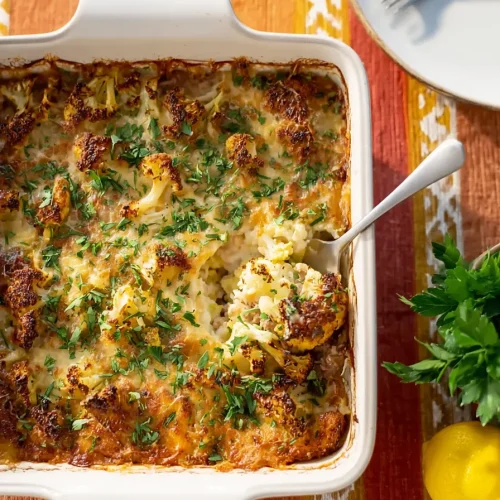
Keto Tuna Casserole
Keto tuna casserole that does not go watery, because the cauliflower is roasted down from 900g to about 650g before it goes anywhere near the sauce - and you weigh it to check. Cream cheese rather than mayonnaise, so the sauce cannot break in the oven. 9.0g net carbs.
Equipment
- Large rimmed baking sheet for roasting in a single layer
- Digital kitchen scale to check the roasted cauliflower weight
- Saucepan
- 9x13 baking dish
- Instant-read thermometer for the 165F check
Ingredients
- 2 lb cauliflower florets 900 g; roasts down to about 650 g - weigh it
- 1 tbsp olive oil for roasting the cauliflower
- 2 x 5 oz cans canned tuna 280 g drained weight, about 3 x 5 oz cans of chunk light in water
- 6 ounces cream cheese 170 g, softened - this is the sauce body
- 1/2 cup heavy cream 120 ml
- 1 1/4 cups sharp cheddar cheese 140 g, shredded from a block, divided - not pre-shredded
- 3/4 cup grated Parmesan cheese 75 g total grated from a WEDGE, not the shaker can: 1/2 cup for the sauce, 1/4 cup for the topping
- 1/2 tsp xanthan gum mixed into the dry grated Parmesan first
- 3 tbsp butter 2 tbsp for the sauce, 1 tbsp melted for the topping
- 50 g onion diced
- 2 stalks celery 80 g, diced
- 1 tsp yellow mustard not Dijon - most brands are made with white wine
- 1/2 tsp garlic powder
- 1/2 tsp fine sea salt taste first, tuna and cheese are salty
- 1/4 tsp black pepper
- 2 tbsp blanched almond flour 14 g, for the topping
Instructions
- Roast the cauliflower, then weigh it: heat the oven to 425°F. Toss the florets with the olive oil and spread them on a large sheet in a single layer with space between them - bare dry florets on hot metal stick and scorch. Roast 25 minutes, turning once, until the edges are properly browned. Weigh them - you want around 650 g from a starting 900 g. If you are well above that, give them another five minutes. This is the number that predicts whether the casserole goes watery.
- Disperse the xanthan first: toss the 1/2 tsp xanthan gum through the grated Parmesan with your fingers before either meets a liquid. Sprinkled straight into a hot sauce it hydrates on contact and forms slippery lumps that will not whisk out.
- Build the sauce: melt 2 tbsp butter in a saucepan over medium and cook the onion and celery 5 minutes until soft. Turn the heat to low, add the cream cheese in pieces and stir until melted, then pour in the cream. Add the Parmesan-and-xanthan mixture a handful at a time, then 1 cup of the cheddar, the mustard, garlic powder, salt and pepper. Keep it on low - a boiling cheese sauce is a broken cheese sauce.
- Combine and top: drop the oven to 375°F and butter a 9x13 dish. Flake the drained tuna into the sauce, fold in the roasted cauliflower, and taste for salt now. Spread it out. Mix the remaining 1/4 cup cheddar, the 1/4 cup Parmesan, the almond flour and the last tablespoon of melted butter into a loose crumb and scatter it over. The butter matters - almond flour alone draws moisture up out of the casserole and softens.
- Bake uncovered: 30 minutes at 375°F, until golden on top and bubbling at the edges. Foil keeps moisture in and moisture is this dish's problem. Check the centre reads 165°F (74°C), the USDA figure for a combination dish containing fish.
- Rest 10 minutes before serving. The sauce firms noticeably as it drops below scalding, and serving it straight from the oven is what makes a good casserole look loose on the plate.
Notes
Weigh the cauliflower after roasting. 900 g of florets should come down to about 650 g, and those 250 g are pure water that is now not in your casserole. Roasting removes water and nothing else; boiling or steaming adds it.
Why cream cheese and not mayonnaise or sour cream: both are common in keto tuna casseroles and both are unstable over a long bake. Mayonnaise is an egg-yolk emulsion that breaks and leaves oil on the surface; sour cream curdles. Cream cheese and heavy cream hold.
Shred the cheddar from a block. Pre-shredded carries anti-caking starch that thickens the sauce on its own and makes the xanthan dose unpredictable.
Oil-packed tuna is worth considering over water-packed for a dish this sensitive to moisture - it drains more cleanly and brings fat rather than water.
Using zucchini instead of cauliflower? It carries far more water. Slice, salt in a colander 20 minutes, rinse the salt off and pat very dry. Every zucchini noodle guide teaches this and casserole recipes rarely mention it. Expect a looser result even so.
Storage: 4 days refrigerated, 2 months frozen (slightly grainier on thawing). Expect a thin pool of liquid by day two as the cauliflower keeps releasing water - pour it off rather than stirring it back in, and reheat UNCOVERED at 350°F for about 20 minutes. Covering traps exactly the liquid you are trying to lose.
Parmesan from a wedge, not the shaker can. Shelf-stable grated Parmesan is cut with cellulose and carries roughly four times the carbohydrate of a wedge. On the 75 g used here that alone would push the dish past 10 g net carbs per serving.