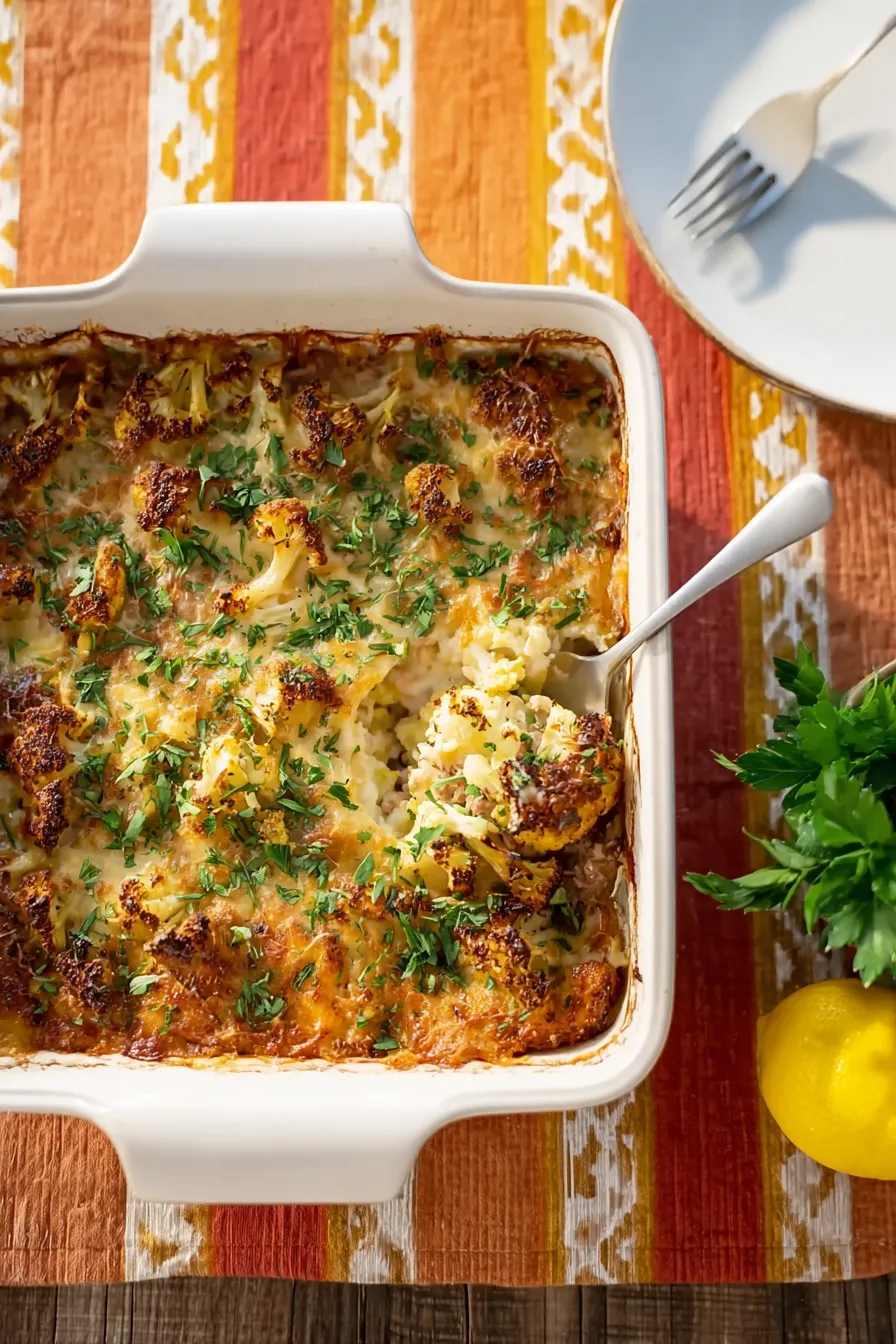
Keto Tuna Casserole (No Canned Soup, 9.0g Net Carbs)
- Total time
- 1 hour 25 minutes
- Makes
- 6 servings (about 265 g each)
- Net carbs
- 9g
- Calories
- 486
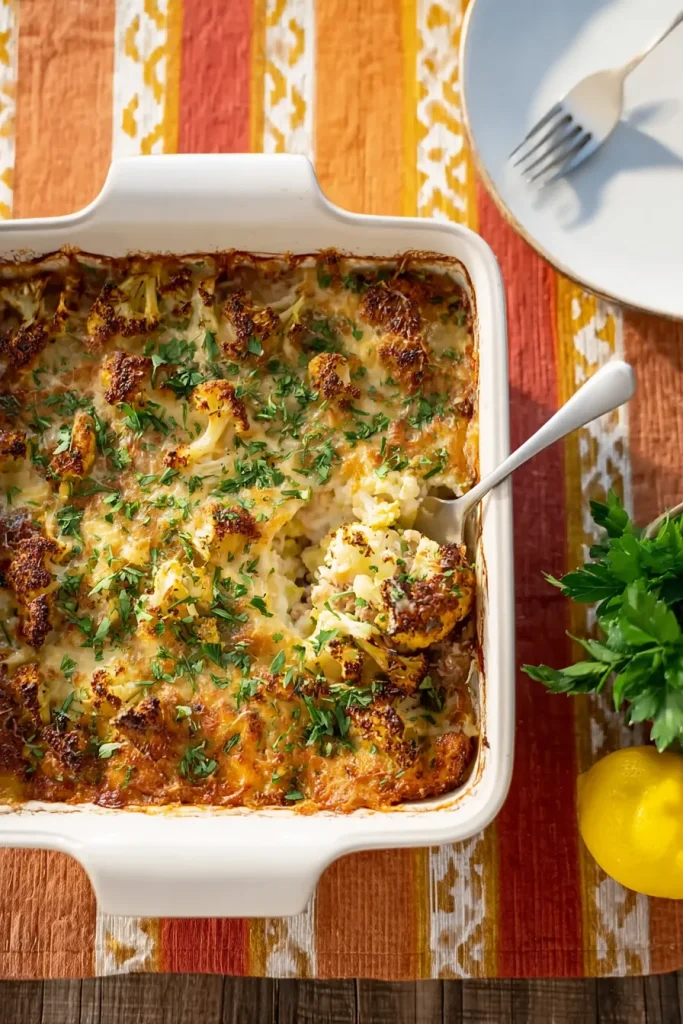
Tuna casserole goes watery because of the vegetable, not the tuna.
Take out the noodles and you have to put something in their place, and every candidate — cauliflower, zucchini, cabbage — is somewhere north of ninety percent water. Noodles absorbed liquid. Their replacement releases it. That is the whole problem in one sentence, and it is why so many people make this once and never again.
The fix is to drive that water off before the casserole is assembled, and then to actually measure whether you did. This recipe roasts 900g of cauliflower down to about 650g and tells you to check it on a scale. Roasting removes water and nothing else, so those 250 grams are pure liquid that is now not in your dish.
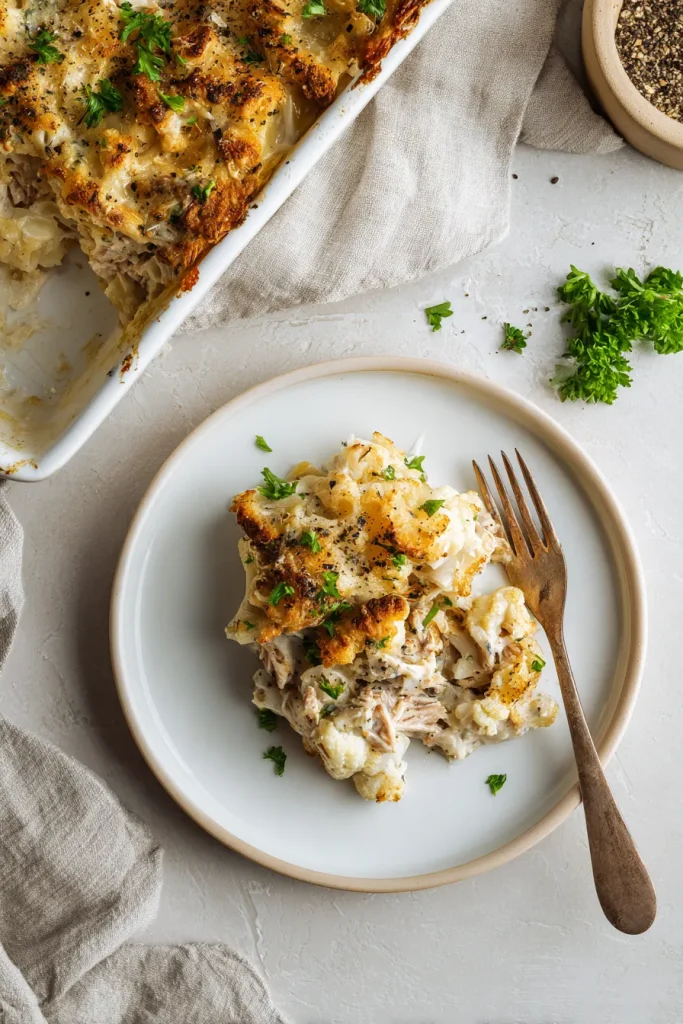
Why This One Stays Thick
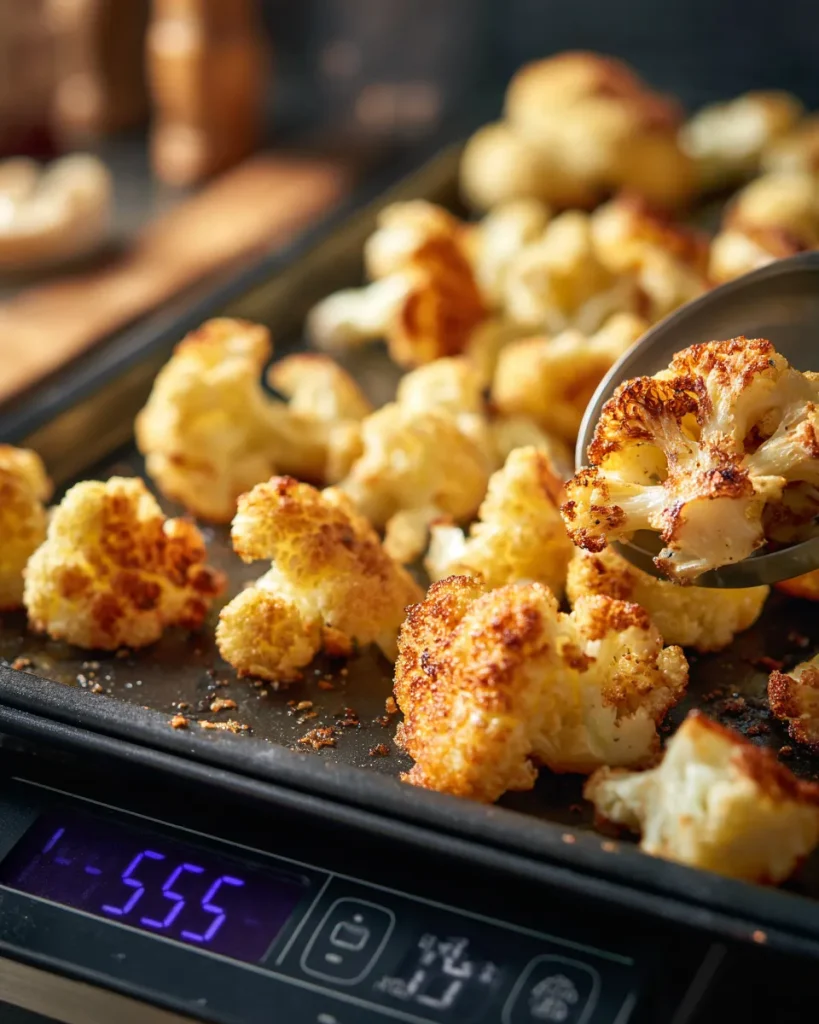
Roast the cauliflower, do not boil or steam it. Boiling loads it with more water; roasting takes water out. Twenty-five minutes at 425°F on a bare sheet, in a single layer, until the edges are browning.
Build the sauce on cream cheese, not mayonnaise or sour cream. A lot of keto tuna casseroles use one or both, and both are unstable at length in a hot oven — mayonnaise is an egg-yolk emulsion that breaks and leaves oil on the surface, and sour cream curdles. Cream cheese and heavy cream hold. Nobody warns you about this and it is the second most common complaint after wateriness.
Bake it uncovered. Foil is for keeping moisture in and this dish’s problem is moisture. Uncovered lets steam leave for the whole thirty minutes.
Then let it sit for ten minutes. The sauce firms noticeably as it drops below scalding. Serving it straight out of the oven is what makes a perfectly good casserole look loose on the plate.
Recipe Overview
- Prep Time: 20 minutes
- Cook Time: 55 minutes — 25 roasting, 30 baking
- Rest: 10 minutes, and it matters
- Total Time: 1 hour 25 minutes
- Servings: 6, about 265g each
- Net Carbs: 9.0g per serving
- Difficulty: Easy
That carb figure looks higher than some published keto tuna casseroles and I would rather explain it than shave the portions. This is a 265-gram dinner plate of food. Published versions of this dish quote anywhere from 4g to 11g, and when you normalise them by weight they land within a fraction of a gram of each other — the spread is almost entirely how big a scoop they called a serving.
Ingredients
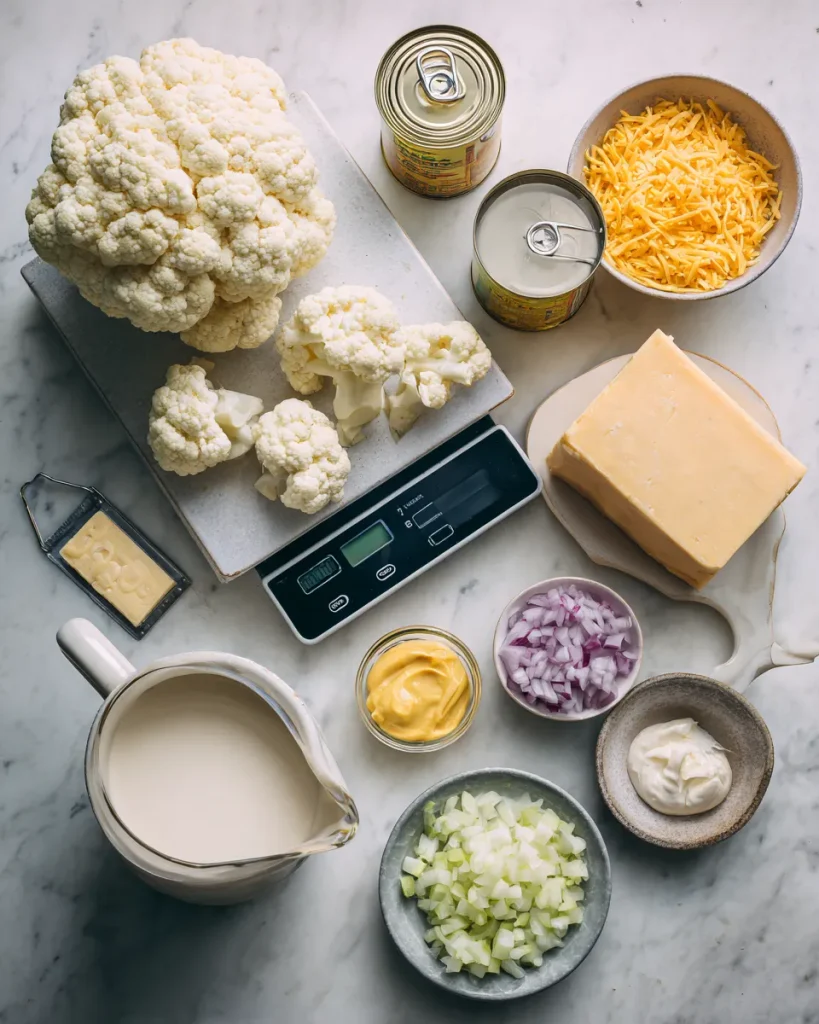
| Ingredient | Quantity | Notes |
| Cauliflower florets | 2 lb (900 g) | Roasts down to about 650g. Weigh it |
| Olive oil | 1 tbsp | For roasting the cauliflower |
| Canned tuna, drained | 280 g drained | About 3 × 5 oz cans, chunk light in water |
| Cream cheese | 6 oz (170 g) | Softened. This is the sauce body |
| Heavy cream | ½ cup (120 ml) | |
| Sharp cheddar, from a block | 1¼ cups (140 g) | Divided. Not pre-shredded — see below |
| Parmesan, grated from a wedge | ½ cup (50 g) | Plus ¼ cup (25 g) for the topping. Not the shaker can |
| Xanthan gum | ½ tsp | Mixed into the dry cheese first |
| Butter | 2 tbsp (28 g) | Plus 1 tbsp for the topping |
| Onion, diced | 50 g | |
| Celery, diced | 2 stalks (80 g) | |
| Yellow mustard | 1 tsp | Not Dijon — see below |
| Garlic powder | ½ tsp | |
| Fine sea salt | ½ tsp | Taste first — tuna and cheese are salty |
| Black pepper | ¼ tsp | |
| Blanched almond flour | 2 tbsp (14 g) | For the topping |
Shred the cheddar from a block, and grate the Parmesan from a wedge. Pre-shredded cheddar is coated in starch to stop it clumping, and that starch thickens the sauce on its own, which throws off the xanthan. Shaker-can Parmesan is worse for a different reason — it is cut with cellulose and carries around four times the carbohydrate of a wedge, which on the 75g used here would push this recipe past 10g net carbs on its own.
Yellow mustard, not Dijon. Most familiar Dijon brands are made with white wine rather than wine vinegar, which is on the label if you check. Yellow mustard does the same job here.
Recipe Timing
| Order | Step | Time |
| 1 | Roast the cauliflower at 425°F | 25 minutes |
| 2 | Weigh it — target about 650g | 1 minute |
| 3 | Soften the vegetables, build the sauce | 12 minutes |
| 4 | Combine, top, bake uncovered at 375°F | 30 minutes |
| 5 | Rest before serving | 10 minutes |
Step-by-Step Instructions
1. Roast the cauliflower, then weigh it
Heat the oven to 425°F. Toss the florets with the olive oil, then spread them on a large sheet in a single layer with space between them — crowd them and they steam each other instead of roasting, and bare dry florets on hot metal will stick and scorch. Roast 25 minutes, turning once, until the edges are properly browned.
Now weigh them. You are looking for around 650g from a starting 900g. If you are much above that, give them another five minutes. This is the only number in the recipe that actually predicts whether the casserole will be watery, and no published version of this dish gives it to you.
2. Disperse the xanthan into the dry cheese
Toss the ½ teaspoon of xanthan gum through the grated Parmesan with your fingers before either goes near a liquid.
This is the best small trick in the whole dish. Xanthan sprinkled straight into a hot sauce hydrates on contact and forms slippery lumps that will not whisk out — the reason a lot of people try it once and swear off it. Coated in dry cheese, the grains separate before they can find water. The dose is light here on purpose: the cream cheese is doing most of the thickening and the xanthan is insurance.
3. Build the sauce
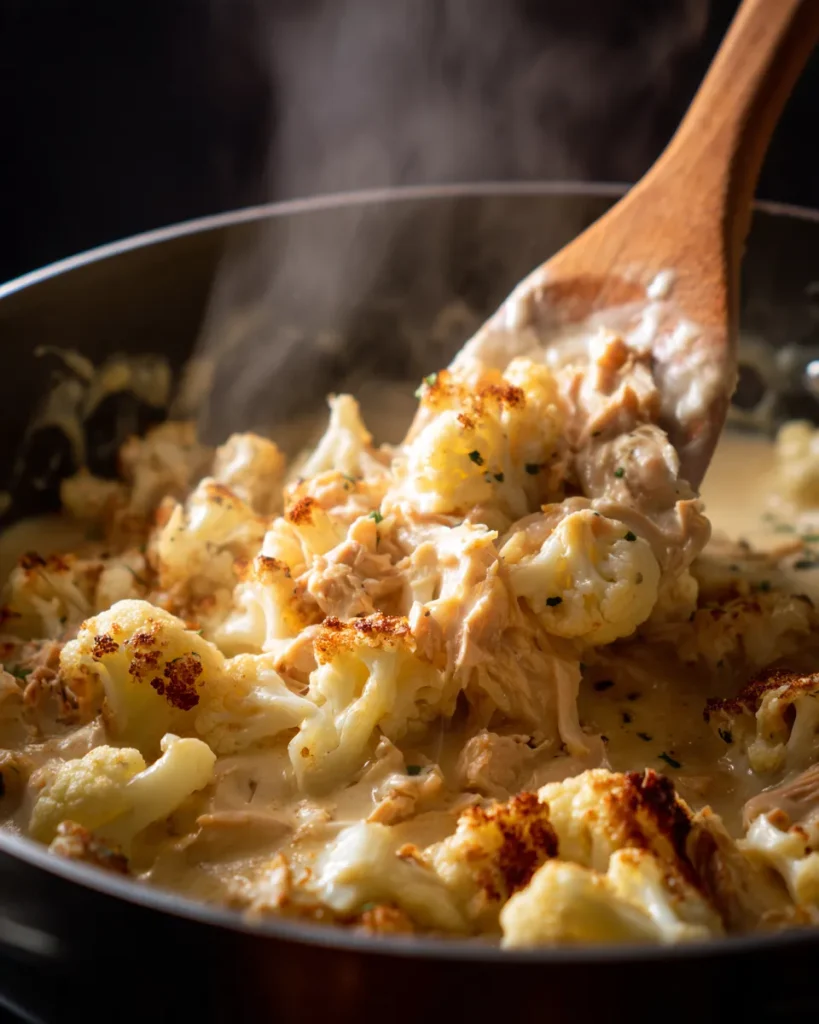
Melt the butter in a saucepan over medium and cook the onion and celery 5 minutes until soft. Turn the heat to low, add the cream cheese in pieces and stir until it melts, then pour in the cream. Add the Parmesan-and-xanthan mixture a handful at a time, stirring, then 1 cup of the cheddar, the mustard, garlic powder, salt and pepper. Keep it on low — a boiling cheese sauce is a broken cheese sauce.
4. Combine and top
Drop the oven to 375°F and butter a 9×13 dish. Flake the well-drained tuna into the sauce, fold in the roasted cauliflower, and taste for salt now — once it is in the dish you have lost the chance.
Spread it out. Mix the remaining ¼ cup cheddar, the ¼ cup Parmesan, the almond flour and the last tablespoon of melted butter into a loose crumb and scatter it over. The butter matters — almond flour on its own draws moisture up out of the casserole and goes soft, and coating it in fat first slows that down.
5. Bake uncovered, then rest
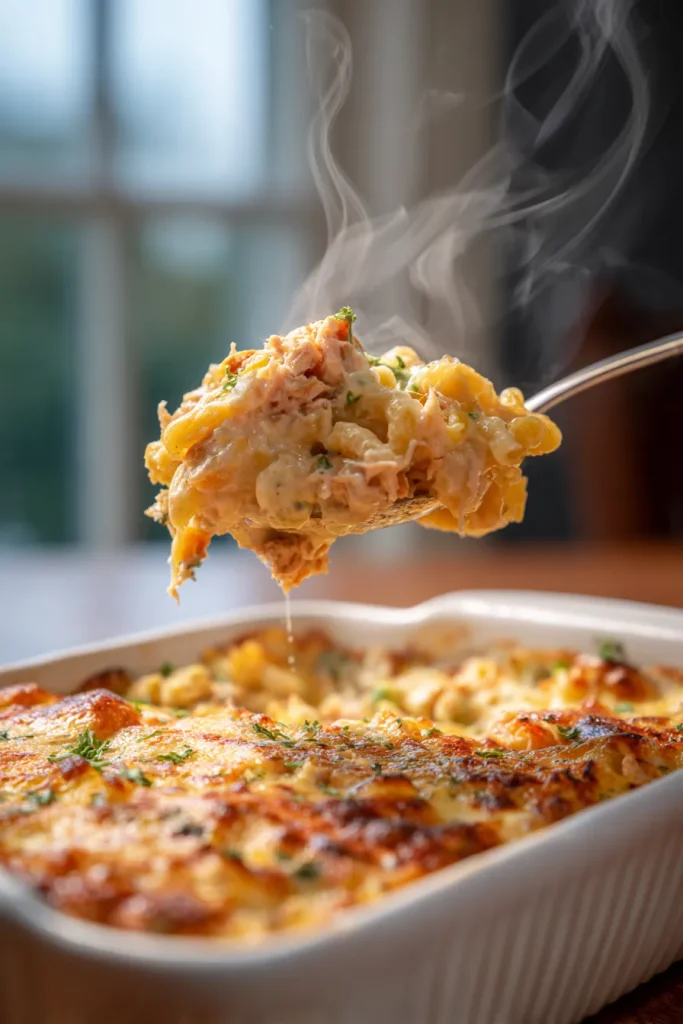
Bake uncovered for 30 minutes, until the top is golden and the edges are bubbling. Check the centre reads 165°F (74°C) — that is the USDA figure for a combination dish with fish in it, and not one published tuna casserole I could find gives a temperature at all.
Then let it stand 10 minutes before you serve it.
Recipe Tips and Variations
Oil-packed tuna is worth considering. Almost everyone reaches for water-packed, but for a dish this sensitive to moisture the oil-packed version drains far more cleanly and brings fat rather than water. Drain it just as thoroughly.
Using zucchini instead? It carries much more water than cauliflower. Slice it, salt it in a colander for 20 minutes, rinse the salt off and pat it very dry — every guide to zucchini noodles teaches this and no casserole recipe seems to mention it. Even then, expect a looser result.
Add-ins: a cup of sauteed mushrooms (cooked until the pan goes dry again), a handful of frozen peas if you are not counting carbs closely, or a teaspoon of lemon zest, which does a lot for canned fish.
Not another chicken casserole. If you want the same comfort with poultry, the site already has keto chicken and broccoli casserole — this one exists because canned fish behaves completely differently and needs its own sauce.
Serving Suggestions
It is a full plate on its own. Something sharp alongside helps — a green salad with a lemony dressing, or roasted broccoli and cauliflower if you already have the oven hot.
For a lighter lunch version of the same flavours, keto tuna salad takes ten minutes and no oven.
Storage and Reheating
Fridge: 4 days, covered. Freezer: 2 months, though the sauce comes back slightly grainier.
Expect liquid by the next day, and pour it off. Cauliflower keeps releasing water in the fridge, so a casserole that was perfect out of the oven will have a thin pool under it on day two. Tip that off before reheating rather than stirring it back in — and reheat uncovered, at 350°F for about 20 minutes. Every reheating instruction you will read says to cover it, which traps exactly the liquid you are trying to lose.
Frequently Asked Questions
Why is my keto tuna casserole watery?
The vegetable, nine times out of ten. Cauliflower is over ninety percent water and boiling or steaming it adds more; roasting is the only common preparation that takes water out. Weigh it after roasting — if 900g of florets has not lost around 250g, it needs longer. The other cause is under-drained tuna.
Can I use condensed cream of mushroom soup?
It is the traditional shortcut and I would skip it. The carbs are real, the ingredient lists are opaque about what the fats are, and the sauce here takes about twelve minutes to build from cream cheese and cream. If you want that mushroom flavour, saute a cup of sliced mushrooms until the pan is dry and fold them in.
Do I need the xanthan gum?
No — the cream cheese carries the sauce on its own. The half teaspoon is insurance against a cauliflower that was wetter than expected. If you use it, mix it through the dry grated cheese first; sprinkled into hot liquid it lumps instantly and will not whisk out.
How many carbs are in keto tuna casserole?
9.0g net carbs per serving of about 265g. Cauliflower is most of it. When you compare that to a recipe advertising four grams, check the serving weight before concluding anything — normalised by weight, the published versions of this dish are nearly identical, and the headline differences are almost entirely portion size.
More Keto Casseroles and Comfort Food
- Keto Cauliflower Mac and Cheese — the same cheese sauce problem, solved without fish.
- Creamy Mushroom Keto Casserole — if the mushroom version is what you were really after.
- Cheesy Spinach Casserole — another dish that lives or dies on water management.
- 15-Minute Keto Salmon Patties — for the other can in the cupboard.
- Keto Broccoli Cheese Soup — the same comfort in a bowl.
Recipe Card
Two more recipes that replace breadcrumbs rather than work around them. My keto crab cakes bind with almond flour and mayonnaise, and my keto chicken parmesan crusts the chicken in almond flour and Parmesan.
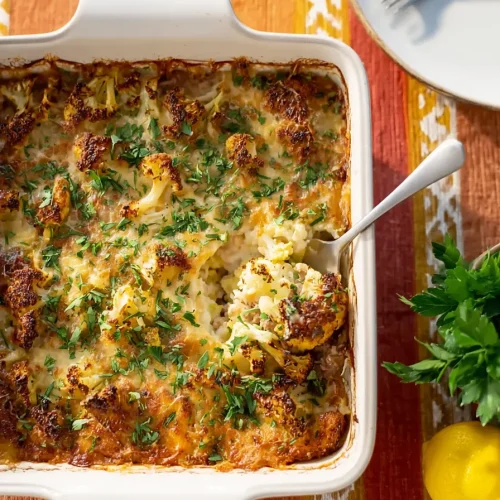
Keto Tuna Casserole
Equipment
- Large rimmed baking sheet for roasting in a single layer
- Digital kitchen scale to check the roasted cauliflower weight
- Saucepan
- 9×13 baking dish
- Instant-read thermometer for the 165F check
Ingredients
- 2 lb cauliflower florets 900 g; roasts down to about 650 g – weigh it
- 1 tbsp olive oil for roasting the cauliflower
- 2 x 5 oz cans canned tuna 280 g drained weight, about 3 x 5 oz cans of chunk light in water
- 6 ounces cream cheese 170 g, softened – this is the sauce body
- 1/2 cup heavy cream 120 ml
- 1 1/4 cups sharp cheddar cheese 140 g, shredded from a block, divided – not pre-shredded
- 3/4 cup grated Parmesan cheese 75 g total grated from a WEDGE, not the shaker can: 1/2 cup for the sauce, 1/4 cup for the topping
- 1/2 tsp xanthan gum mixed into the dry grated Parmesan first
- 3 tbsp butter 2 tbsp for the sauce, 1 tbsp melted for the topping
- 50 g onion diced
- 2 stalks celery 80 g, diced
- 1 tsp yellow mustard not Dijon – most brands are made with white wine
- 1/2 tsp garlic powder
- 1/2 tsp fine sea salt taste first, tuna and cheese are salty
- 1/4 tsp black pepper
- 2 tbsp blanched almond flour 14 g, for the topping
Instructions
- Roast the cauliflower, then weigh it: heat the oven to 425°F. Toss the florets with the olive oil and spread them on a large sheet in a single layer with space between them – bare dry florets on hot metal stick and scorch. Roast 25 minutes, turning once, until the edges are properly browned. Weigh them – you want around 650 g from a starting 900 g. If you are well above that, give them another five minutes. This is the number that predicts whether the casserole goes watery.
- Disperse the xanthan first: toss the 1/2 tsp xanthan gum through the grated Parmesan with your fingers before either meets a liquid. Sprinkled straight into a hot sauce it hydrates on contact and forms slippery lumps that will not whisk out.
- Build the sauce: melt 2 tbsp butter in a saucepan over medium and cook the onion and celery 5 minutes until soft. Turn the heat to low, add the cream cheese in pieces and stir until melted, then pour in the cream. Add the Parmesan-and-xanthan mixture a handful at a time, then 1 cup of the cheddar, the mustard, garlic powder, salt and pepper. Keep it on low – a boiling cheese sauce is a broken cheese sauce.
- Combine and top: drop the oven to 375°F and butter a 9×13 dish. Flake the drained tuna into the sauce, fold in the roasted cauliflower, and taste for salt now. Spread it out. Mix the remaining 1/4 cup cheddar, the 1/4 cup Parmesan, the almond flour and the last tablespoon of melted butter into a loose crumb and scatter it over. The butter matters – almond flour alone draws moisture up out of the casserole and softens.
- Bake uncovered: 30 minutes at 375°F, until golden on top and bubbling at the edges. Foil keeps moisture in and moisture is this dish’s problem. Check the centre reads 165°F (74°C), the USDA figure for a combination dish containing fish.
- Rest 10 minutes before serving. The sauce firms noticeably as it drops below scalding, and serving it straight from the oven is what makes a good casserole look loose on the plate.
Notes
Keep cooking