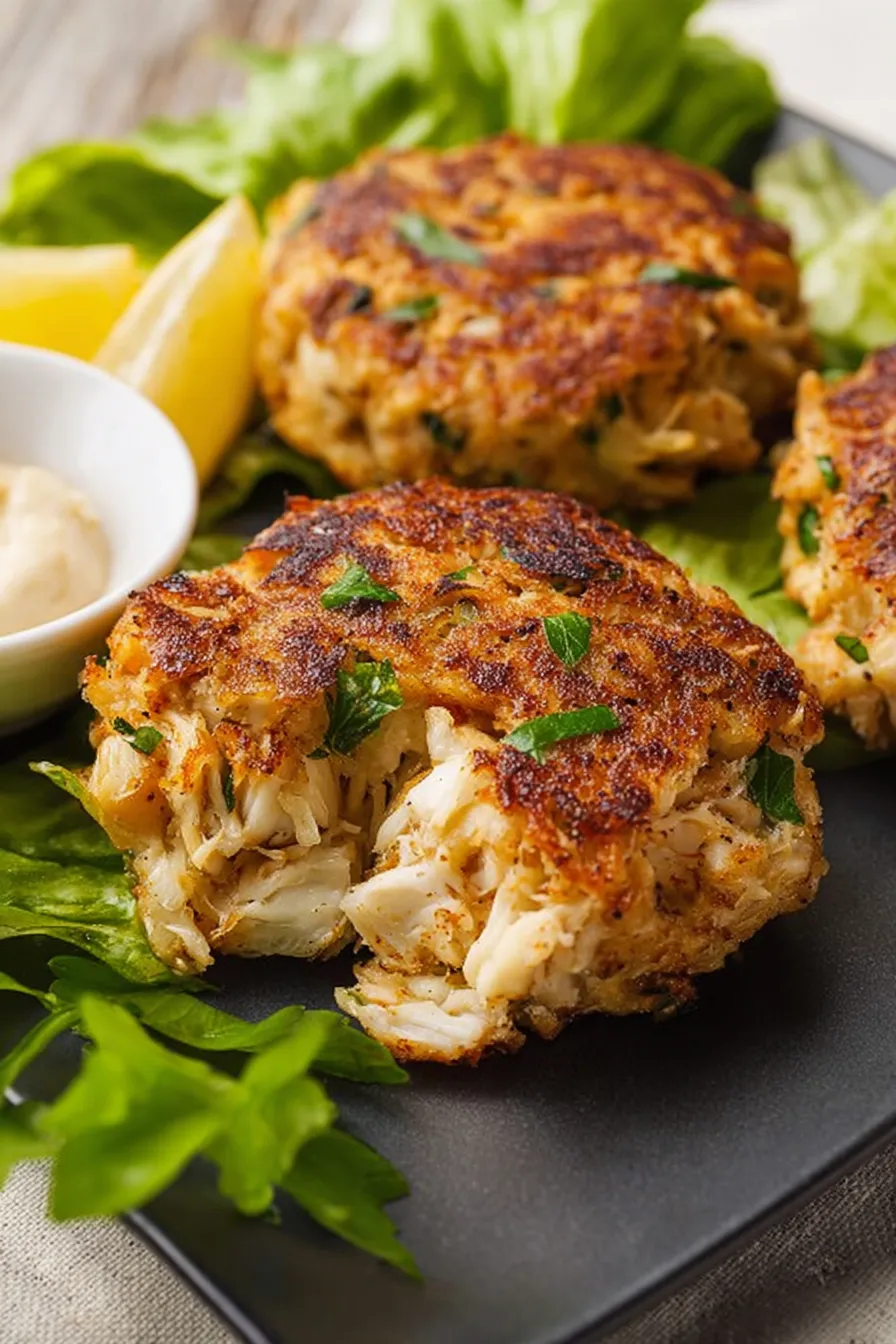
Keto Crab Cakes (No Breadcrumbs, 2.1g Net Carbs)
- Total time
- 1 hour 10 minutes
- Makes
- 4 servings (2 cakes, about 78 g each)
- Net carbs
- 2.1g
- Calories
- 384
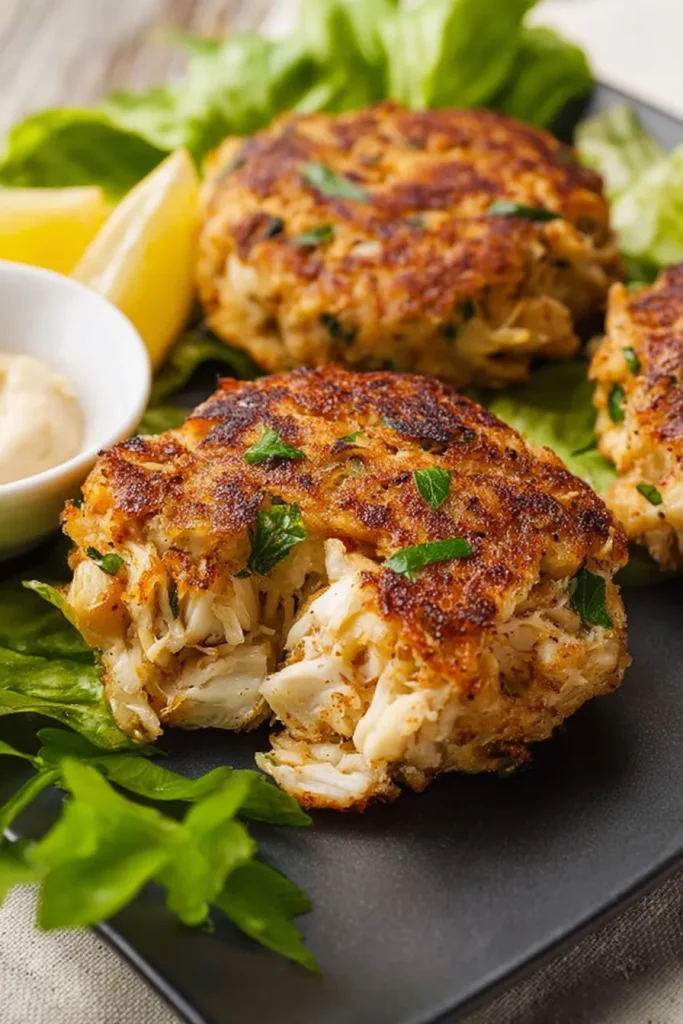
A crab cake falls apart at exactly one moment: the flip.
Up to then it is sitting still and its own weight is holding it down. Turn it over and for half a second the whole cake has to support itself on a spatula, and if the binder has not set yet it folds into the pan. Everything that matters in this recipe is aimed at that half-second: enough binder, not too much liquid, and cold enough going in that the outside sets before the middle gets warm and loose.
Which is why I have given the almond flour as a range rather than a fixed number. Crab varies enormously in how wet it is — jumbo lump from a refrigerated tub is a different ingredient from a drained can — and a recipe that pretends otherwise is just telling you its own brand’s answer.
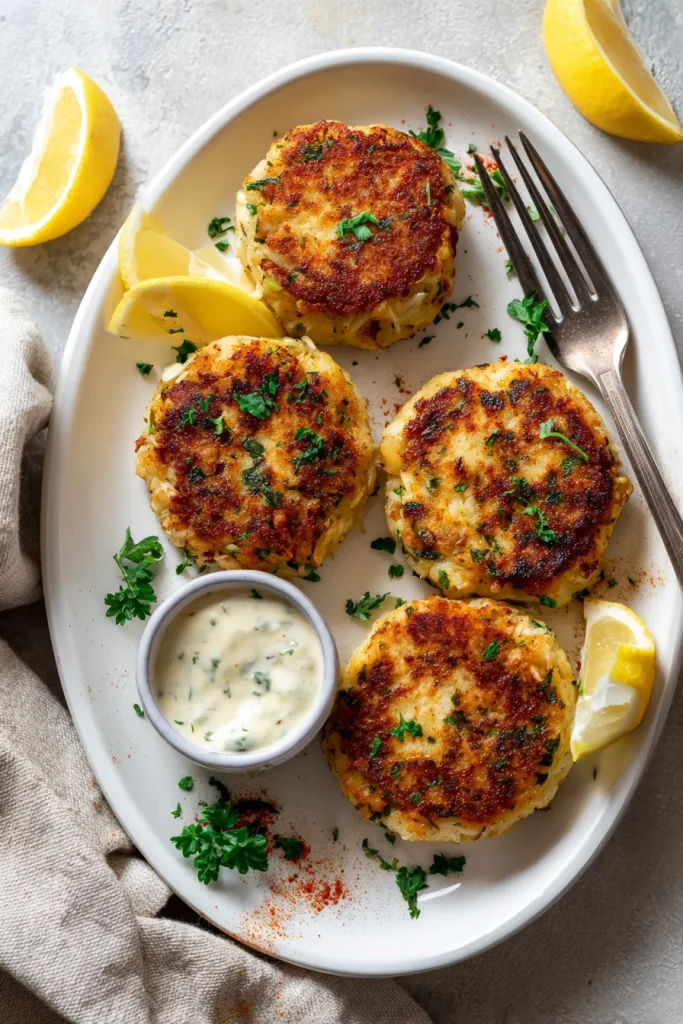
Three Things That Decide Whether They Hold
Drain the crab, then pat it. Tip it into a sieve, let it sit five minutes, then spread it on paper towel and press gently. This is not about a puddle in the bowl — it is about the ratio. Every gram of water you take out is a gram of almond flour you do not have to add, and almond flour is the thing that makes a crab cake taste like a dumpling.
Mix to a texture, not to a measurement. Start at a quarter cup of almond flour, fold gently, and stop when a scooped portion just holds its shape without slumping and nothing pools at the bottom of the bowl. If it slumps, add a tablespoon more and check again. Wetter crab wants closer to a third of a cup.
Chill before forming. Thirty minutes minimum, and an hour is better. A cold cake goes into the pan firm and gets a crust before the interior warms through, and that crust is what survives the flip.
Recipe Overview
- Prep Time: 20 minutes
- Chill Time: 30 minutes minimum
- Cook Time: 20 minutes, in two batches
- Total Time: 1 hour 10 minutes
- Yield: 8 cakes of about 78g — 4 servings of two
- Net Carbs: 2.1g per serving, about 1.1g per cake
- Difficulty: Easy, with one fiddly moment
Twenty minutes of cooking is two skillet loads, not one. Eight cakes do not fit in a twelve-inch pan and crowding them is how they steam instead of searing.
Ingredients
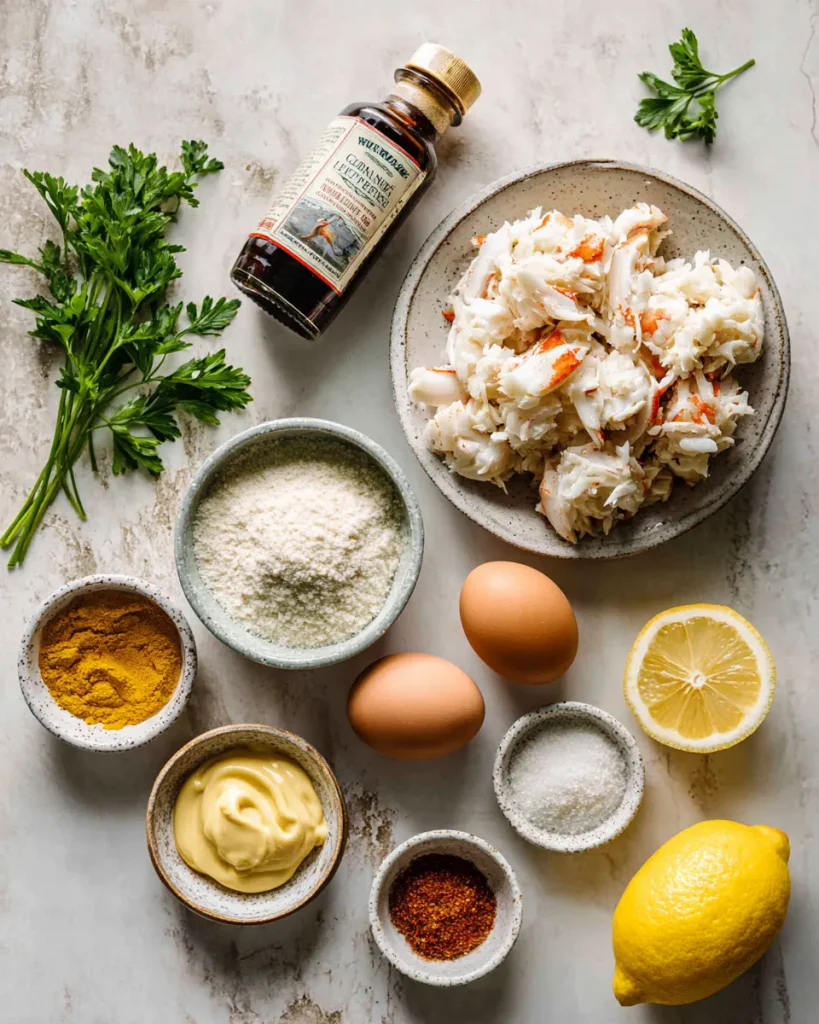
| Ingredient | Quantity | Notes |
| Lump crab meat | 1 lb (450 g) | Drained pasteurised lump, about one 1 lb tub |
| Blanched almond flour | ¼ to ⅓ cup (28–38 g) | Start low, go by texture. Nutrition calculated at 33 g |
| Mayonnaise | ⅓ cup (75 g) | |
| Large egg | 1 | Whole, lightly beaten |
| Yellow mustard | 2 tsp | Not Dijon — see the note below |
| Mustard powder | ¼ tsp | Puts back the heat yellow mustard lacks |
| Lemon juice | 1 tbsp | Plus wedges to serve |
| Worcestershire sauce | 1 tsp | The savoury backbone — do not skip it |
| Old Bay style seasoning | 1½ tsp | Or the blend below |
| Fresh parsley, chopped | 2 tbsp | |
| Fine sea salt | ¼ tsp | Taste first — canned crab is salty |
| Butter | 2 tbsp (28 g) | For frying |
| Avocado oil | 1 tbsp | Stops the butter burning |
Use yellow mustard, not Dijon. Classic crab cakes call for Dijon and most of the well-known brands are made with white wine rather than wine vinegar — it is on the label if you look. Yellow mustard is thinner and milder, so a quarter teaspoon of mustard powder goes in alongside it to put the sharpness back.
Homemade seasoning blend, if you would rather know what is in it: 1 tsp smoked paprika, ½ tsp celery salt, ½ tsp mustard powder, ¼ tsp black pepper, ¼ tsp ground bay leaf, a pinch of cayenne. Makes a little more than you need.
Recipe Timing
| Order | Step | Time |
| 1 | Drain and pat the crab | 8 minutes |
| 2 | Whisk the wet mix, fold in crab to texture | 10 minutes |
| 3 | Chill the mixture | 30 minutes minimum |
| 4 | Form eight cakes | 5 minutes |
| 5 | Fry in two batches, wiping the pan between | 20 minutes |
Step-by-Step Instructions
1. Drain and pick over the crab
Tip the crab into a sieve and leave it 5 minutes. Spread it on paper towel and press gently. Run your fingers through it for shell fragments — even good crab has them, and one is enough to ruin somebody’s evening.
2. Build the wet mix first, crab last
In a large bowl whisk the mayonnaise, egg, yellow mustard, mustard powder, lemon juice, Worcestershire sauce, seasoning, parsley and salt until smooth. Sprinkle over ¼ cup of the almond flour and stir it in.
Now add the crab and fold, do not stir. Come up from underneath with a spatula and turn the mixture over on itself a dozen times. The lumps are what you are paying for; breaking them up gets you a fish cake.
3. Check the texture and adjust
Scoop a portion with your hand and hold it. It should just hold its shape without slumping, and there should be no liquid pooling in the bottom of the bowl. If it slumps, fold in another tablespoon of almond flour and check again. Stop as soon as it holds — every extra spoonful past that point is a step towards dense.
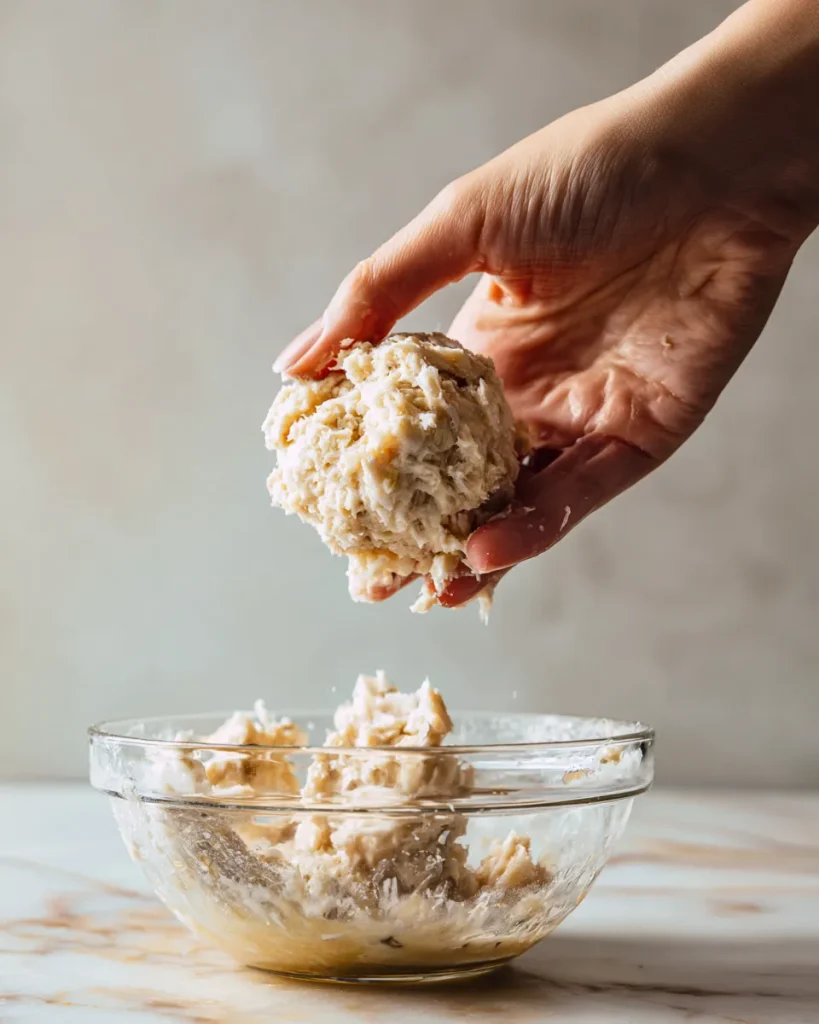
4. Chill, then form
Cover the bowl and refrigerate at least 30 minutes, up to overnight. Then divide into eight cakes of about 78g and shape them roughly three inches across and an inch thick. Do not compress them hard — press just enough to make them hold.
Three inches is deliberate. Your spatula needs to be wider than the cake, and a standard turner is about three and a half inches. A four-inch cake will fold over the edge of the spatula on the flip, and then it is a scramble.
5. Fry in two batches
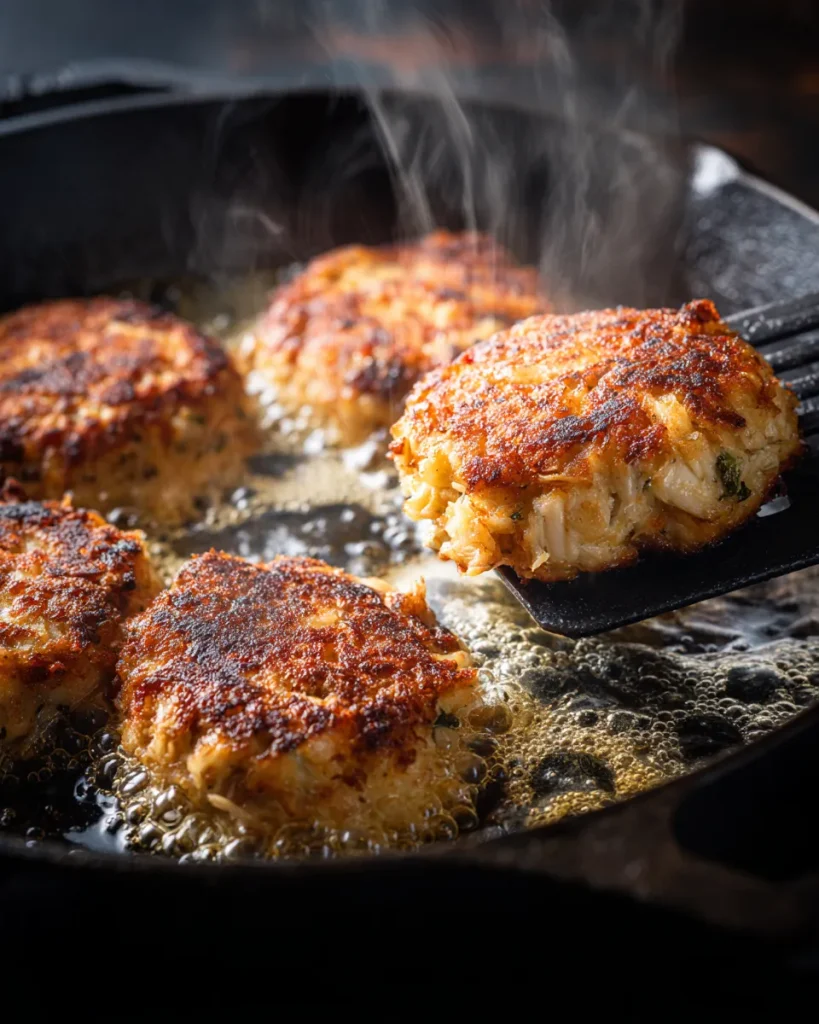
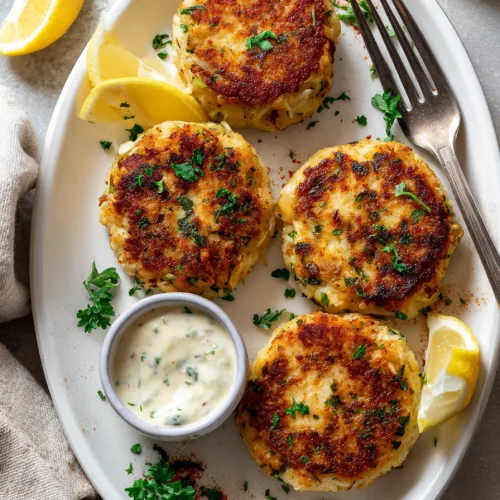
Heat half the butter and half the oil in a 12-inch skillet over medium. Add four cakes with space between them and cook 3 to 4 minutes until the underside is deep golden. Flip once, confidently, and give them 3 to 4 minutes more, to 160°F (71°C) in the centre.
Between batches: wipe the pan out. Loose almond flour from the first four is now sitting in the fat, burnt, and it will stick to the second batch and taste bitter. Wipe with paper towel, add the remaining butter and oil, let it come back up to temperature, and go again. Hold batch one on a rack in a 200°F oven — on a plate they steam themselves soft.
Tartar Sauce Worth Making
Most recipes end on “serve with tartar sauce” and leave you to the jar, which is where the sugar and the mystery ingredients live. This takes two minutes:
½ cup mayonnaise · 2 tbsp finely chopped dill pickle · 1 tbsp pickle brine · 1 tsp yellow mustard · 1 tbsp chopped fresh dill or parsley · a squeeze of lemon · black pepper. Stir and rest it 10 minutes so the pickle flavours the mayonnaise. Roughly 0.5g net carbs for the whole batch.
Recipe Tips and Variations
If a cake collapses, do not add more almond flour. That is the instinct and it is the wrong lever — you will trade a collapse for a dense puck. The real fixes are a longer chill, or a tablespoon less mayonnaise next time, or crab that was not drained well enough.
Baked version: 400°F on a greased sheet, 12 to 15 minutes, no flipping, until 160°F. Easier and more forgiving, with a paler crust. I would not go above 400°F — almond flour browns faster than breadcrumbs and turns bitter rather than dark.
Air fryer: 380°F for 10 to 12 minutes, sprayed lightly, no flip. Watch them from 8 minutes.
Canned crab works and costs a fraction of lump. It carries more water, so drain it hard, and expect to want the full third of a cup of almond flour. The lumps will be smaller — that is the trade.
Serving Suggestions
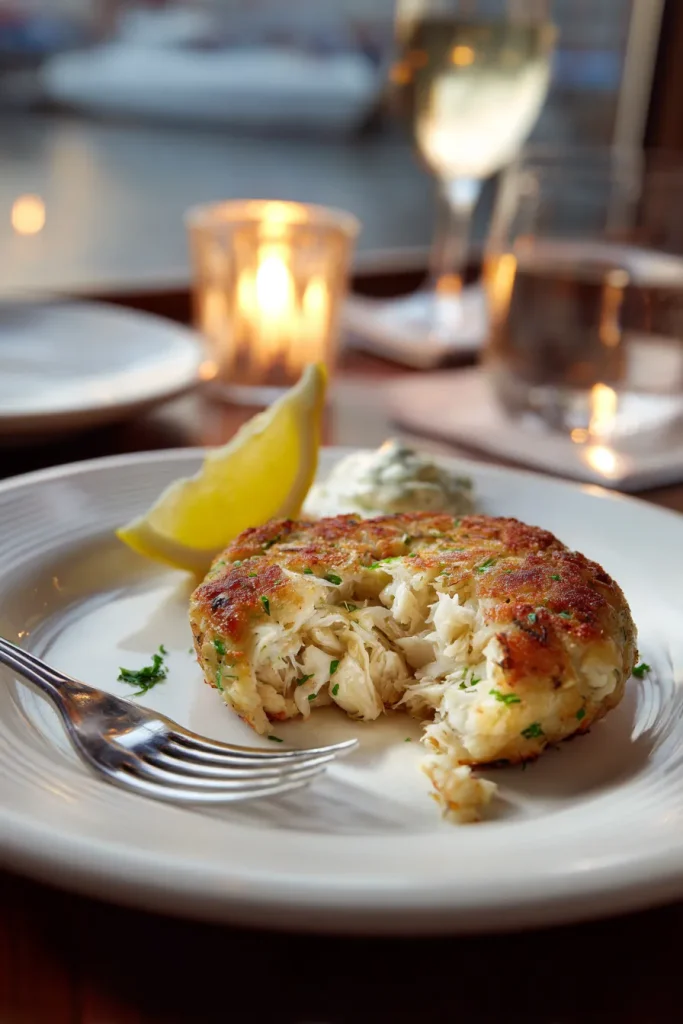
Lemon wedges, the tartar sauce above, and something sharp and green. They also sit very well on a plate with keto seafood salad for a cold-and-hot spread, or next to low-carb shrimp scampi if you are feeding people properly.
A dollop of keto ranch dressing works if tartar is not your thing.
Storage and Reheating
Make ahead: the mixture keeps covered in the fridge for a day before forming, and formed uncooked cakes hold for a few hours on a lined tray.
Fridge: 3 days cooked. Freezer: 2 months. Freeze uncooked cakes on a tray until solid, then bag them; cook from frozen at 375°F for about 25 minutes.
Reheating: 350°F oven or air fryer for 8 minutes, on a rack. The microwave turns the crust to sponge.
Frequently Asked Questions
Why do my crab cakes fall apart?
Almost always too much liquid relative to binder, or not enough chilling, or flipping too early. Drain the crab properly, chill the mixture at least half an hour, and leave the cake alone until the underside is genuinely deep golden — a pale cake has no crust yet and no crust means no structure.
What can I use instead of breadcrumbs?
Blanched almond flour, which is what this recipe uses. It absorbs more than breadcrumbs do, so you need less of it than a conventional recipe calls for, and it seasons differently — breadcrumbs carry salt and almond flour does not, which is why there is salt in the list. Crushed Parmesan crisps also work and add their own salt, so cut the added salt if you use them.
Which crab should I buy?
Lump is the sweet spot on price and texture. Jumbo lump is better and expensive enough that it feels wasteful to break it up in a cake. Claw meat is cheaper, darker and stronger tasting, and works fine. Avoid imitation crab entirely — it is made from starch-bound fish paste and it is not low carb.
How many carbs are in keto crab cakes?
2.1g net carbs for two cakes, roughly 1.1g each at about 78g per cake. Crab itself has none; everything here comes from the almond flour and the seasonings, calculated at the middle of the flour range. The calories count all of the frying butter and oil, because nothing is drained off — published recipes differ wildly on whether they count cooking fat at all, which is worth a glance when you compare numbers.
More Keto Seafood Recipes
- 15-Minute Keto Salmon Patties — the same binding problem on a weeknight budget.
- Keto Garlic Shrimp Au Gratin — cheesy, rich, and a proper dinner-party dish.
- Keto Seafood Salad — cold, creamy, and ready in 25 minutes.
- Baked Shrimp with Garlic and Parmesan — one pan, almost no work.
- Ultimate Keto Fish Tacos — crisp fish without a flour coating.
Recipe Card
With no breadcrumbs in these, the mayonnaise is the binder as well as the flavour, which puts a lot of weight on a third of a cup. My homemade keto mayonnaise is thicker than most bottled ones straight out of the fridge, which helps the cakes hold their shape.
Keto Crab Cakes
Equipment
- 12-inch skillet eight cakes will not fit at once
- Wide spatula must be wider than the cake
- Instant-read thermometer for the 160F check
Ingredients
- 1 lb lump crab meat 450 g drained pasteurised lump crab, about one 1 lb tub; picked over for shell
- 1/4-1/3 cup blanched almond flour 28-38 g; start low and go by texture. Nutrition calculated at 33 g
- 1/3 cup mayonnaise 75 g
- 1 large egg lightly beaten
- 2 tsp yellow mustard not Dijon – most brands are made with white wine
- 1/4 tsp mustard powder puts back the heat yellow mustard lacks
- 1 tbsp lemon juice plus wedges to serve
- 1 tsp Worcestershire sauce the savoury backbone of a Maryland crab cake
- 1 1/2 tsp Old Bay style seasoning or the homemade blend in the notes
- 2 tbsp fresh parsley chopped
- 1/4 tsp fine sea salt taste first, canned crab is salty
- 2 tbsp butter 28 g, for frying
- 1 tbsp avocado oil stops the butter burning
Instructions
- Drain and pick over: tip the crab into a sieve and leave 5 minutes, then spread on paper towel and press gently. Run your fingers through it for shell fragments. Every gram of water removed is a gram of almond flour you do not have to add.
- Wet mix first, crab last: whisk the mayonnaise, egg, yellow mustard, mustard powder, lemon juice, Worcestershire sauce, seasoning, parsley and salt until smooth. Stir in 1/4 cup of the almond flour. Then add the crab and FOLD – come up from underneath and turn the mixture over a dozen times. Breaking up the lumps gets you a fish cake.
- Check the texture: scoop a portion and hold it. It should just hold its shape without slumping, with no liquid pooling in the bowl. If it slumps, fold in another tablespoon of almond flour and check again. Stop as soon as it holds – every spoonful past that is a step towards dense.
- Chill, then form: cover and refrigerate at least 30 minutes, up to overnight. Divide into 8 cakes of about 85 g, roughly 3 inches across and an inch thick, pressed just enough to hold. Three inches matters – your spatula needs to be wider than the cake or it folds on the flip.
- Fry in two batches: heat half the butter and half the oil in a 12-inch skillet over medium. Cook four cakes with space between them 3-4 minutes until the underside is deep golden, flip once, and give them 3-4 minutes more to 160°F (71°C) in the centre.
- Wipe the pan between batches: loose almond flour from the first four is now burnt in the fat and will stick to the second batch and taste bitter. Wipe with paper towel, add the remaining butter and oil, let it come back to temperature. Hold batch one on a rack in a 200°F oven – on a plate they steam themselves soft.
Notes
Keep cooking