Keto Sourdough Bread (Tangy, Sliceable, 2.8g Net Carbs)
- Total time
- 4 hours 10 minutes
- Makes
- 12 slices
- Net carbs
- 2.8g
- Calories
- 118
I kept a wheat starter alive on my counter for three years. When I went low carb, I fed it for another two months out of guilt, then finally let it go. What I missed was not the ritual. It was the smell, and that sour edge under the butter.
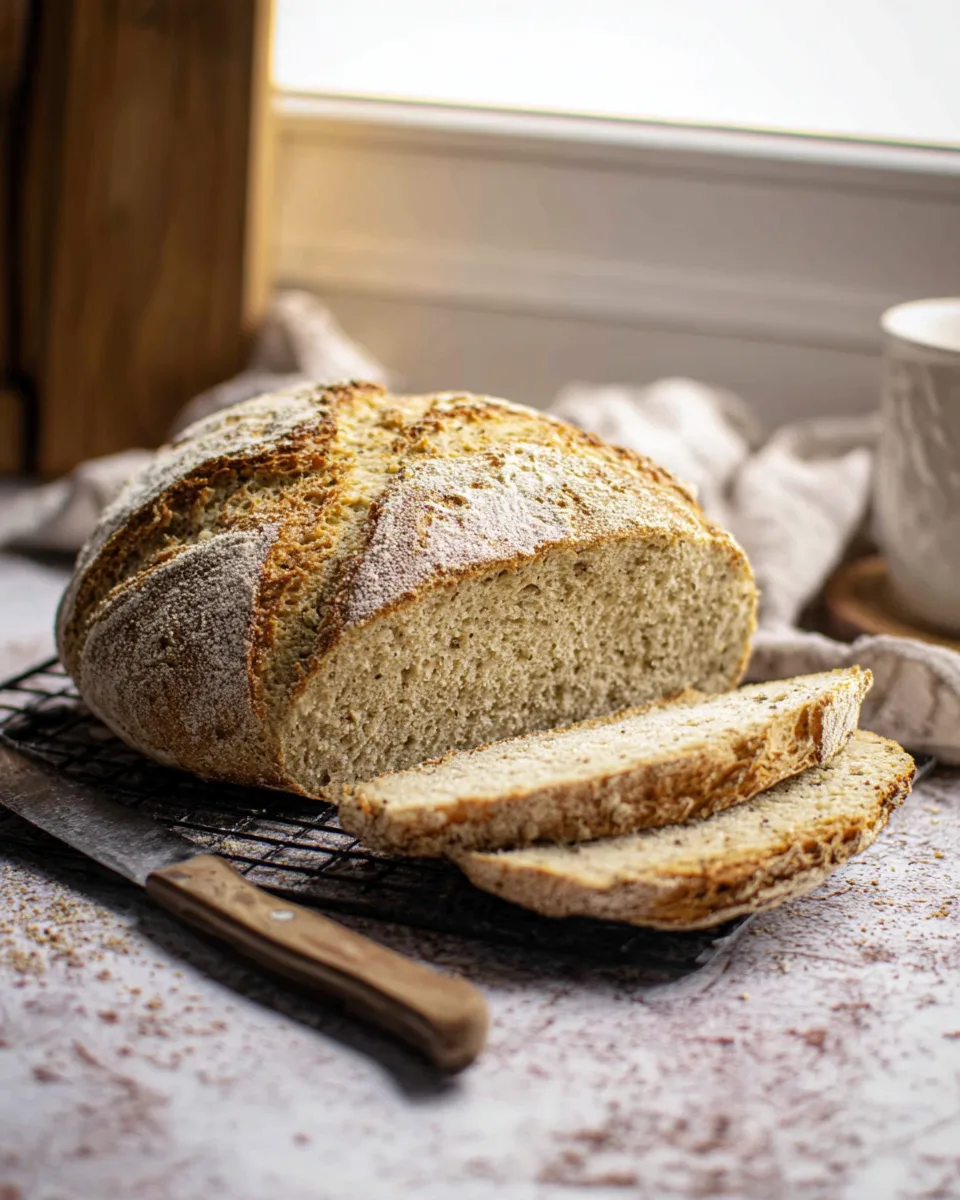
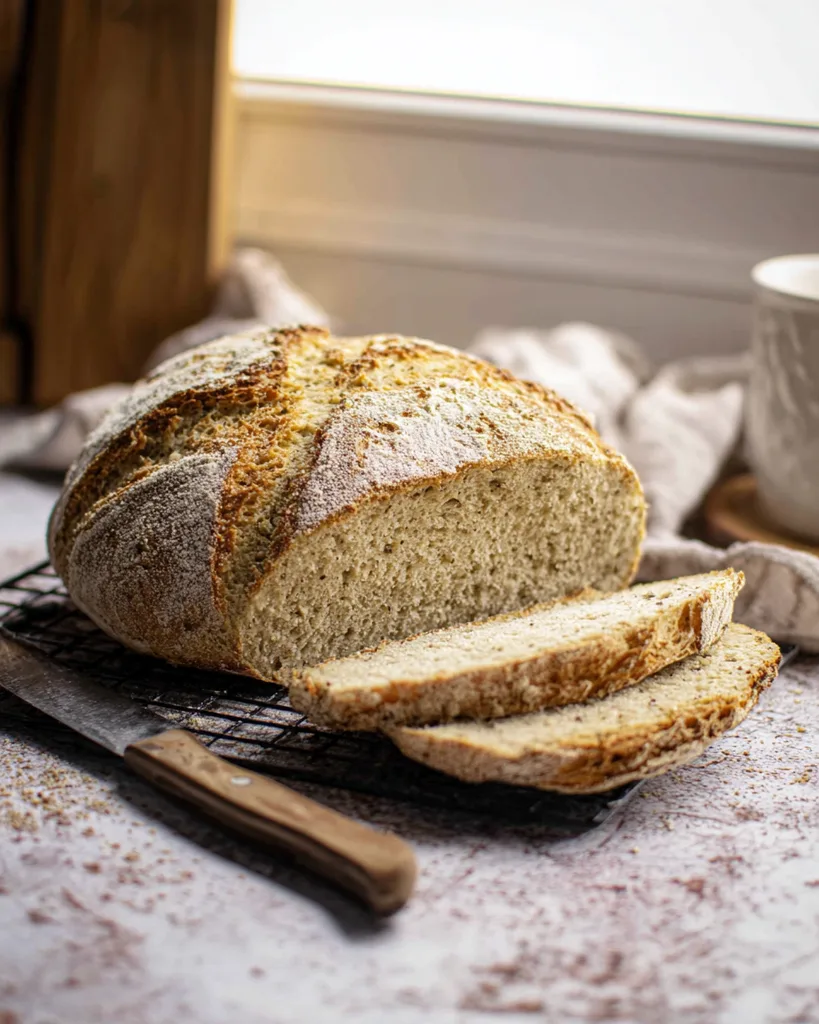
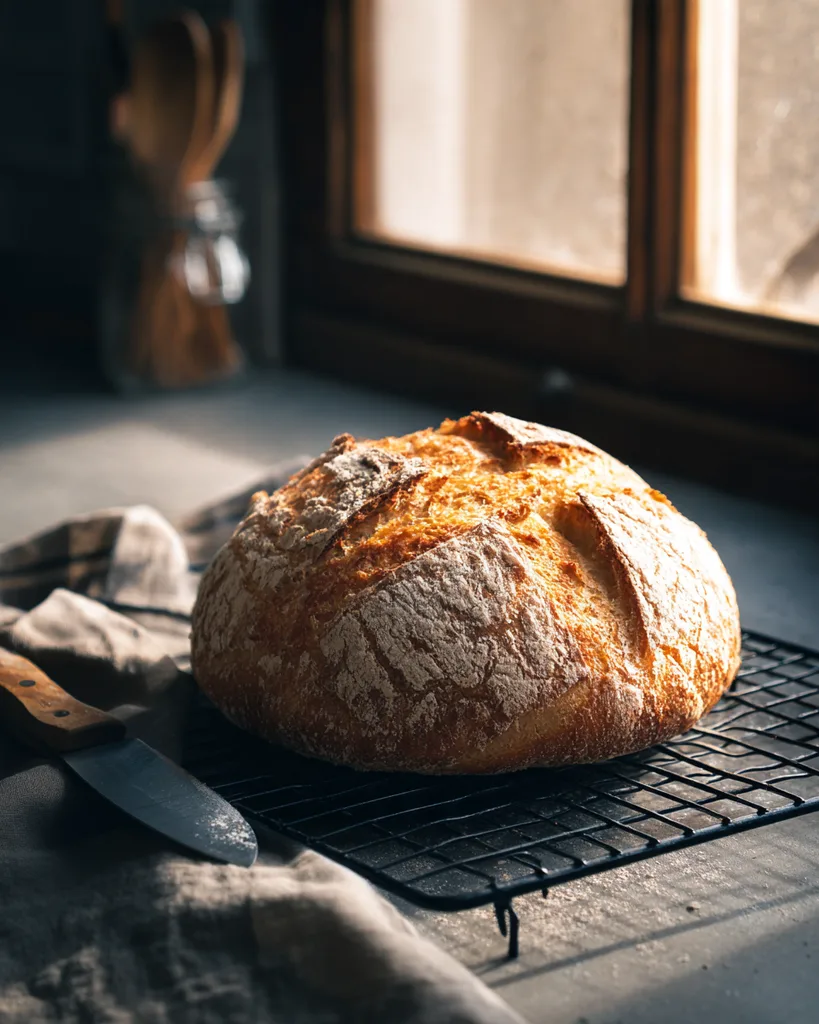
This keto sourdough bread gets that edge from cider vinegar and buttermilk instead of a starter. It bakes into a round loaf with a crackly top and a crumb you can cut into real slices, not crumbs. A slice is 2.8g net carbs.
It also takes four hours, almost all of it the oven and the cooling rack doing the work. I will be blunt about the cooling, because that is where this loaf gets ruined.
Why This Keto Sourdough Bread Actually Tastes Sour
A real starter makes lactic and acetic acid over days of fermentation. That is what your tongue reads as sourdough. You cannot ferment almond flour, because there is nothing in it for wild yeast to eat, which is why most so-called keto sourdough tastes like plain almond bread.
So we add the acid directly. Three tablespoons of cider vinegar plus cultured buttermilk gives you both acids at once, sharp and dairy-sour, and the vinegar smell bakes off while the tang stays behind. Both sources I trust most on this use exactly that pairing.
The acid earns its place twice, because it also reacts with the baking soda, and that reaction is most of the lift. Leave the soda out and you get a brick that smells right and eats wrong.
Structure comes from psyllium husk. It absorbs several times its weight in water and turns into a gel that behaves a little like gluten, holding the crumb open and keeping the loaf sliceable for days. If you have baked my everyday low carb bread, you have met psyllium before. That one is a quick batter loaf you stir and pour. This is a shaped, kneaded dough that bakes into a boule.
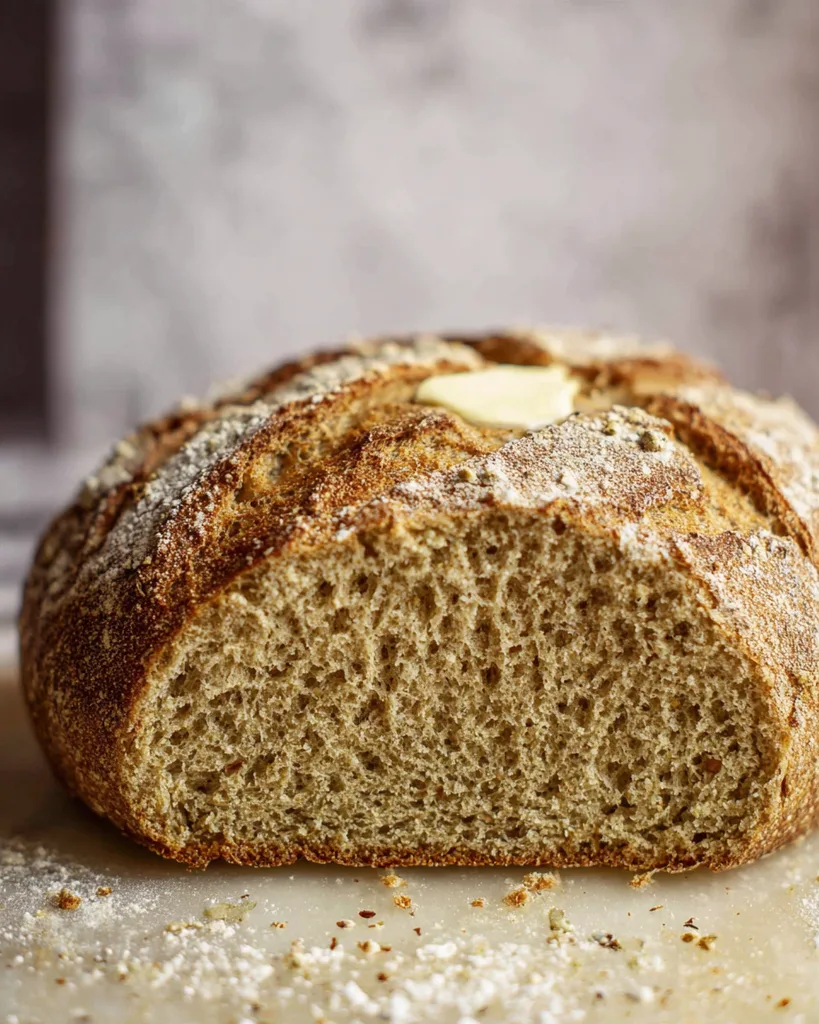
Recipe Overview
- Prep Time: 25 minutes
- Resting: 15 minutes
- Bake Time: 1 hour 30 minutes
- Cooling: 2 hours, and this one is not optional
- Total Time: about 4 hours 10 minutes
- Makes: 1 round loaf, 12 slices
- Net Carbs: 2.8g per slice
- Difficulty: Medium
Ingredients
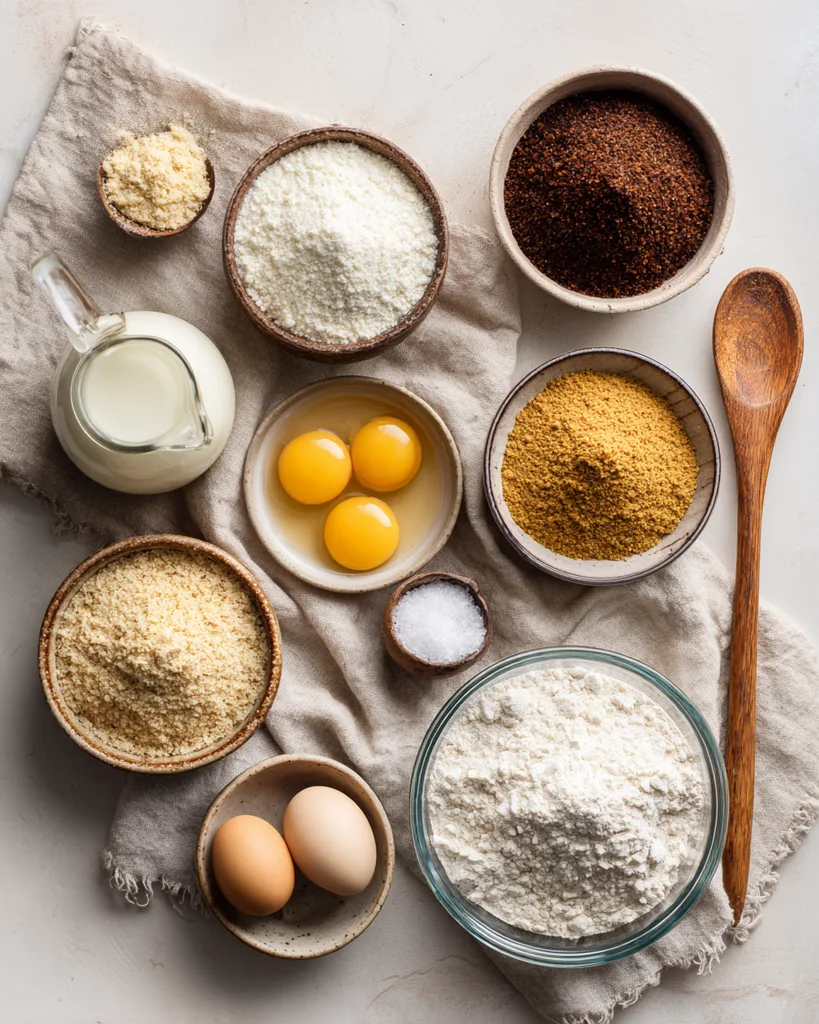
| Ingredient | Quantity | Notes |
| Blanched almond flour | 1¼ cups (140 g) | Finely ground, not almond meal |
| Coconut flour | ⅓ cup (40 g) | Soaks up the extra liquid |
| Psyllium husk powder | ¼ cup (30 g) | Powder, not whole husks |
| Golden flaxseed meal | ¼ cup (28 g) | Golden keeps the crumb lighter |
| Baking powder | 1 tsp | Fresh |
| Baking soda | ½ tsp | Reacts with the vinegar |
| Fine sea salt | ¾ tsp | |
| Large egg whites | 5 (150 g) | Room temperature |
| Large egg | 1 | Room temperature |
| Buttermilk | ½ cup (120 g) | Or almond milk plus ½ tbsp lemon juice |
| Apple cider vinegar | 3 tbsp | Raw, with the mother, for the best tang |
| Warm water | ½ cup (120 g) | Warm, not hot |
Psyllium husk powder and whole husks are not the same by volume. A quarter cup of powder weighs close to twice what whole husks do. If all you have is whole husks, grind them first, then measure. Otherwise the center comes out wet and heavy.
One more thing about psyllium: some brands turn baked goods purple-gray. It is harmless and tastes the same, but if that would bother you, look for a brand other low carb bakers report staying pale.
Recipe Timing
| Order | Step | Time |
| 1 | Whisk the dry ingredients | 5 minutes |
| 2 | Froth the wet ingredients and combine | 10 minutes |
| 3 | Knead, shape and score the loaf | 10 minutes |
| 4 | Rest in the dish | 15 minutes |
| 5 | Bake covered, then uncovered | 1 hour 30 minutes |
| 6 | Cool completely on a rack | 2 hours |
Step-by-Step Instructions
1. Whisk the dry ingredients first
In a large bowl, whisk the blanched almond flour, coconut flour, psyllium husk powder, golden flaxseed meal, baking powder, baking soda and fine sea salt until the color is completely even. Do this properly. Psyllium clumps the second it meets liquid, and any dry pocket you leave now becomes a gummy streak in the finished loaf.
2. Froth the wet ingredients
In a second bowl, beat the large egg whites, the whole large egg, the buttermilk and the apple cider vinegar for about a minute, until the surface is foamy. You are not making meringue. You just want air in there, because those bubbles are the rest of the lift.
3. Combine, then add the water last
Pour the wet mixture into the dry and fold until it looks like a thick paste. Now add the warm water in two goes, mixing between them. The dough will thicken under your spoon as the psyllium drinks it up. Within a minute or two it goes from paste to something you can pick up.
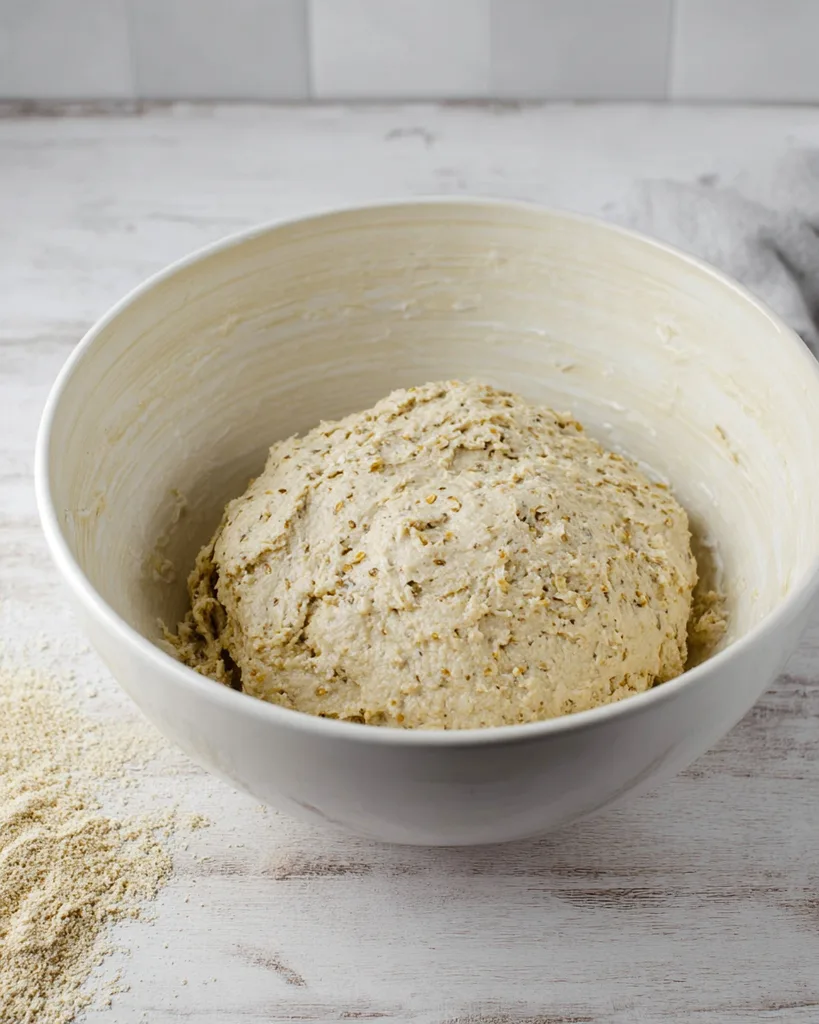
4. Knead and shape a round loaf
Dust the counter with almond flour, turn the dough out and knead eight or ten times, just enough for a smooth ball. There is no gluten here, so long kneading gains nothing and squeezes out the air you just beat in.
Set the ball into a greased 9-inch round baking dish, seam side down, and press it gently so it fills the base. Dust the top with almond flour and cut a cross about half an inch deep with a sharp knife. The scoring is not only for looks. It gives the loaf a seam to open along instead of splitting down the side.
5. Rest for 15 minutes
Leave the shaped loaf on the counter while the oven heats to 375°F. The psyllium gel is still setting during this window, and the crust holds its scored pattern much better when it goes in firm rather than slack.
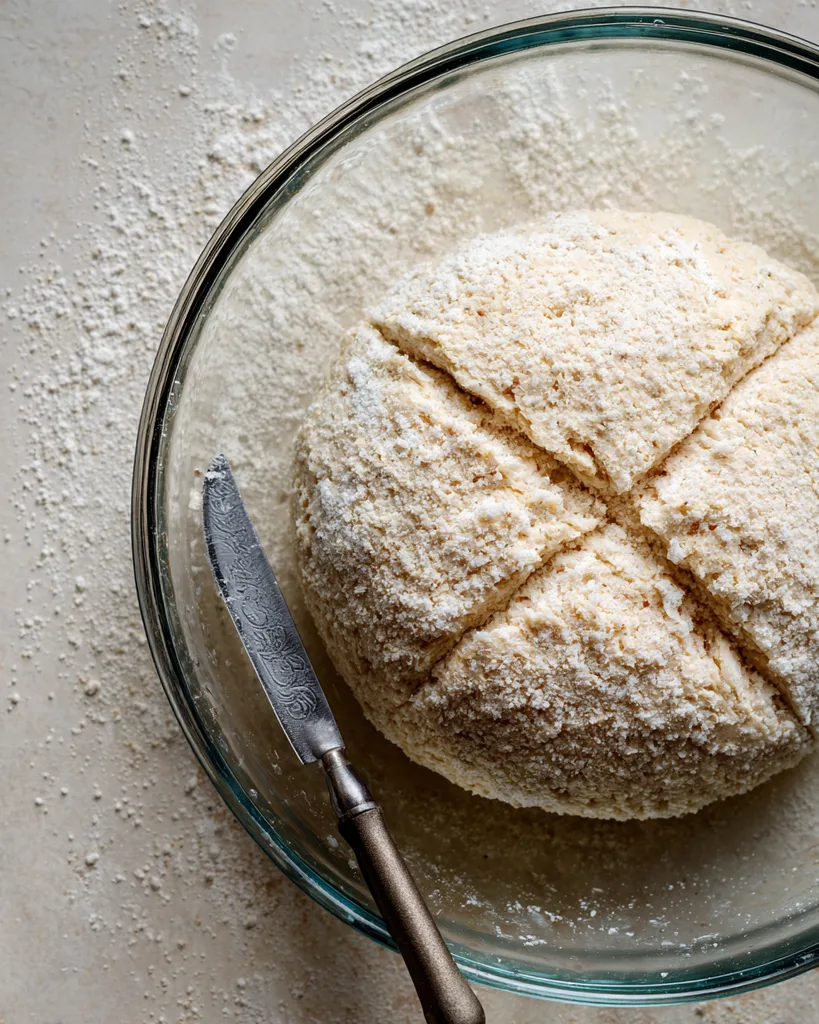
6. Bake covered, then finish uncovered
Cover the dish loosely with foil and bake for 15 minutes at 375°F. Drop the oven to 300°F, still covered, and bake for 1 hour. Take the foil off and give it a final 15 minutes to brown.
The long, low middle stretch is what dries out the center. A high oven the whole way would give you a dark crust over a raw core, which is the single most common failure with psyllium loaves. When it is done, the top sounds hollow under a knuckle and a skewer comes out clean.
7. Cool completely before you cut it
This loaf is not finished when it leaves the oven. Psyllium bread keeps setting as it cools, and the steam trapped inside has to work its way out. Cut into it warm and the crumb smears into a damp, sticky mess that no extra baking will fix.
Turn it out onto a wire rack and leave it for at least two hours. I know. I have cut one at 40 minutes to see if it was really true, and it really is.
Recipe Tips and Variations
Weigh the psyllium if you can. Thirty grams is the number that matters. Cup measures of psyllium vary more than any other ingredient in low carb baking, and this is the ingredient that decides whether the middle is bread or paste.
Sharper tang. Swap the buttermilk for the same amount of plain full-fat kefir, or add an extra tablespoon of cider vinegar. Do not push past four tablespoons total or the crumb starts to taste harsh.
Rolls instead of a loaf. Divide the dough into eight balls on a lined sheet, score each one, and bake at 350°F for about 35 minutes uncovered. They cool in 30 minutes rather than two hours.
Dairy free. Use half a cup of unsweetened almond milk with half a tablespoon of lemon juice in place of the buttermilk. You lose a little of the dairy sourness and keep all of the acid.
Serving Suggestions
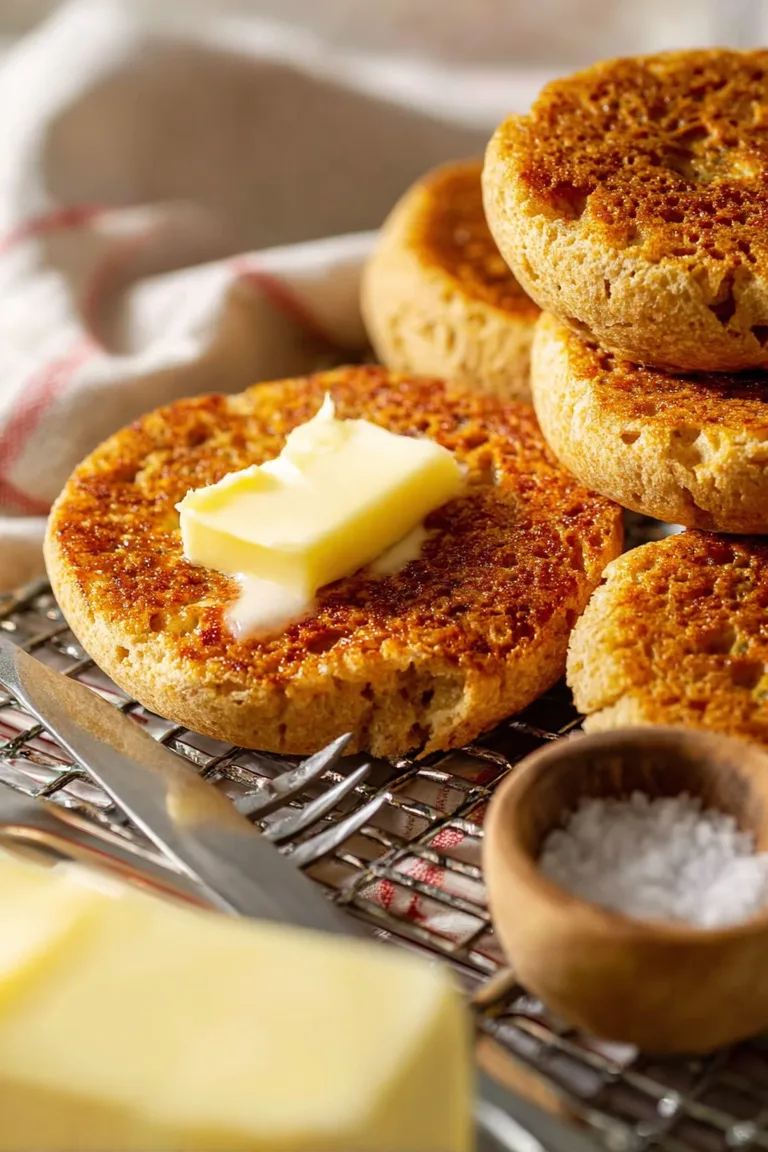
Toasted, thickly buttered, with salt. That is how two thirds of every loaf disappears here. It is sturdy enough for a real sandwich and it holds up under soup, which is more than most low carb breads manage.
For a lighter roll alongside dinner, my keto buns are a five-ingredient cheese dough that goes from bowl to table in 25 minutes.
Storage and Reheating
Room temperature: wrapped in a clean towel, 2 days. Any longer and the crust softens.
Refrigerator: sliced, in an airtight container, up to 5 days. Cold slices taste flat, so toast them.
Freezer: freeze slices flat with parchment between them for up to 3 months, then toast straight from frozen. Freezing whole works too, but you will wait an hour for it to thaw.
Frequently Asked Questions
Is this real sourdough?
No, and I would rather say so plainly. There is no starter and no fermentation here. The sour comes from cider vinegar and cultured buttermilk, which gets you the flavor and the crust without the carbs a wheat starter brings.
Why is the middle of my loaf gummy?
Almost always one of three things: it was cut before it cooled, the psyllium was measured as whole husks instead of powder, or the oven ran the whole bake at 375°F instead of dropping to 300°F. The long low stretch is what dries the center.
Can I make keto sourdough bread without eggs?
Not this version. Five egg whites carry most of the structure here, and flax eggs cannot hold up a loaf this size.
How many carbs are in a slice?
A slice is 2.8g net carbs and 118 calories, based on 12 slices from the loaf. Cut 10 thicker slices and it comes to about 3.4g each.
More Keto Bread Recipes
- Keto Naan — a soft no-yeast flatbread for tearing and dipping instead of slicing.
- Keto Bagels — five-ingredient fathead dough shaped into eight real bagels with an egg wash.
- Flourless Keto Cheese Bread — a pull-apart cheese bread out of the oven in 27 minutes.
- Carb Free Cloud Bread — four light buns from egg whites, and a bag trick that turns them soft overnight.
- Keto Almond Flour Tortillas — eight pliable tortillas rolled between parchment that keep five days.
Recipe Card
Want the tang without the four hours? My keto crackers take three ingredients and bake in about ten minutes.
Keto Sourdough Bread
Equipment
- 9-inch round baking dish 2-quart, greased
- Hand mixer or a balloon whisk
- Wire rack
- Kitchen scale recommended for the psyllium
Ingredients
Dry
- 1 1/4 cups blanched almond flour 140 g, finely ground, not almond meal
- 1/3 cup coconut flour 40 g
- 1/4 cup psyllium husk powder 30 g, powder and not whole husks
- 1/4 cup golden flaxseed meal 28 g
- 1 tsp baking powder fresh
- 1/2 tsp baking soda
- 3/4 tsp fine sea salt
Wet
- 5 large egg whites 150 g, room temperature
- 1 large egg room temperature
- 1/2 cup buttermilk 120 g, or almond milk plus 1/2 tbsp lemon juice
- 3 tbsp apple cider vinegar raw, with the mother
- 1/2 cup warm water 120 g, warm and not hot
Instructions
- Dry: Whisk the blanched almond flour, coconut flour, psyllium husk powder, golden flaxseed meal, baking powder, baking soda and fine sea salt in a large bowl until the color is completely even, with no dry pockets.
- Wet: In a second bowl, beat the large egg whites, large egg, buttermilk and apple cider vinegar for about 1 minute, until foamy.
- Combine: Fold the wet mixture into the dry until it forms a thick paste, then add the warm water in two additions, mixing between them. The dough thickens as the psyllium hydrates.
- Shape: Turn out onto a surface dusted with almond flour and knead 8-10 times into a smooth ball. Set into a greased 9-inch round baking dish, press to fill the base, dust the top and score a cross about 1/2 inch deep.
- Rest: Leave 15 minutes at room temperature while the oven heats to 375°F.
- Bake: Cover loosely with foil and bake 15 minutes at 375°F. Reduce to 300°F and bake 1 hour, still covered. Uncover and bake a final 15 minutes, until the top sounds hollow and a skewer comes out clean.
- Cool: Turn out onto a wire rack and cool completely, at least 2 hours, before slicing. Cutting it warm leaves a gummy crumb.
Notes
Keep cooking