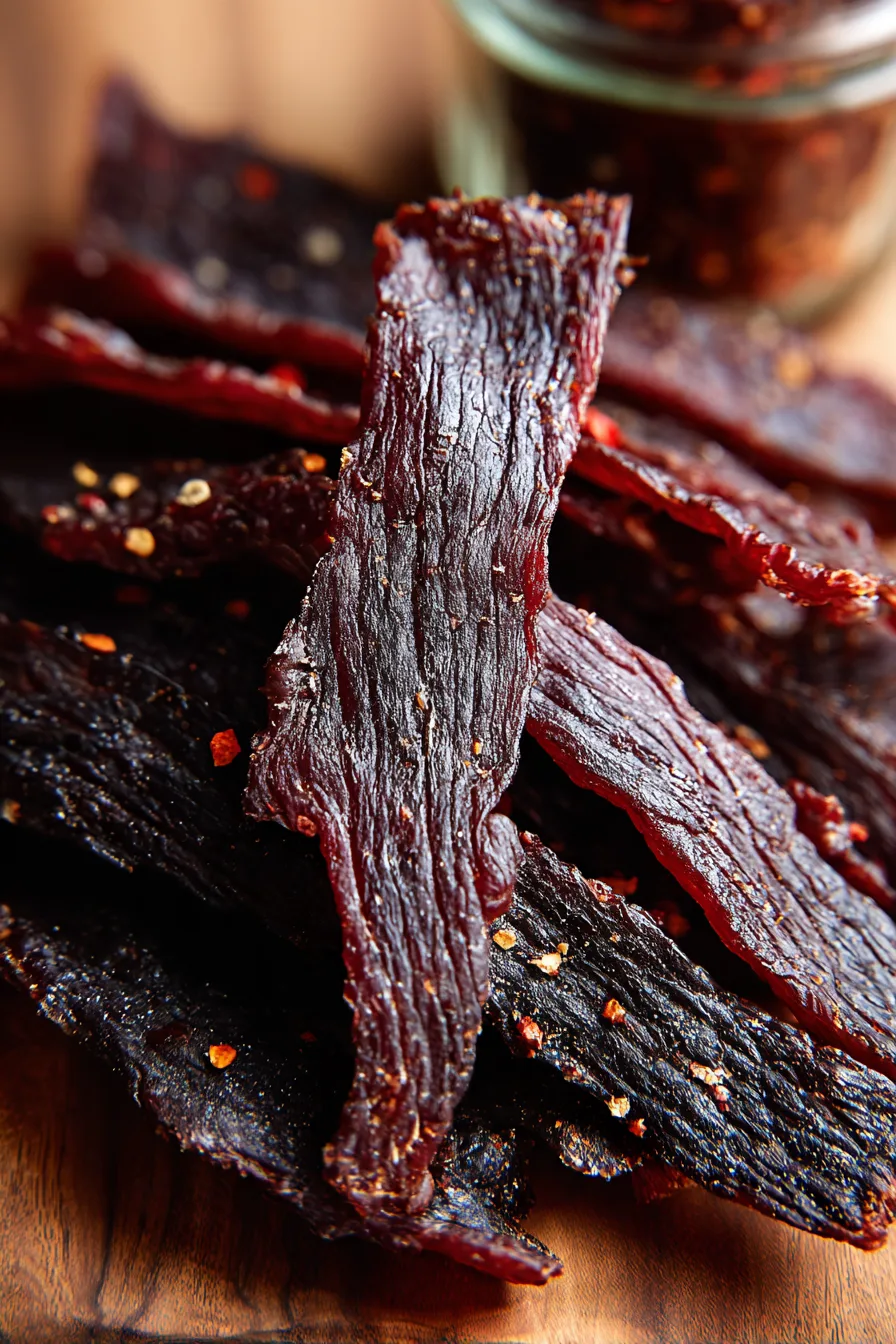
Keto Beef Jerky (Oven or Dehydrator, 0.9g Net Carbs)
- Total time
- 17 hours 40 minutes
- Makes
- 12 ounces
- Net carbs
- 0.9g
- Calories
- 104
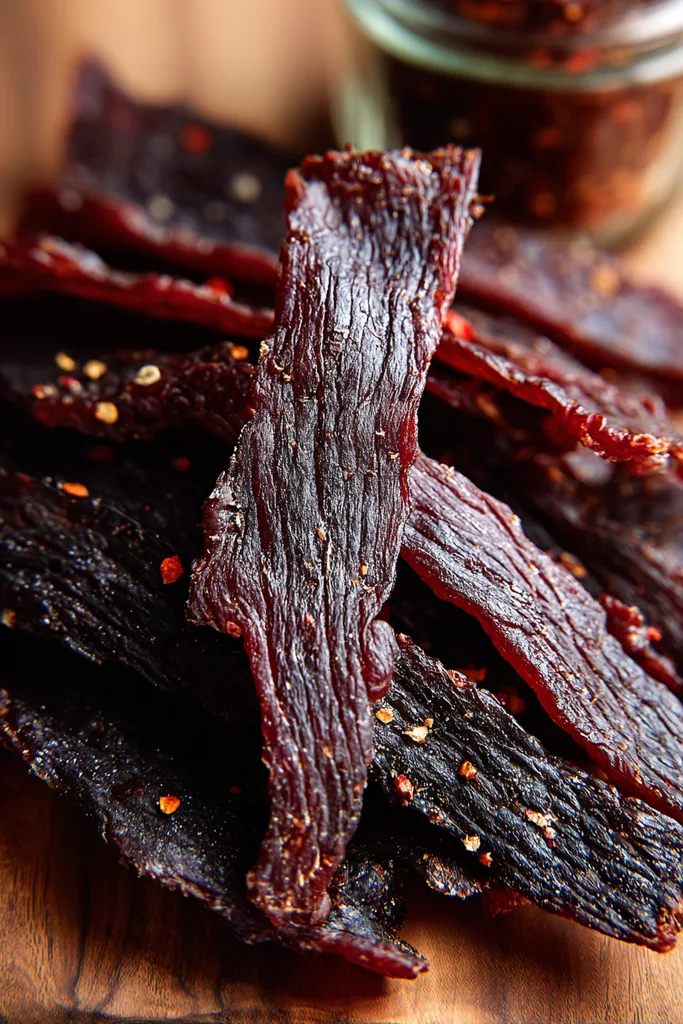
Read the back of almost any jerky bag and the second ingredient is sugar. Sometimes third and fifth as well, under two other names.
It is there for a reason. Sugar darkens the surface and gives that sticky-sweet edge people expect. It is also why an ounce of store jerky can run 6 grams of carbs, which is a lot for a snack.
This keto beef jerky gets the same depth from Worcestershire, smoked paprika and liquid smoke, with a brown-sugar-style sweetener carrying the rest. An ounce is 0.9g net carbs and 17.7g protein. It also covers the part most recipes skip, which is how to make it safely.
What Makes Keto Beef Jerky Work
Three things decide whether this comes out well, and the marinade is only one of them.
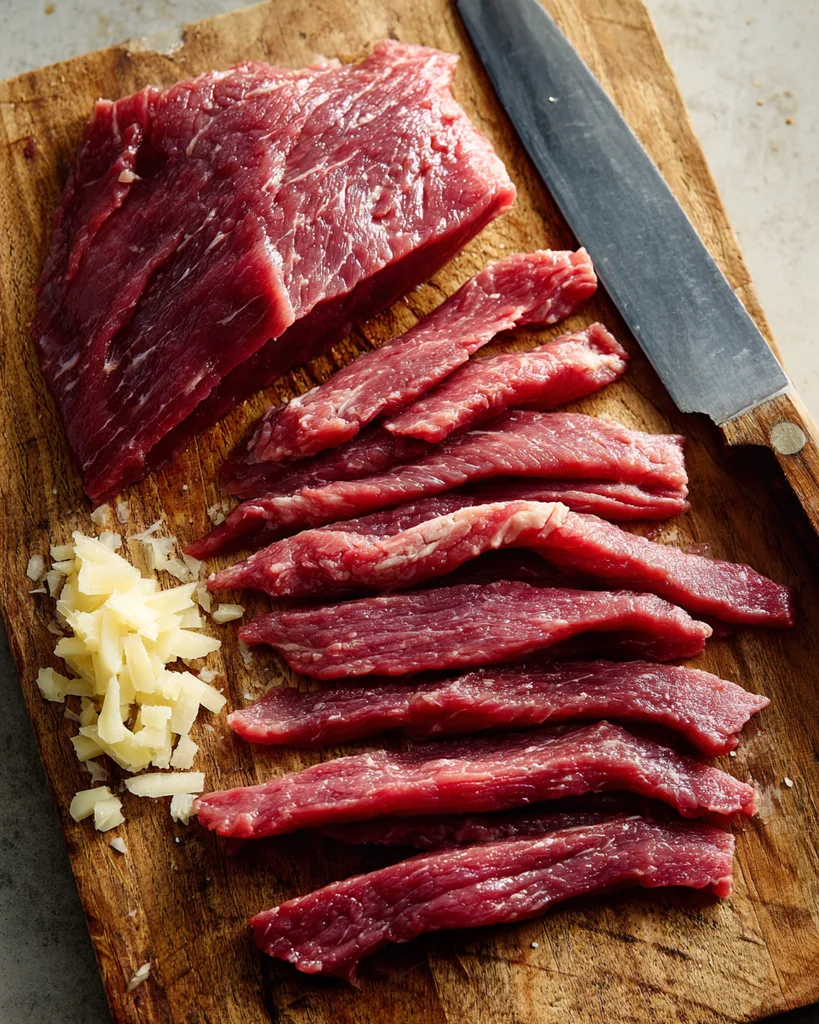
The cut. Fat does not dry. It stays soft while the meat around it hardens, then goes rancid within days, which is what ruins most homemade batches. Top round is lean, cheap and cuts into wide even slices, which is why nearly every jerky source starts there. Eye of round, bottom round and sirloin tip work the same way.
The slice. A quarter inch is the ceiling. Thicker strips never dry through the middle. And the grain direction is a real choice rather than a detail: cut with the grain for chewy, classic jerky, across it for strips that break apart tenderly.
The heat step. Dehydrators and low ovens run well below the temperature that kills bacteria, so drying alone is not enough. The USDA is specific about this: the meat has to reach 160°F at some point, either before or after drying. Ten minutes in a 300°F oven at the start handles it, and it shortens the drying time too.
Recipe Overview
- Prep Time: 30 minutes, after the beef firms up in the freezer
- Marinating: 12 hours, up to 24
- Oven Time: 10 minutes at 300°F, then 4 to 6 hours drying
- Total Time: about 17 hours 40 minutes, almost all of it unattended
- Makes: about 12 oz from 2 lb of beef, 12 servings
- Net Carbs: 0.9g per ounce
- Difficulty: Medium
Ingredients
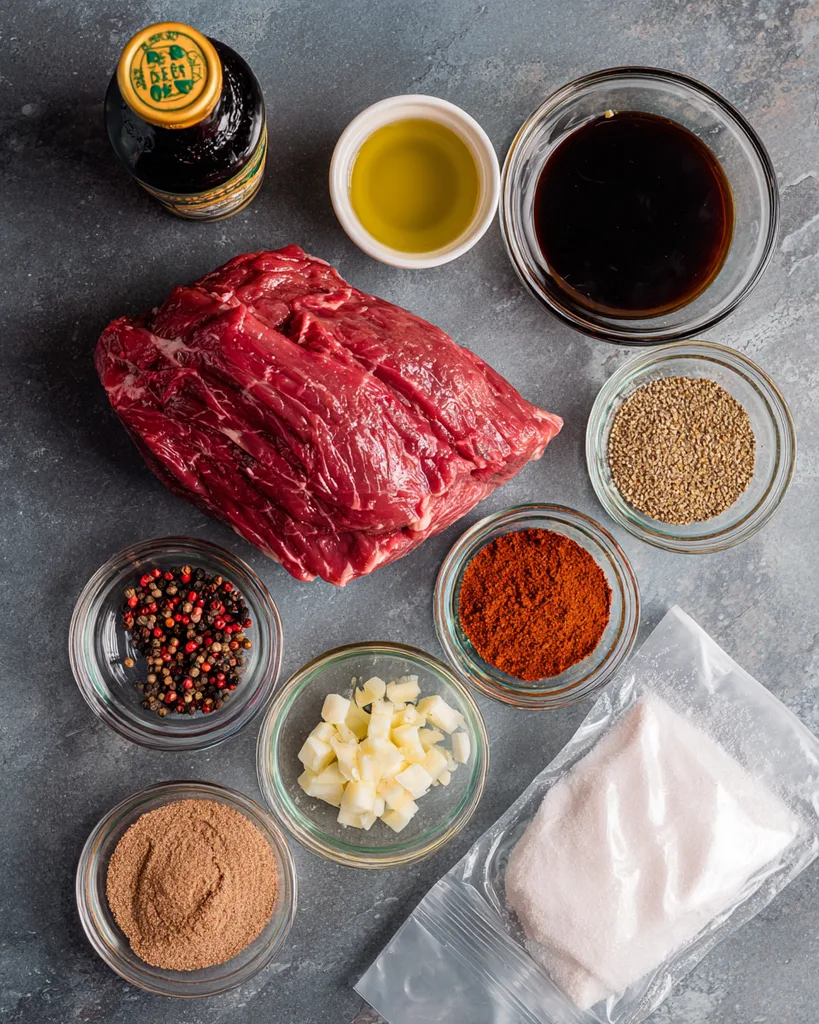
| Ingredient | Quantity | Notes |
| Beef top round | 2 lb (907 g) | Lean, all visible fat trimmed |
| Soy sauce | ½ cup (128 g) | Or tamari |
| Worcestershire sauce | ¼ cup (68 g) | Brings the savory depth |
| Brown-sugar-style sweetener | 2 tbsp | Monk fruit allulose blend |
| Liquid smoke | 1 tbsp | Hickory or mesquite |
| Garlic powder | 2 tsp | Powder, not granules |
| Onion powder | 2 tsp | |
| Coarse black pepper | 2 tsp | Coarse ground, for texture |
| Smoked paprika | 1 tsp | |
| Red pepper flakes | 1 tsp | Optional |
Two pounds of raw beef gives you about twelve ounces of jerky. That shrink surprises people the first time. It is mostly water leaving, which is exactly the point, but plan for it before you buy.
The sweetener is there for balance, not sweetness. Two tablespoons across two pounds of meat is barely detectable on its own; take it out entirely and the soy and pepper taste harsh.
Recipe Timing
| Order | Step | Time |
| 1 | Firm the beef in the freezer | 1 to 2 hours |
| 2 | Trim and slice | 30 minutes |
| 3 | Marinate in the refrigerator | 12 to 24 hours |
| 4 | Pat dry and arrange | 15 minutes |
| 5 | Heat step at 300°F | 10 minutes |
| 6 | Dry at the lowest oven setting | 4 to 6 hours |
Step-by-Step Instructions
1. Freeze the beef, then trim and slice
Freeze the beef top round for 1 to 2 hours, until firm at the edges but still yielding in the middle. Soft beef rolls away from the knife into wedges; firm beef cuts like a block of cheese.
Trim off every piece of visible fat and silverskin, then slice into strips no more than ¼ inch thick, with the grain for chewy or across it for tender. Even thickness matters more than neat shapes; thin strips finish an hour before thick ones.
This is the same trick I use for my keto mongolian beef, where the steak gets 30 minutes in the freezer before it can be sliced thin enough.
2. Mix the marinade and let it work
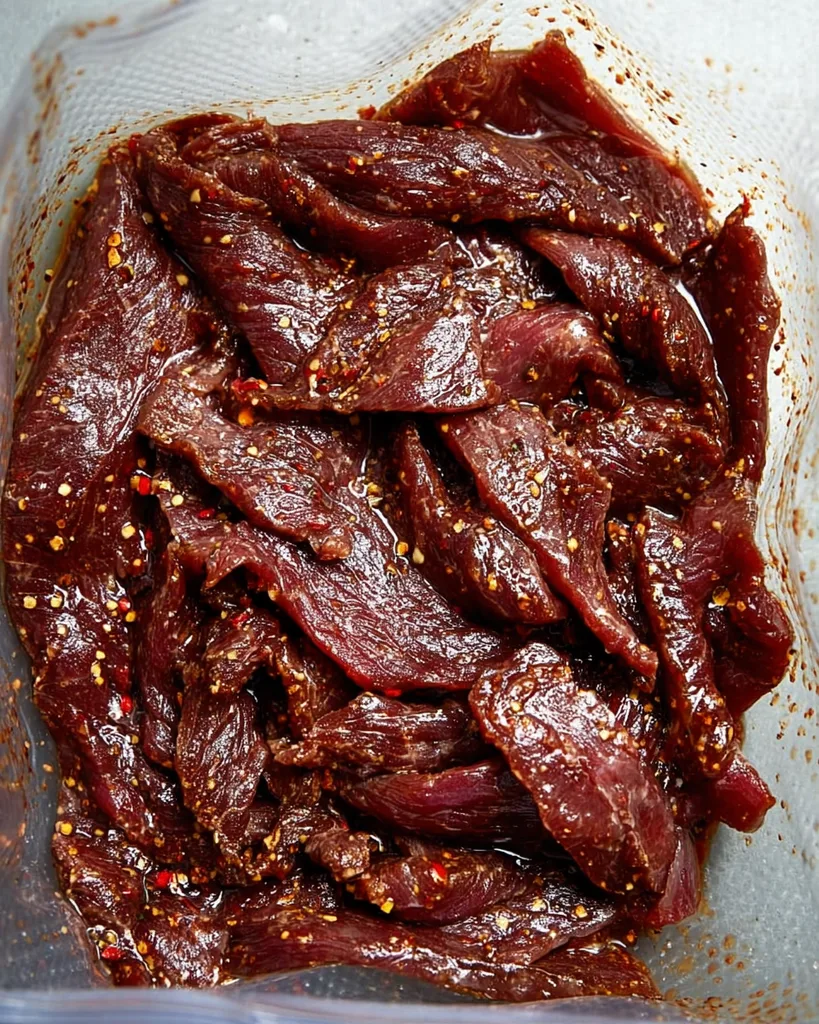
Whisk the soy sauce, Worcestershire sauce, brown-sugar-style sweetener, liquid smoke, garlic powder, onion powder, coarse black pepper, smoked paprika and red pepper flakes together until the sweetener dissolves.
Put the strips in a large zip-top bag, pour the marinade over, press out the air and seal. Refrigerate for 12 to 24 hours, turning the bag whenever you think of it. Twelve is enough; twenty-four is noticeably better.
3. Pat dry, and mean it
Lift the strips out onto a thick bed of paper towels and press more towels on top. Surface moisture is drying time. Wet strips can add an hour, and they steam instead of drying at first.
4. Arrange with air on every side
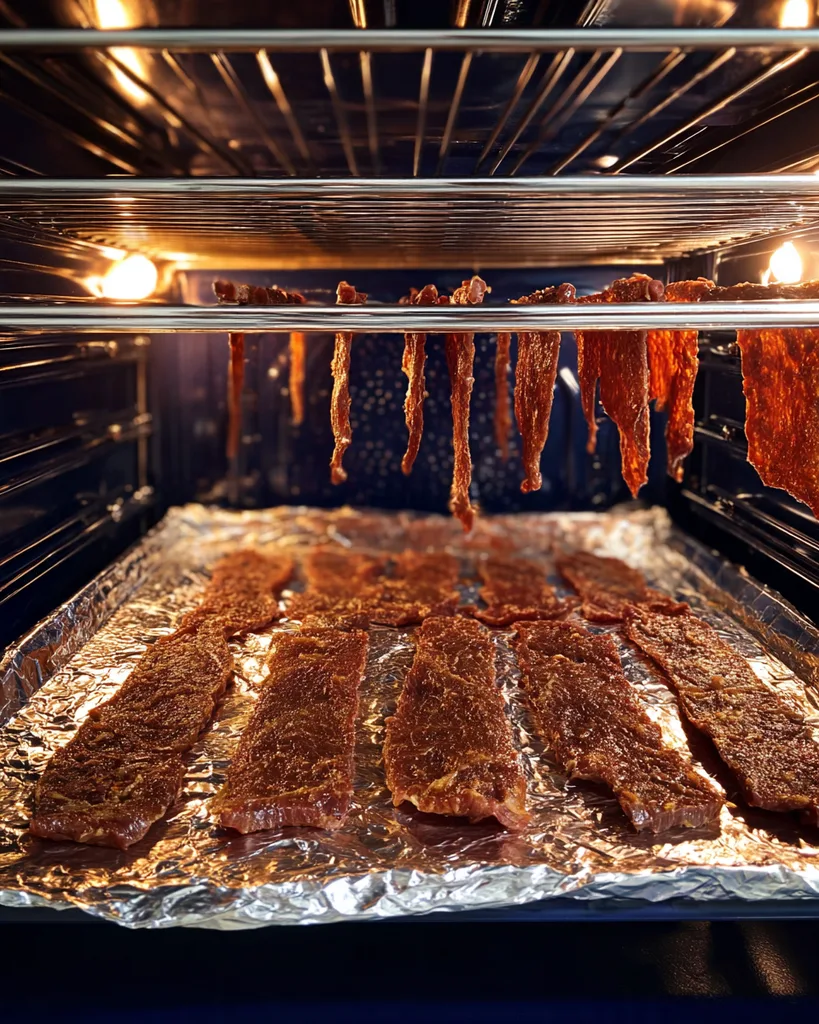
Lay the strips directly on the oven racks with half an inch between them, and slide a foil-lined sheet pan onto the bottom rack for drips. Every surface needs moving air, so nothing may touch or overlap.
5. The 10-minute heat step
Heat the oven to 300°F and give the loaded racks 10 minutes. This brings the meat to the 160°F the USDA asks for, which drying temperatures alone never reach.
Do not skip it or shorten it. It is ten minutes out of a seventeen-hour process, and it is the difference between a snack and a gamble.
6. Drop the heat and dry
Turn the oven down to its lowest setting, usually 170°F, and prop the door open a couple of inches with the handle of a wooden spoon. That gap lets the moisture escape instead of circling back onto the meat. If you have a convection fan, switch it on after the first half hour.
Dry for 4 to 6 hours, rotating the racks once at the halfway mark. Start checking at four. Thin strips finish well before thick ones, so pull pieces as they are ready rather than waiting for the tray.
7. The bend test
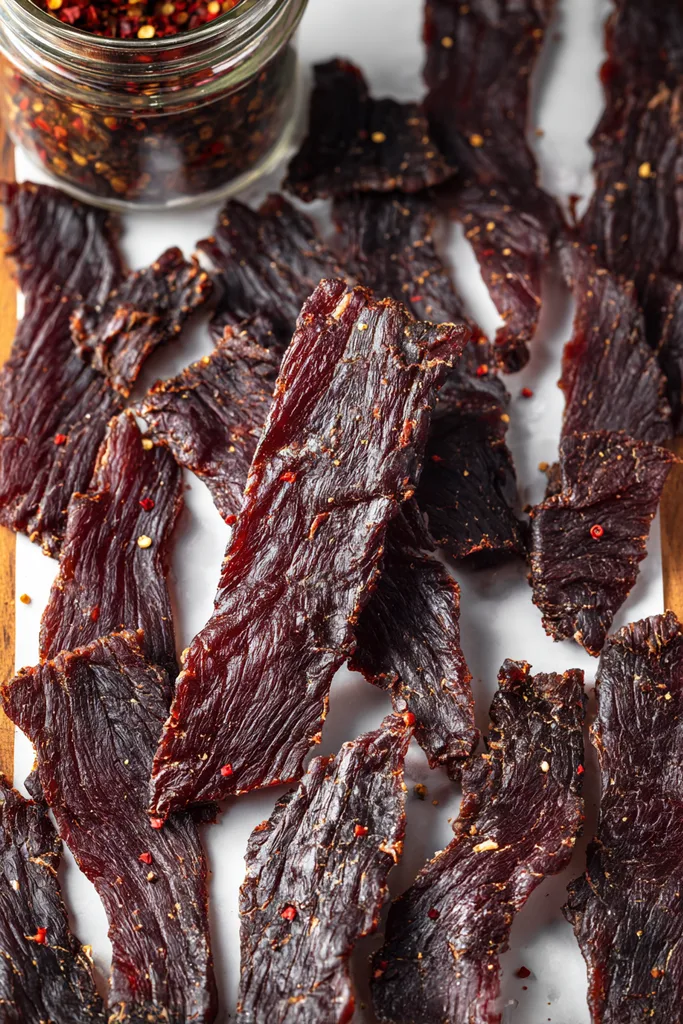
Take a strip out, let it cool for five minutes, and bend it. It should crack and show white stress lines without snapping in two. Cool it first, every time; warm jerky always feels softer than it really is, and that is how people end up over-drying a whole batch.
8. Cool completely before it goes in a jar
Spread the finished strips on a wire rack for about an hour, until they are fully at room temperature. Bagging warm jerky traps steam, and that condensation is what puts mold on a perfect batch.
Recipe Tips and Variations
Using a dehydrator instead. Run it at 165°F for 4 to 6 hours, then finish the whole batch in a 275°F oven for 10 minutes to hit the safety temperature. That is the second method the USDA accepts, and it suits dehydrators that cannot reach 300°F.
Teriyaki style. Add 2 teaspoons of ground ginger and a tablespoon of toasted sesame oil to the marinade.
Black pepper and garlic. Double the coarse black pepper, double the garlic powder, and leave out the smoked paprika and liquid smoke.
Hot. Add a tablespoon of sugar-free hot sauce and a teaspoon of cayenne. Heat concentrates as the meat dries, so go lighter than feels right.
No curing salt needed. Recipes that call for it are protecting against bacteria over long, low drying. The 300°F step does that job here, so you can leave it out.
Serving Suggestions
This is a glovebox and gym-bag snack, and the most useful thing in the house on a long drive. Two ounces is 35 grams of protein and under 2 grams of carbs, which is a meal rather than a nibble.
On a board with cheese, olives and a pile of my keto crackers, it turns into a proper meat and cheese board. The crackers keep a week in an airtight container, so both can be made ahead.
Storage and Shelf Life
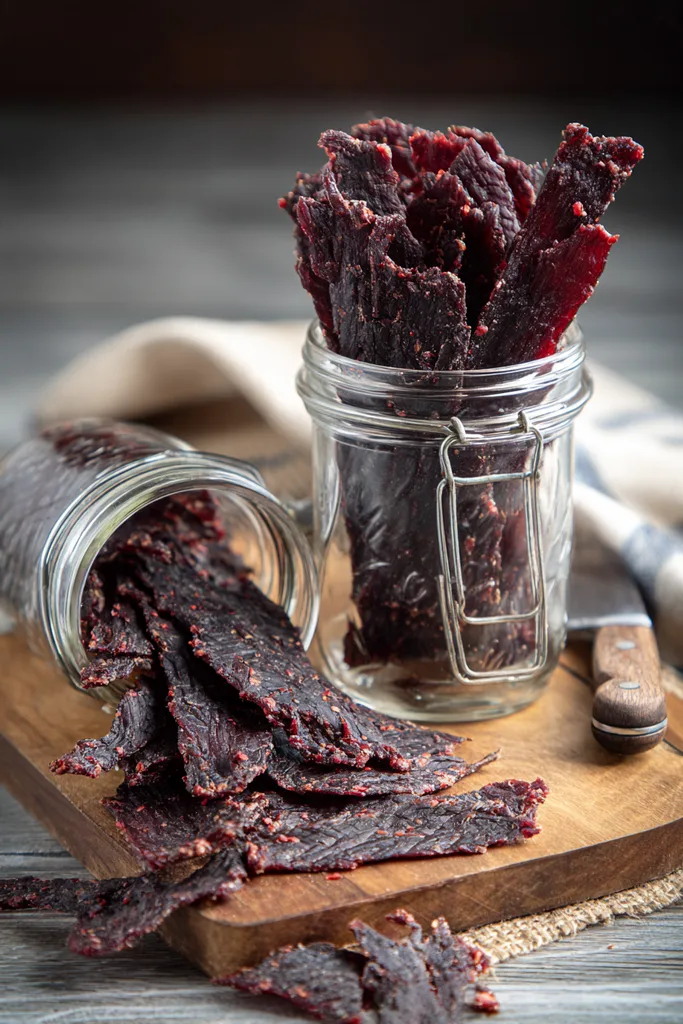
Room temperature: in a sealed jar or bag in a cool dark cupboard, about 2 weeks. Check it after a few days; if you see condensation inside the jar, it needed more drying, so return it to a low oven for another hour.
Refrigerator: 1 to 3 months in an airtight container.
Freezer: vacuum sealed, 6 months or more with no loss of texture. Thaw in the bag so the jerky does not pick up moisture.
Frequently Asked Questions
Is store-bought jerky keto?
Usually not. Most brands carry 5 to 7g of carbs an ounce because sugar is high on the ingredient list. Homemade keto beef jerky lands at 0.9g, and you control the salt as well.
Can I skip the 300°F step?
No. Drying temperatures do not get the meat to 160°F, so nothing else in the process kills bacteria. If your dehydrator cannot manage it, do the 275°F finish for 10 minutes afterwards instead.
Why is my jerky brittle?
It dried too long, or the strips were cut thinner than a quarter inch. Start the bend test at four hours and pull pieces individually as they pass it.
Can I use ground beef?
Yes, with a jerky gun to press it into strips, but it is a different product and needs closer attention to temperature. Whole muscle is far more forgiving for a first batch.
How many carbs are in a serving?
One ounce is 0.9g net carbs, 104 calories and 17.7g protein, based on 12 ounces of finished jerky from 2 pounds of beef. Yield varies with how long you dry it, so treat it as close rather than exact.
More Keto Snacks Worth Making Ahead
- 2-Ingredient Keto Chips — almond flour and mozzarella baked crisp, kept at room temperature for a week.
- Keto Deviled Eggs — a no-fail boiling method, ready in 35 minutes.
- Keto Meatballs — beef and dark-meat turkey, chilled before browning so they hold together.
- Keto Peanut Butter Granola — nuts and seeds pressed into real clusters, good for two weeks.
Recipe Card
Want a crunchy snack tonight instead of tomorrow? My keto cheese puffed snacks bake at 400°F and are done in under half an hour.
Keto Beef Jerky
Equipment
- Sharp slicing knife
- Large zip-top bags 2-gallon, or a covered dish
- Oven racks 2, or a dehydrator
- Sheet pan foil lined, for drips
Ingredients
- 2 lb beef top round 907 g, lean, all visible fat trimmed
- 1/2 cup soy sauce 128 g, or tamari
- 1/4 cup Worcestershire sauce 68 g
- 2 tbsp brown-sugar-style sweetener monk fruit allulose blend
- 1 tbsp liquid smoke hickory or mesquite
- 2 tsp garlic powder
- 2 tsp onion powder
- 2 tsp coarse black pepper coarse ground
- 1 tsp smoked paprika
- 1 tsp red pepper flakes optional
Instructions
- Firm and slice: Freeze the beef top round 1-2 hours, until firm at the edges. Trim away all visible fat and silverskin, then slice into strips no thicker than 1/4 inch, with the grain for chewy jerky or across it for tender.
- Marinate: Whisk the soy sauce, Worcestershire sauce, brown-sugar-style sweetener, liquid smoke, garlic powder, onion powder, coarse black pepper, smoked paprika and red pepper flakes together. Add the strips to a large zip-top bag, pour over the marinade, press out the air and refrigerate 12-24 hours, turning occasionally.
- Dry the surface: Lift the strips out and press them between thick layers of paper towels until the surface is dry to the touch.
- Arrange: Lay the strips directly on the oven racks with at least 1/2 inch between pieces, none touching, and slide a foil-lined sheet pan onto the bottom rack to catch drips.
- Heat step: Bake at 300°F for 10 minutes. This brings the meat to the 160°F the USDA requires; drying temperatures alone never reach it.
- Dry: Reduce to the oven’s lowest setting, usually 170°F, and prop the door open about 2 inches with a wooden spoon handle. Dry 4-6 hours, rotating the racks once, switching on the convection fan after the first 30 minutes if you have one.
- Bend test: Cool a strip for 5 minutes, then bend it. It should crack and show white stress lines without snapping in two. Pull pieces individually as they pass.
- Cool: Spread on a wire rack until completely at room temperature, about 1 hour, before storing. Warm jerky traps steam, and that condensation grows mold.
Notes
Keep cooking