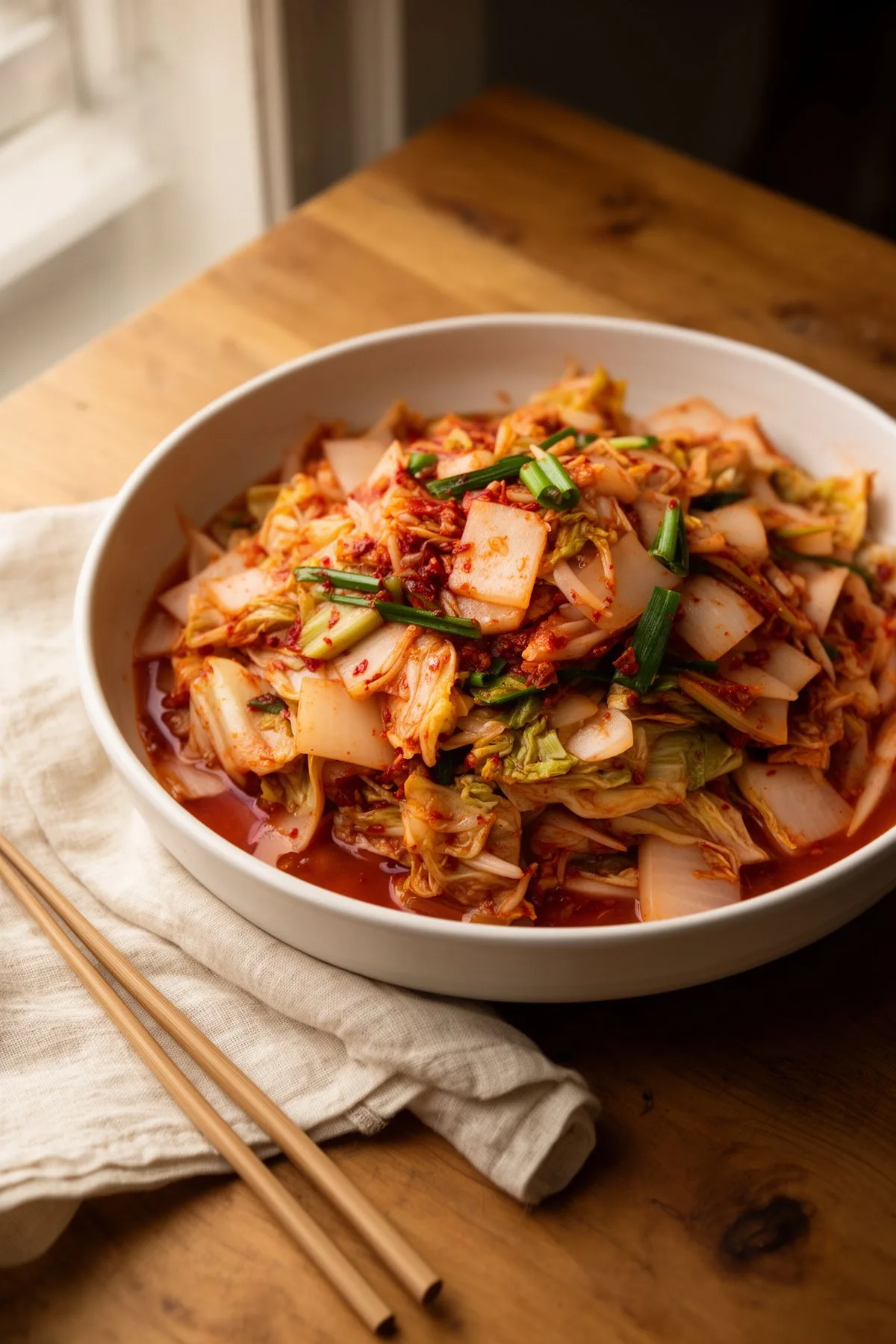
Kimchi (Keto, No Sugar, 3.2g Net Carbs)
- Total time
- 1 day 2 hours 30 minutes
- Makes
- 12 servings (1/2 cup each)
- Net carbs
- 3.2g
- Calories
- 28
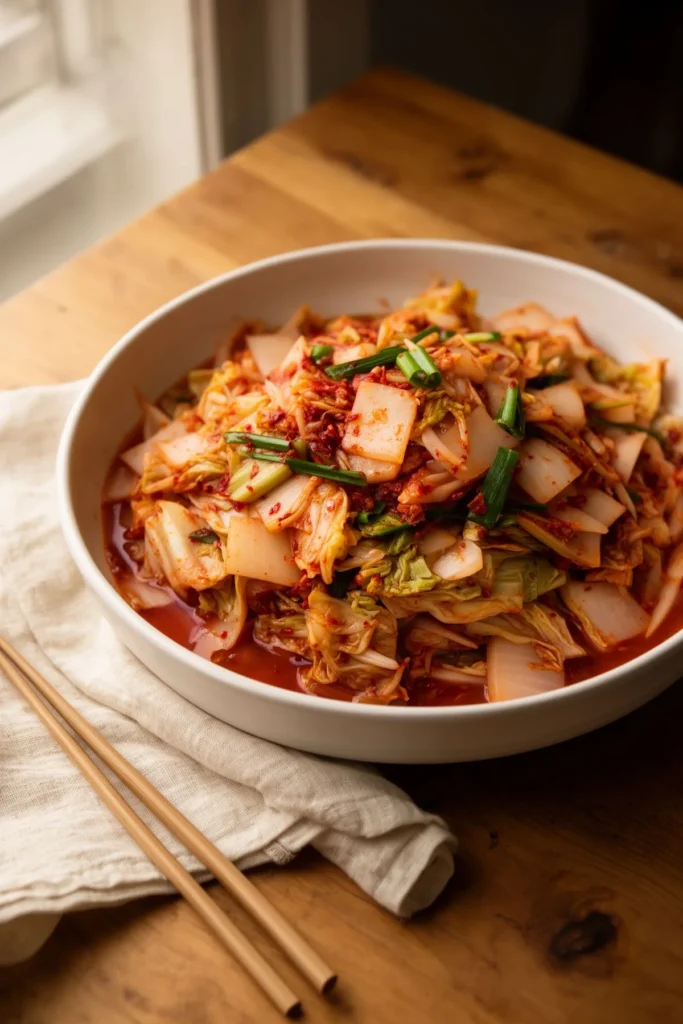
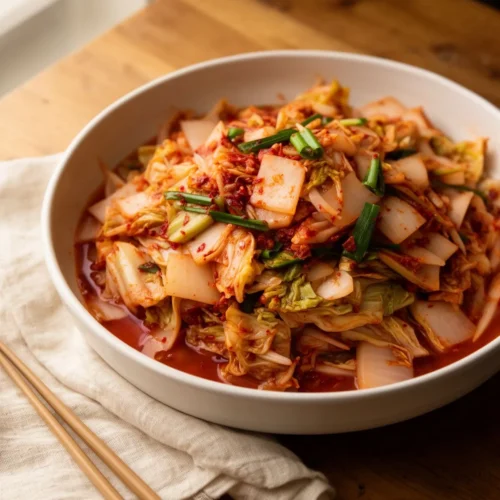
Homemade kimchi is mostly waiting. You salt a head of napa cabbage, rinse it, toss it with a bright red paste of chili flakes, garlic, ginger and fish sauce, pack it into a jar and leave it on the counter. A day or two later it is tangy, crunchy and fizzing slightly. One cabbage makes enough for a couple of weeks of side dishes.
It is also easy to keep keto. Many recipes add a spoonful of sugar or a grated pear to feed the fermentation, but the cabbage brings enough natural sugar of its own. This version leaves the sugar out and follows a traditional Korean method for cut-up kimchi, scaled down to a single 2-pound cabbage. A half-cup serving comes to 3.2g net carbs.
Two things decide how it turns out. The salting, which pulls water out of the cabbage so it stays crunchy instead of turning limp in the jar. And tasting as it ferments, because the warmth of your kitchen decides how fast it sours, not the calendar.
Why This Kimchi Recipe Works
Salting in brine, then rinsing. Soaking the cut cabbage in salt water for about two hours draws out water and makes the thick white ribs bendable. Three rinses afterwards take off the surface salt, so the finished kimchi is seasoned rather than harsh.
No sugar is needed for fermentation. The lactic acid bacteria that sour kimchi live on the vegetables themselves and feed on the sugars already in the cabbage and radish. Sugar in a recipe mostly rounds off the flavor; leaving it out gives a cleaner, sharper kimchi.
Fish sauce and salted shrimp bring the depth. They make it taste savory rather than just spicy and sour. Both are seafood, so they are halal; check the fish sauce label lists fish (usually anchovy) and salt.
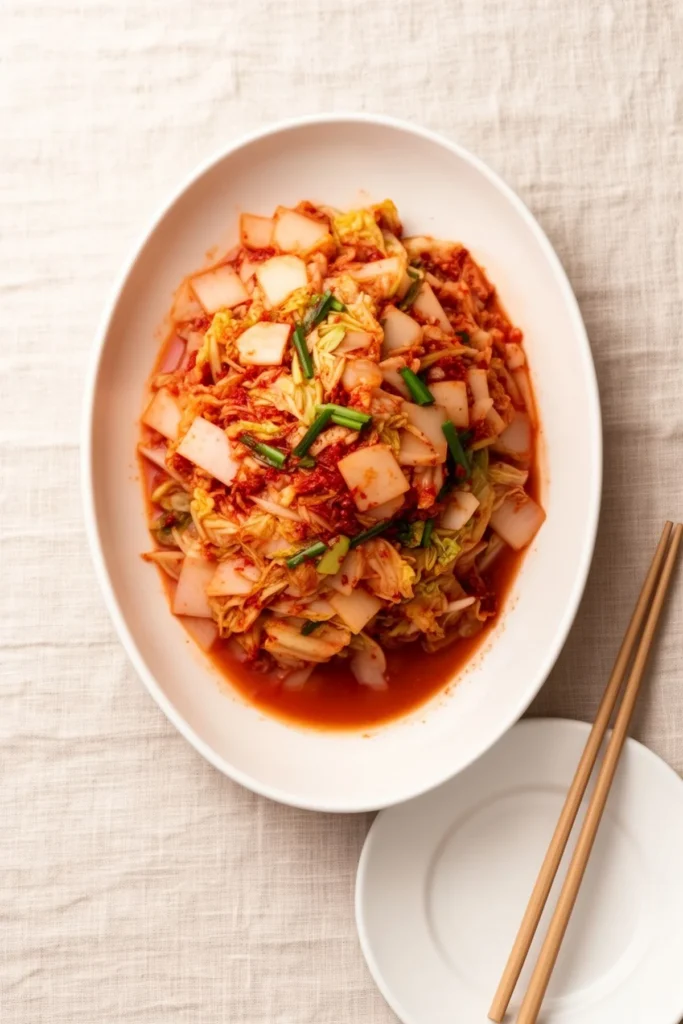
Recipe Overview
- Prep Time: 30 minutes
- Salting: 2 hours
- Fermenting: 1 to 2 days at room temperature, then in the fridge
- Total Time: about 26 1/2 hours before the first tangy bite (it can be eaten fresh right away)
- Yield: about 6 cups, 12 servings of 1/2 cup
- Net Carbs: 3.2g per serving
- Equipment: a large bowl, a colander, kitchen gloves and a 2-quart jar or container with a lid
Ingredients for Kimchi
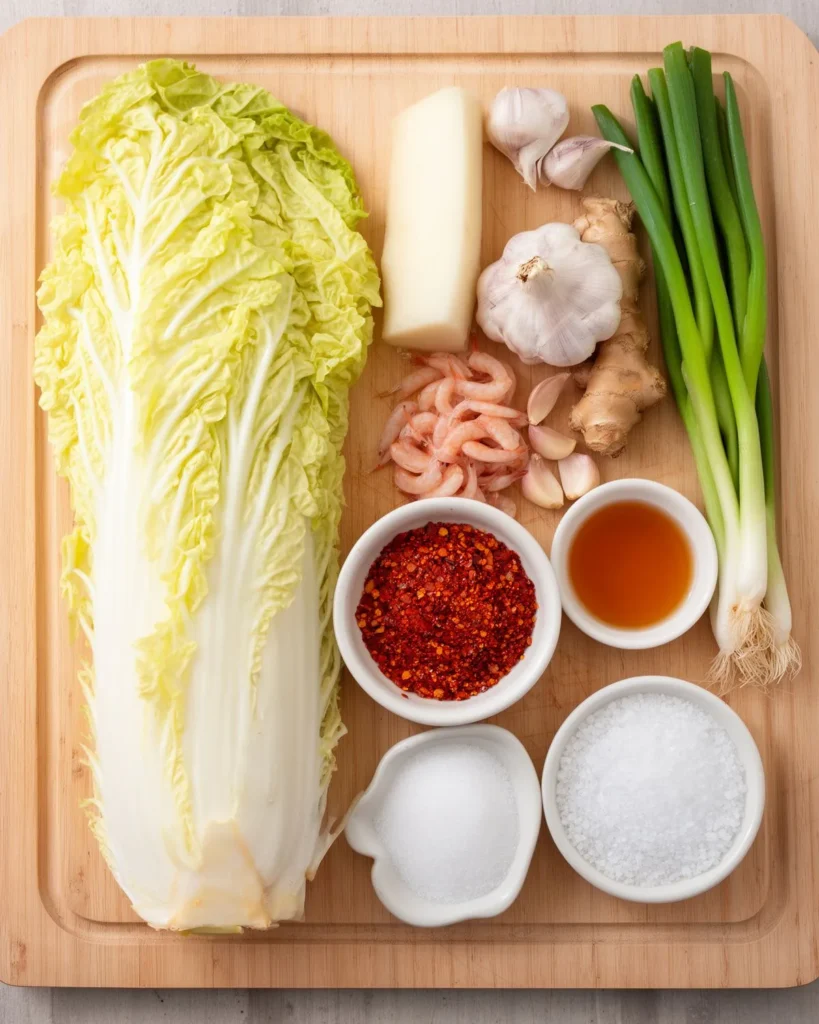
| Ingredient | Quantity | Notes |
| Napa cabbage | 2 lb | 1 medium head |
| Coarse sea salt | 5 tbsp | For the brine, dissolved in 1 1/2 cups water |
| Water | 1 1/2 cups | For the brine |
| Korean radish or daikon | 6 oz | Cut into thin 1 1/2-inch squares |
| Coarse sea salt | 3/4 tsp | For the radish |
| Scallions | 2 | Cut into 1-inch pieces |
| Gochugaru (Korean red chili flakes) | 1/4 cup | Use less for a milder kimchi |
| Salted shrimp (saeujeot) | 4 tsp | Finely minced |
| Fish sauce | 1 tbsp | Anchovy fish sauce |
| Garlic | 1 tbsp | Minced, about 3 cloves |
| Fresh ginger | 1/2 tsp | Finely grated |
| Water | 1/4 cup | For the seasoning paste, plus 2 tbsp to rinse the bowl |
Gochugaru. Korean chili flakes are mild, a little sweet and bright red, and they give the dish its color. Crushed red pepper flakes or cayenne are not a swap: they are far hotter and turn the batch brown and fiery. Look for gochugaru at a Korean or Asian market, or online.
Salted shrimp. Saeujeot is tiny shrimp fermented in salt, sold in small jars in the refrigerated section of Korean markets. It adds a rounded, savory depth. If you cannot find it, use 2 more teaspoons of fish sauce instead.
Salt. Use coarse sea salt for the brine. Fine salt packs more tightly into a spoon, so if that is all you have, use a little less of it. Avoid iodized table salt for fermenting.
Radish. Korean radish is shorter, rounder and denser than daikon, but daikon works well. If you have neither, use 6 more ounces of cabbage.
Recipe Timing
| Stage | Time |
| Cut the cabbage and make the brine | 10 minutes |
| Salt the cabbage, turning it now and then | 2 hours |
| Salt the radish (during the cabbage salting) | 30 minutes |
| Rinse, mix the paste, toss and pack the jar | 20 minutes |
| Ferment at room temperature | 1 to 2 days |
| Total | about 26 1/2 hours, most of it hands-off |
Only about 30 minutes of that is work.
How to Make Kimchi, Step by Step
1. Cut and salt the cabbage
Cut the cabbage lengthwise into quarters and cut out the hard core from each quarter. Cut the quarters crosswise into bite-size pieces, about 1 1/2 inches. Put them in a large bowl. Dissolve the 5 tablespoons of coarse salt in the 1 1/2 cups of water and pour it over the cabbage. Toss well so every piece gets wet.
Leave it for about 2 hours, turning the pieces over every 30 minutes or so. The cabbage is ready when the thick white parts bend without snapping.
2. Salt the radish
While the cabbage sits, cut the radish into thin squares about 1 1/2 inches across and 1/4 inch thick. Toss them with the 3/4 teaspoon of salt and leave them for 30 minutes. Drain off the liquid, but do not rinse them.
3. Make the seasoning paste
In a small bowl, stir the gochugaru with the salted shrimp, fish sauce, garlic, ginger and 1/4 cup of water. It will look like a thick red paste. Leave it while you rinse the cabbage, so the chili flakes soften.
4. Rinse and drain the cabbage
Rinse the cabbage in cold water three times, then leave it in a colander to drain well. Taste a piece: it should be pleasantly salty, like a potato chip, not unpleasant. Let it drain a few minutes so water does not dilute the paste.
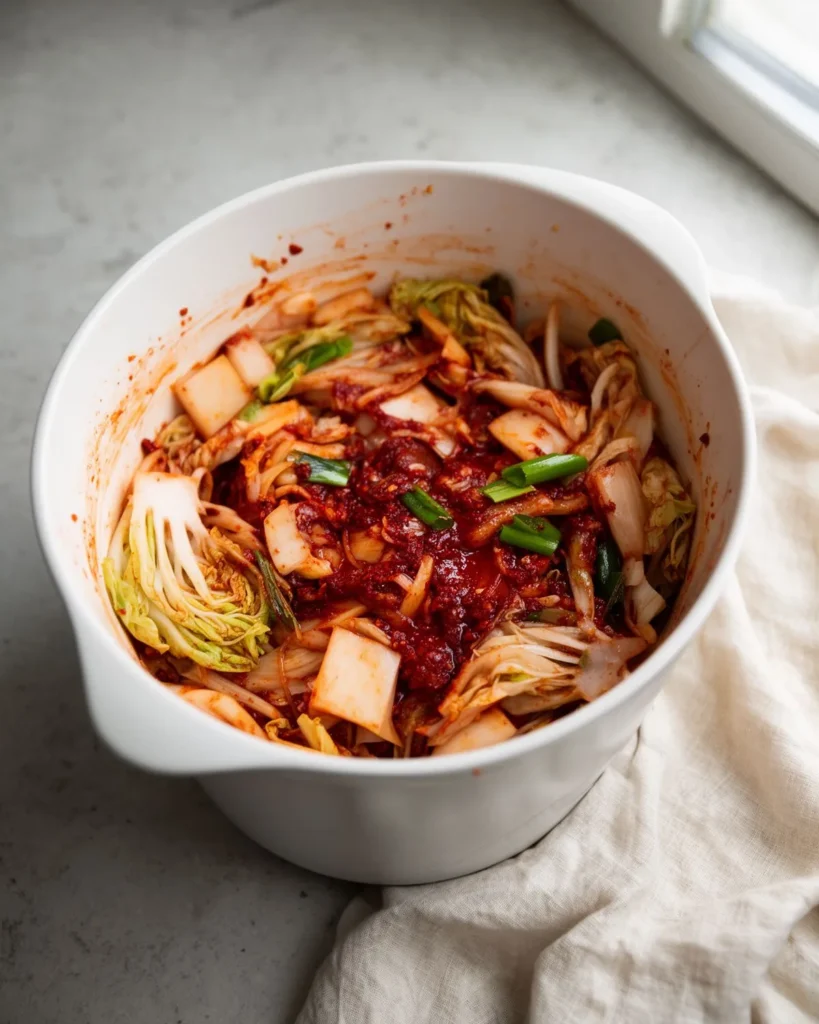
5. Toss everything together
Put the drained cabbage back in the large bowl with the radish, scallions and the paste. Wear kitchen gloves, because the chili stings skin and stains it for a day. Mix with your hands until every piece is red and coated.
6. Pack the jar
Pack the kimchi into a clean 2-quart jar or container, pressing it down firmly with your hand or a spoon to push out air pockets. Swirl the 2 tablespoons of rinsing water around the bowl to collect the last of the paste and pour it over the top. Press down again so the vegetables sit under their own juices, and leave about 2 inches of space at the top.
7. Ferment, then refrigerate
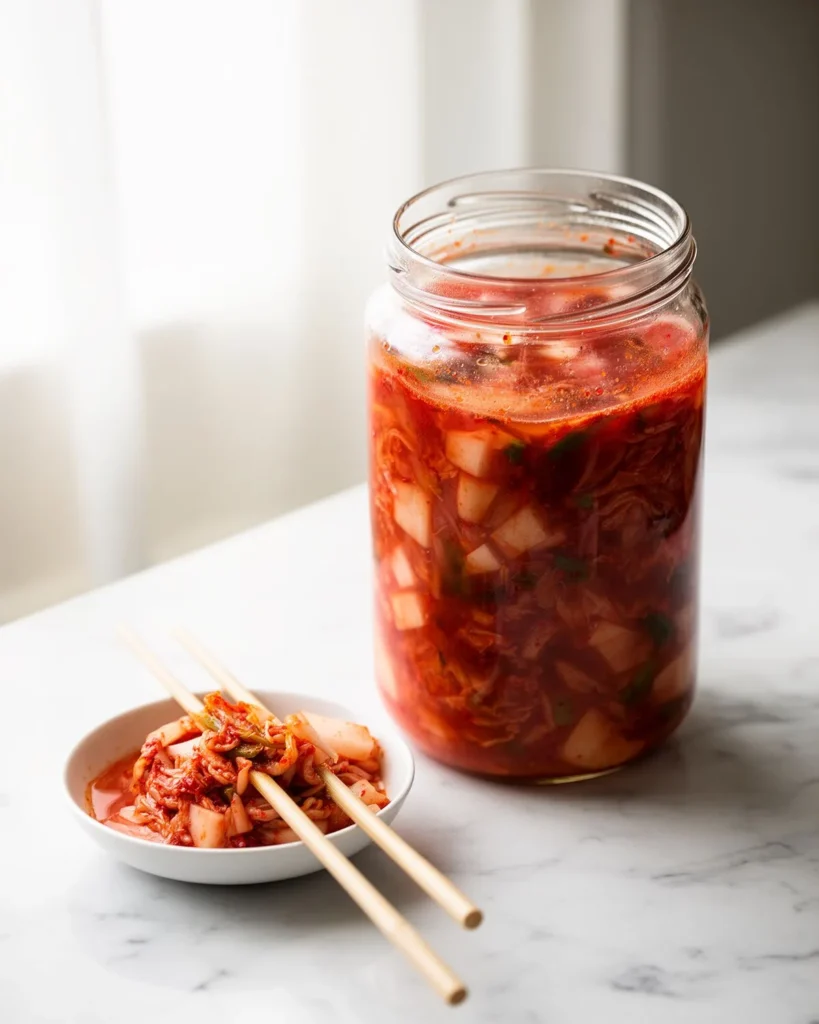
Cover and leave the jar at cool room temperature, about 65 to 70°F and out of direct sun, for 1 to 2 days. Set it on a plate, because it can bubble over. Open the lid once a day to let gas out and press the vegetables back under the liquid. Taste it from the first day: when it smells pleasantly sour and tingles a little on the tongue, move it to the fridge.
Tips and Variations
- Keep the vegetables under the juices. Pieces left sticking out above the liquid can dry out or grow mold. Press them down each time you open the jar.
- Warm kitchen, short counter time. Fermentation runs faster in warm rooms. In summer, one day on the counter may be plenty; in a cold kitchen it can take two or more.
- Milder or hotter. Start with 2 to 3 tablespoons of gochugaru if you are cautious about heat. The flavor still comes through.
- Eat it fresh, too. Kimchi is good straight after mixing, before it sours, like a spicy salad.
How to Eat Kimchi
Serve it cold, as a side, with almost any meat or eggs. It cuts through rich food the way a pickle does. Try it next to pepper steak stir-fried with bell peppers in a tamari sauce, or alongside a bowl of egg drop soup for a light lunch.
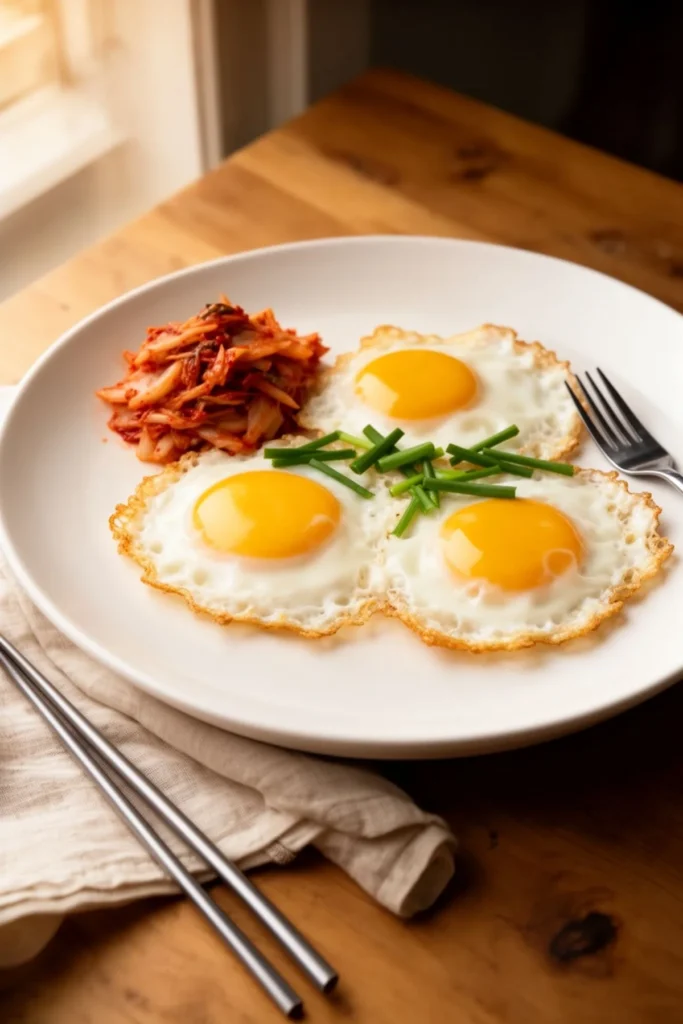
Once it has soured for a week or two, it is at its best for cooking. Chop a handful and stir it into shrimp fried cauliflower rice in the last minute of cooking, or pile it on fried eggs for breakfast. For another make-ahead cabbage side with a completely different character, there is a creamy keto coleslaw that stays crunchy for days.
Storage
Fridge: keep it in its closed jar, pressed under its juices. It keeps for weeks and goes on souring slowly; the flavor fully develops after about two weeks. Use a clean utensil each time.
Very sour is not spoiled; it is ready for cooking.
When to throw it out: if you see fuzzy mold, or it smells rotten rather than sour, discard the batch.
Freezer: not recommended. Freezing stops the fermentation but the cabbage loses its crunch.
Frequently Asked Questions
Is kimchi keto?
Yes, when it is made without sugar or fruit. This recipe has 3.2g net carbs per half-cup serving, mostly from the cabbage and the chili flakes. Store-bought jars often list sugar, so read the label.
Can you make kimchi without sugar?
Yes. The bacteria that ferment kimchi feed on the natural sugars in the cabbage and radish, so it sours on its own. Sugar only softens the flavor.
How long does kimchi take to ferment?
About 1 to 2 days at room temperature to turn tangy, then it keeps fermenting slowly in the fridge. It tastes fully developed after about two weeks in the fridge, but you can eat it at any point.
More Low-Carb Recipes With an Asian Twist
- Pho (Keto, with Shirataki Noodles) — a spiced beef broth with fish sauce, thin beef and shirataki noodles, 6.3g net carbs a bowl.
- Keto Chicken and Broccoli Stir-Fry — chicken and broccoli with garlic, ginger and coconut aminos, 8.4g net carbs.
- Keto Cabbage Rolls (No Rice) — cabbage leaves wrapped around beef and cauliflower rice, baked in tomato sauce, 8.6g net carbs.
Recipe Card
The full ingredient list and the method in short are in the card below.
Keto Kimchi
Equipment
- large bowl
- Colander
- kitchen gloves
- 2-quart glass jar or container with a lid
Ingredients
For the cabbage
- 2 lb napa cabbage 1 medium head
- 5 tbsp coarse sea salt for the brine
- 1 1/2 cups water for the brine
For the radish
- 6 oz Korean radish or daikon, cut into thin 1 1/2-inch squares
- 3/4 tsp coarse sea salt
For the seasoning
- 2 scallions cut into 1-inch pieces
- 1/4 cup gochugaru Korean red chili flakes
- 4 tsp salted shrimp saeujeot, finely minced
- 1 tbsp fish sauce
- 1 tbsp garlic minced, about 3 cloves
- 1/2 tsp fresh ginger finely grated
- 1/4 cup water plus 2 tbsp to rinse the bowl
Instructions
- Salt the cabbage: Quarter the cabbage lengthwise, remove the cores and cut it crosswise into 1 1/2-inch pieces. Dissolve the 5 tbsp salt in the 1 1/2 cups water, pour it over the cabbage in a large bowl and toss. Leave about 2 hours, turning every 30 minutes, until the white parts bend.
- Salt the radish: Toss the radish squares with the 3/4 tsp salt and leave 30 minutes. Drain; do not rinse.
- Make the paste: Stir the gochugaru, salted shrimp, fish sauce, garlic, ginger and 1/4 cup water together.
- Rinse: Rinse the cabbage in cold water three times and drain well in a colander.
- Mix: Wearing gloves, toss the cabbage, radish, scallions and paste together by hand until evenly coated.
- Pack: Press the kimchi firmly into a 2-quart jar, rinse the bowl with 2 tbsp water and pour it over. Press down so the vegetables sit under the juices; leave 2 inches of headspace.
- Ferment: Cover and leave at 65 to 70°F for 1 to 2 days, on a plate, opening the lid daily and pressing the vegetables down. When it tastes pleasantly sour, refrigerate.
Notes
Keep cooking