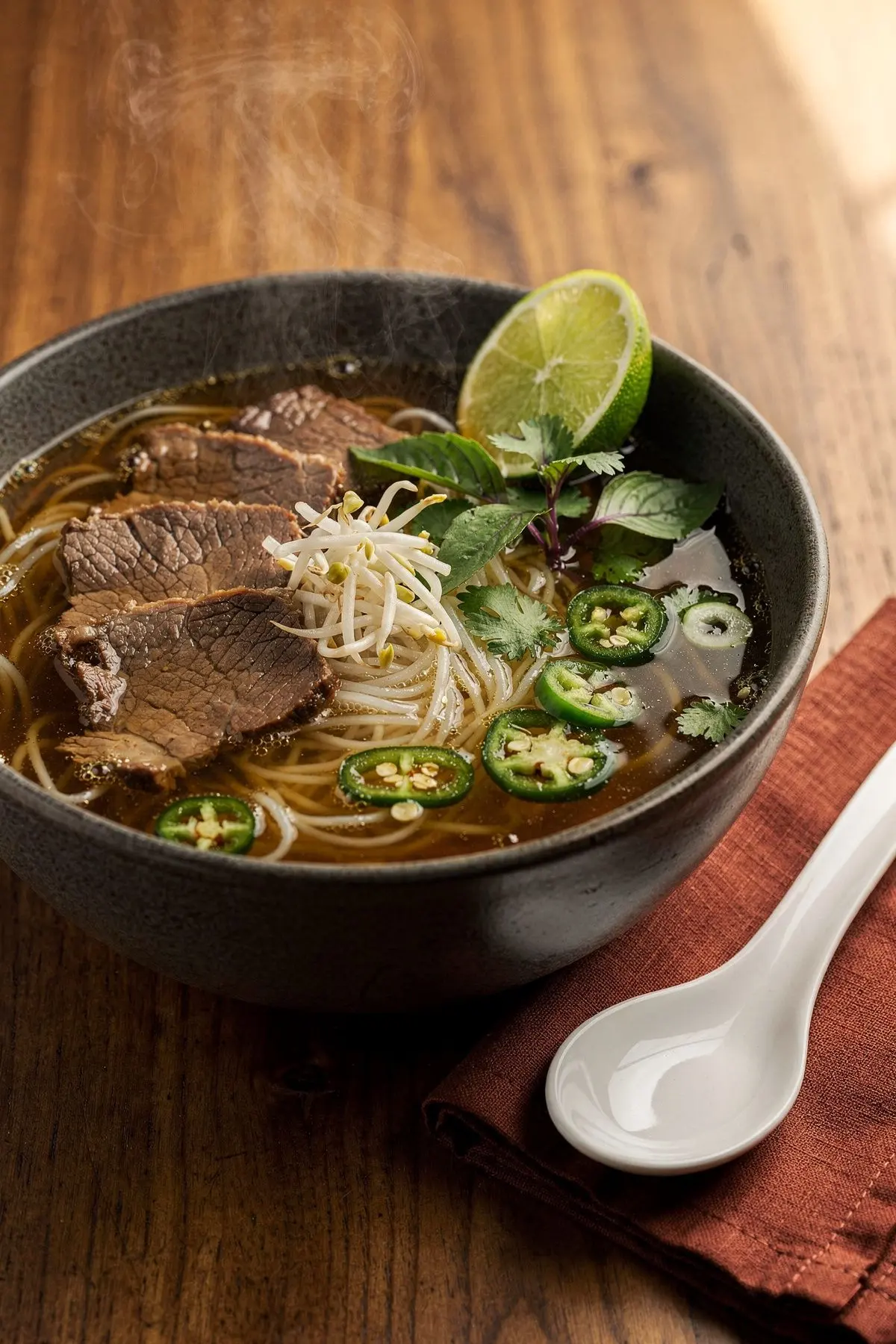
Pho (Keto, with Shirataki Noodles, 6.3g Net Carbs)
- Total time
- 1 hour 5 minutes
- Makes
- 4 large bowls
- Net carbs
- 6.3g
- Calories
- 164
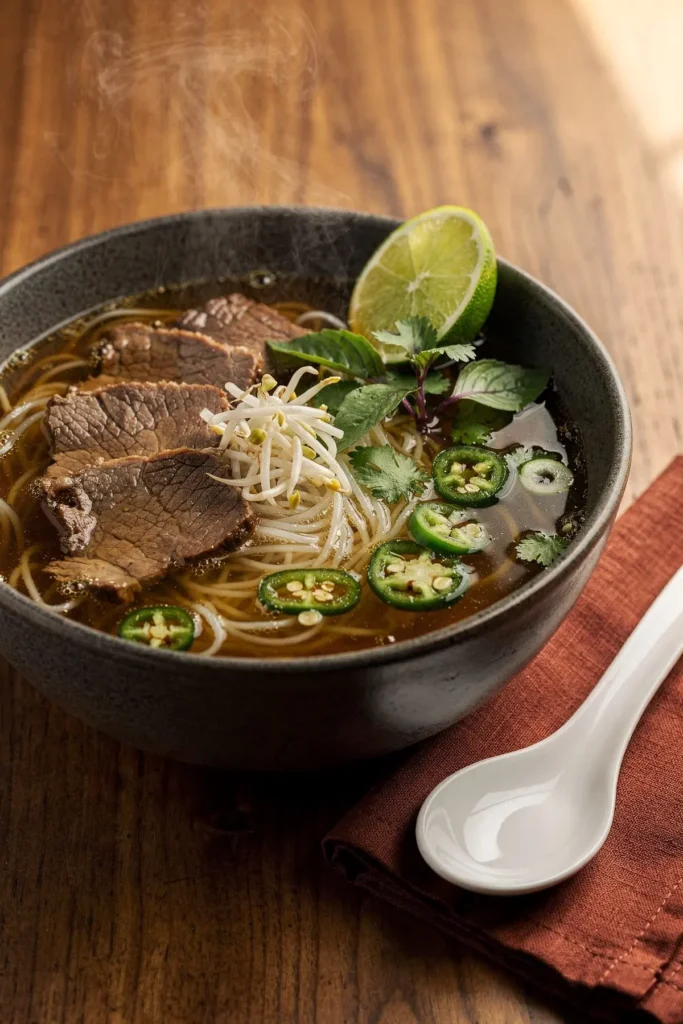
The first time I made pho at home with low-carb noodles, I treated the broth like an afterthought. Carton broth, a pinch of five-spice, a squeeze of lime. It tasted like hot beef water with a cinnamon stick waved over it. The noodles were the least of my problems.
Here is what I learned: pho is the broth. The rice noodles matter far less than people think. Get the broth right, smoky from charred onion and ginger, warm from star anise, cinnamon and cloves, salty and deep from fish sauce, and the bowl tastes like pho whatever is sitting underneath it.
So this keto pho spends its effort where it counts. Store-bought beef broth gets the full treatment: aromatics blackened in a dry pot, whole spices toasted until they smell like a pho shop, then a covered half-hour simmer. Rinsed shirataki noodles take the place of rice noodles, and paper-thin raw beef cooks right in the bowl when the boiling broth hits it. Four big bowls, 6.3g net carbs each, in about 65 minutes.
Why This Pho Tastes Like the Real Thing
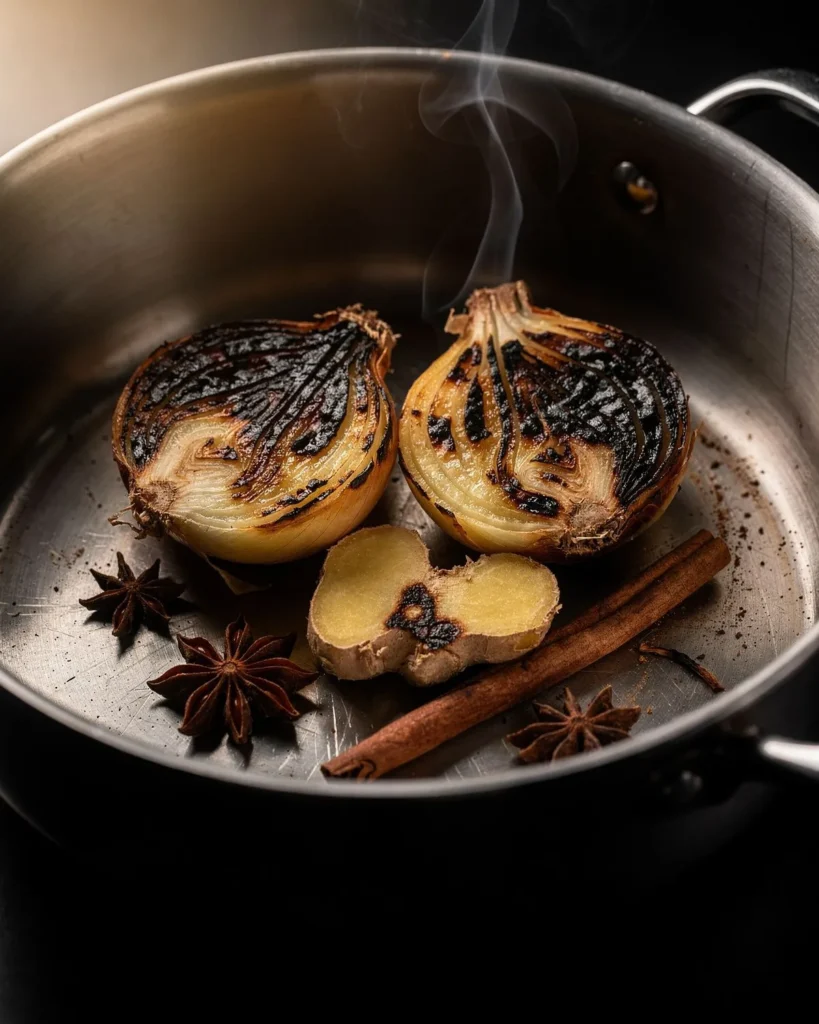
Charring is not optional. Onion and ginger cooked cut side down in a dry pot until they are black in patches give the broth its faint smoky sweetness. Skip this and the broth tastes flat no matter how many spices you add.
Whole spices, toasted dry. Star anise, cinnamon, cloves, cardamom and coriander seed go into the hot pot for a few minutes before any liquid. Toasting wakes up their oils. Ground spices make a muddy, cloudy broth, so keep them whole and strain them out.
Fish sauce at the end. It goes in after straining, so you can taste and adjust. It brings the savory depth that a long-simmered bone broth would otherwise give you, which is why I use low-sodium broth: the fish sauce supplies the salt.
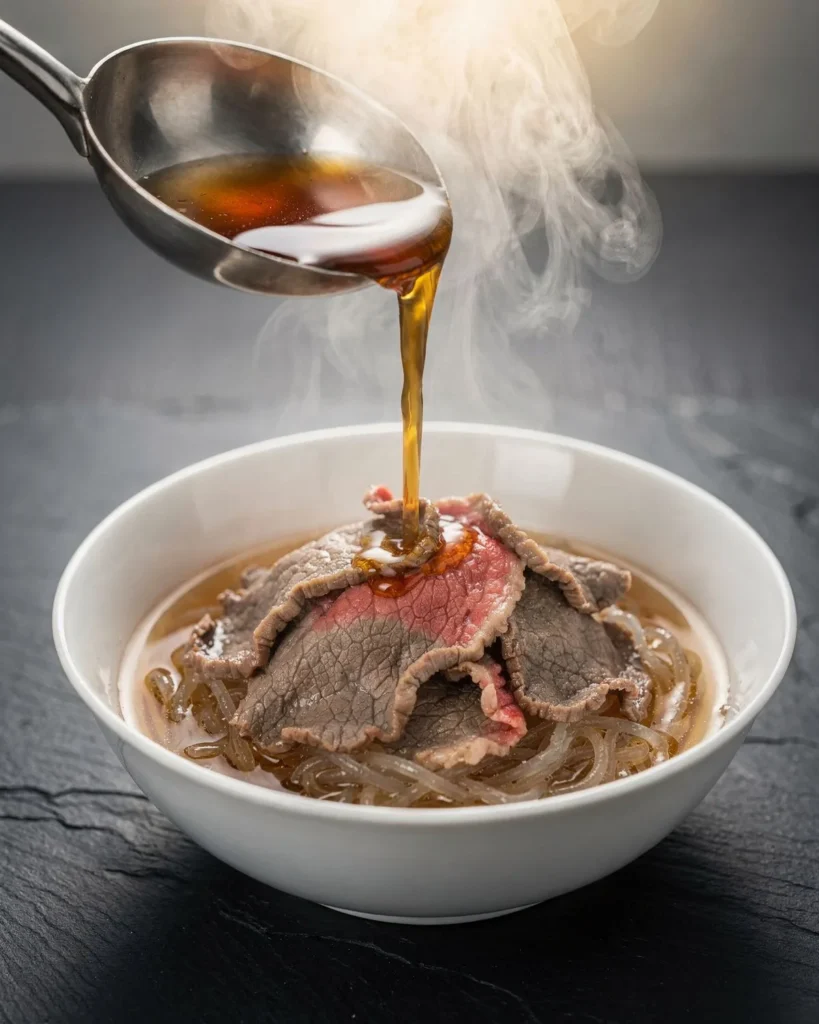
The broth cooks the beef. Thin slices of raw eye of round go into the bowl and the broth goes over them at a rolling boil. They turn from red to soft brown in seconds and stay tender, which they never do if you simmer them in the pot.
Recipe Overview
- Prep Time: 15 minutes
- Cook Time: 50 minutes
- Total Time: 65 minutes
- Serves: 4 large bowls
- Net Carbs: 6.3g per bowl
Ingredients
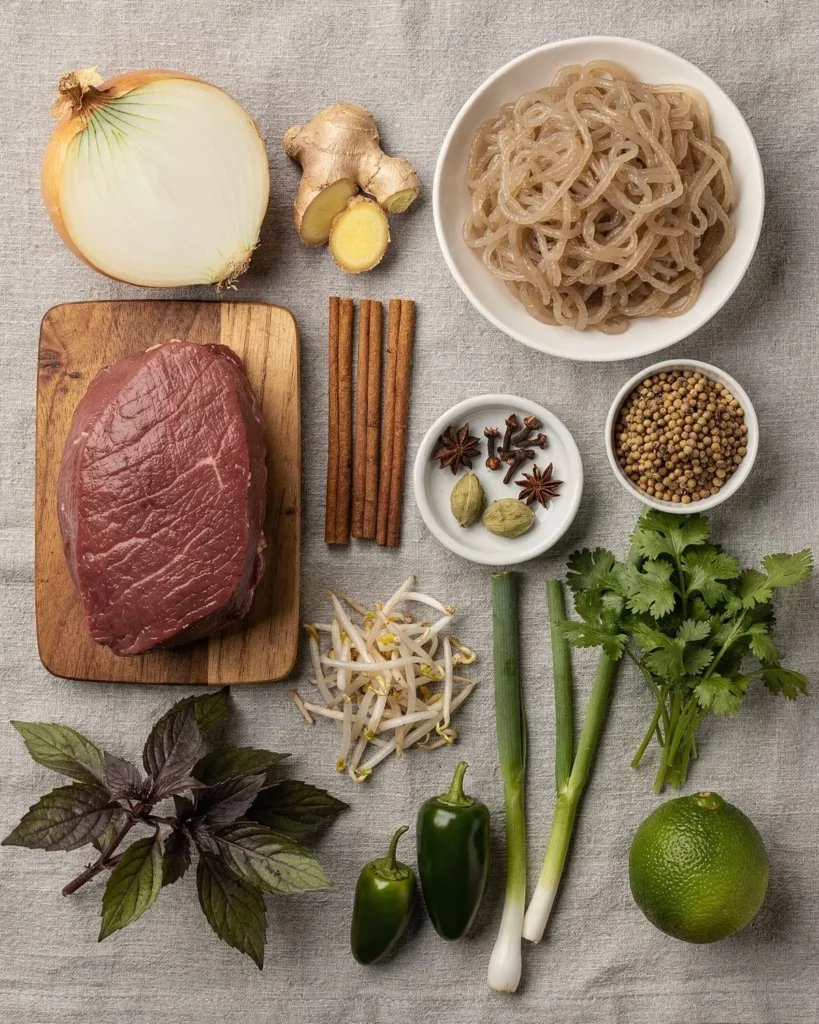
For the broth
| Ingredient | Quantity | Notes |
| Yellow onion | 1 large | Peeled and halved |
| Fresh ginger | 3-inch piece | Halved lengthwise, no need to peel |
| Star anise | 5 whole pods | |
| Cinnamon sticks | 3 (3-inch) | |
| Whole cloves | 4 | |
| Green cardamom pods | 2 | Lightly cracked |
| Coriander seeds | 1 tbsp | |
| Low-sodium beef broth | 8 cups | |
| Fish sauce | 2 tbsp | Plus more to taste |
| Granulated monk fruit sweetener | 1 tbsp | Optional, rounds out the spices |
| Salt | To taste |
For the bowls
| Ingredient | Quantity | Notes |
| Beef eye of round | 12 oz | Or sirloin, sliced paper-thin |
| Shirataki noodles | 2 packages (8 oz each) | Drained and rinsed |
| Bean sprouts | 1 cup | |
| Thai basil | ½ cup leaves | Or regular basil |
| Fresh cilantro | ¼ cup leaves | |
| Green onions | 2 | Thinly sliced |
| Jalapeño | 1 | Thinly sliced |
| Lime | 1 | Cut into wedges |
| Sriracha | To serve | Optional |
Choose the leanest beef you can slice thin. Eye of round is the classic pho cut because it has almost no fat or sinew, so it stays tender even barely cooked. Sirloin works too. If your butcher or Asian market sells beef already shaved for hot pot, it saves you the knife work.
Recipe Timing
| Order | Step | Time |
| 1 | Char the onion and ginger | 7 minutes |
| 2 | Toast the whole spices | 3 minutes |
| 3 | Bring the broth to a boil | 5 minutes |
| 4 | Simmer, covered (chill and slice the beef meanwhile) | 30 minutes |
| 5 | Strain, season and return to a boil | 5 minutes |
| 6 | Build the bowls | 5 minutes |
How to Make Keto Pho
1. Char the onion and ginger
Set a large, heavy stockpot over high heat with nothing in it. Lay the onion and ginger halves in it cut side down and leave them alone for 4 to 5 minutes, until the cut faces are deeply charred, black in patches. Turn them and give the other sides 2 minutes. Lift them out onto a plate. Do not wash the pot.
2. Toast the spices
Turn the heat to medium. Add the star anise, cinnamon sticks, cloves, cardamom pods and coriander seeds and stir them around the dry pot for about 3 minutes, until they are fragrant and the coriander seeds darken a shade. Watch them; burnt spices turn the broth bitter.
3. Simmer the broth
Pour in the beef broth and return the charred onion and ginger to the pot. Bring it to a boil, then lower the heat, cover, and simmer gently for 30 minutes. A lazy simmer keeps the broth clear; a hard boil clouds it.
4. Chill and slice the beef
While the broth simmers, put the beef on a plate in the freezer for 15 to 20 minutes, until the outside feels firm but the center is not frozen. Then slice it across the grain as thin as you can, about ⅛ inch. A thick slice will not cook through in the bowl. Keep them covered in the fridge until you need them.
5. Prepare the noodles
Tip the shirataki noodles into a colander and rinse them under cold running water for a full minute. That washes off the packing liquid and its smell. Shake them dry, then stir them in a dry nonstick skillet over medium heat for 2 to 3 minutes, just until they squeak against the pan. This takes off the last of the water so they do not dilute your broth. Divide them among four large bowls. While the skillet is out, slice the green onions and jalapeño, pick the basil and cilantro leaves, and cut the lime into wedges.
6. Strain and season
Pour the broth through a fine sieve into a clean pot, or lift out the aromatics and spices with a slotted spoon. Stir in the fish sauce and the sweetener, if using. Taste it. It should be savory, fragrant and just a little sweet. Add salt or a few more drops of fish sauce if it needs them. Bring it back to a rolling boil.
7. Build the bowls
Lay a quarter of the raw beef over the noodles in each bowl, in a single layer so no slice hides under another. Ladle about 1¾ cups of the boiling broth straight over the beef. You will see it change color as you pour.
8. Top and serve
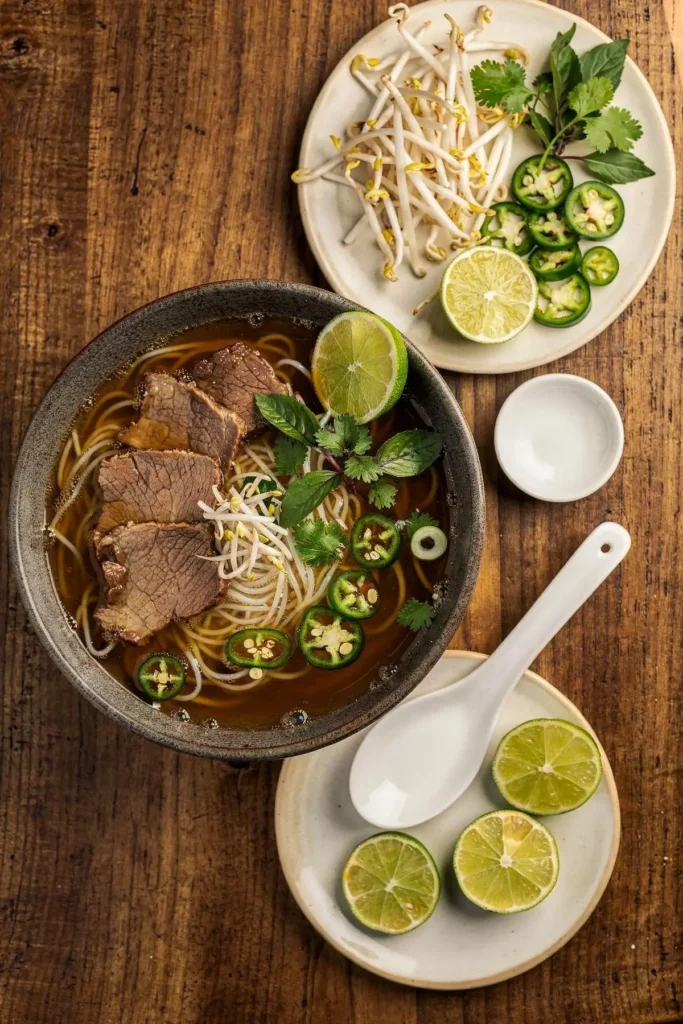
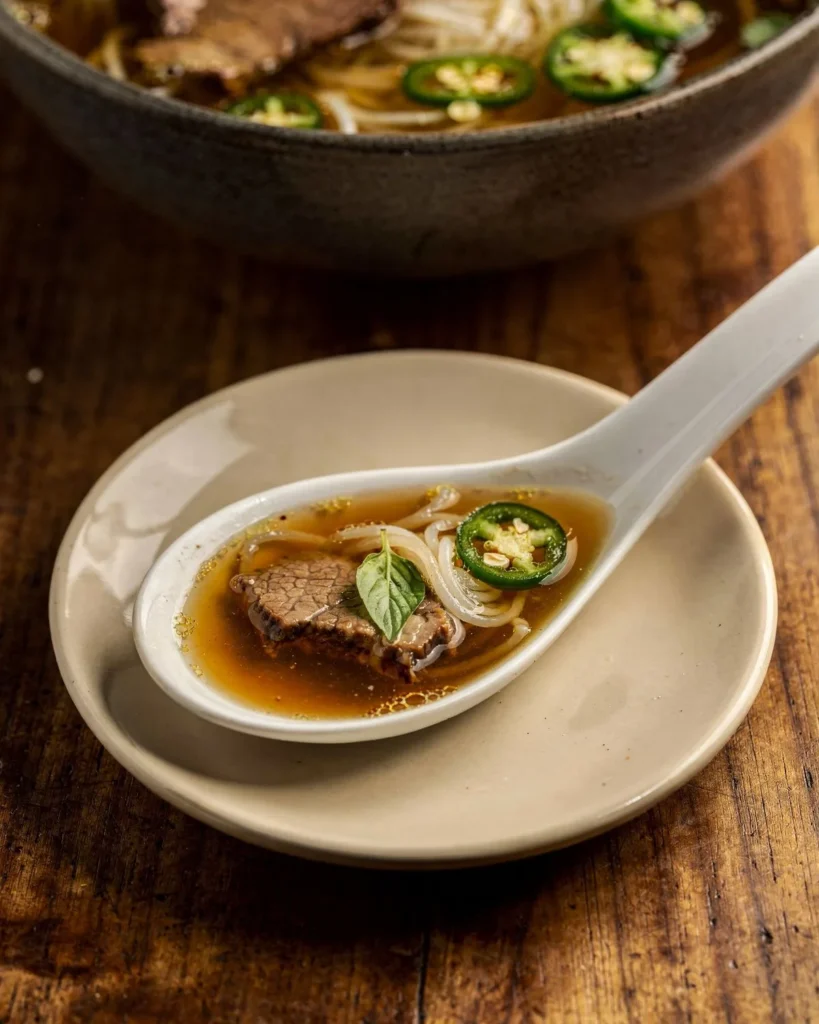
Scatter bean sprouts, Thai basil, cilantro, green onions and jalapeño over each bowl, or set them out on a plate so everyone builds their own. Serve with lime wedges and sriracha on the side.
Recipe Tips and Variations
If the beef is still red after the pour, your broth was not hot enough or the slices were too thick. Hold the bowl’s slices in a ladle and dip them in the boiling pot for 10 seconds before they go in. That is also the way to go if you prefer your beef fully cooked.
Chicken pho. Use low-sodium chicken broth and poach 1 pound of boneless chicken thighs in it for 20 minutes, then shred them into the bowls.
Other noodles. Spiralized zucchini works if you do not like shirataki. Add the raw zucchini noodles to the bowls; the broth softens them in a minute. Hearts of palm noodles, the kind in my keto chicken noodle soup, also hold up well.
Serving Suggestions
Pho is a full meal on its own, but a crisp side keeps the table interesting. My ground turkey egg roll in a bowl makes a good partner for a bigger dinner, and it comes together in one skillet while the broth simmers.
If you love Southeast Asian soups, try tom kha gai next. It is a creamy Thai coconut chicken soup built on galangal, lemongrass and makrut lime leaves, and it is on the table in 25 minutes.
Storage and Reheating
Store the parts separately. Keep the strained broth, the noodles, the raw beef and the herbs in their own containers. Assembled pho goes soggy and the beef overcooks.
Refrigerator: the broth keeps 4 days in a covered container; use the raw sliced beef within a day.
Freezer: the broth freezes well for up to 3 months. To serve, bring it back to a rolling boil and build fresh bowls. Do not freeze the noodles.
Frequently Asked Questions
Is pho keto?
The broth is. The problem is the rice noodles, which carry most of a restaurant bowl’s carbs, plus the sugary hoisin served on the side. Swap the noodles for shirataki and use sriracha and lime instead of hoisin, and a big bowl of this pho comes to 6.3g net carbs.
Why does my shirataki smell fishy?
That is the liquid it is packed in, not the noodles. A full minute of rinsing under running water, followed by a few minutes in a dry skillet, removes it completely.
Can I make the broth ahead?
Yes, and it is a good idea. Strain and season it, cool it, and refrigerate it for up to 4 days. Any fat that rises sets on top and lifts right off. Bring it back to a rolling boil before you pour it over the beef.
What cut of beef is best for pho?
Eye of round is the classic choice for the thin raw slices because it is very lean and tender when sliced thin. Sirloin is a good alternative. Avoid well-marbled cuts here; the fat does not have time to soften in the bowl.
More Low-Carb Soups and Beef Dinners
- Keto Clam Chowder — thick and creamy with no flour and no potatoes, 7.4g net carbs a bowl.
- Low Carb Mongolian Beef — takeout-style flank or flatiron steak in 25 minutes, at 5g net carbs.
- Keto White Chicken Chili — creamy with cream cheese and green chiles, 5.7g net carbs a serving.
- Easy Cabbage Soup — cabbage, fire-roasted tomatoes and herbs, and it tastes even better the next day.
Recipe Card
The full ingredient list and the method in short are in the card below.
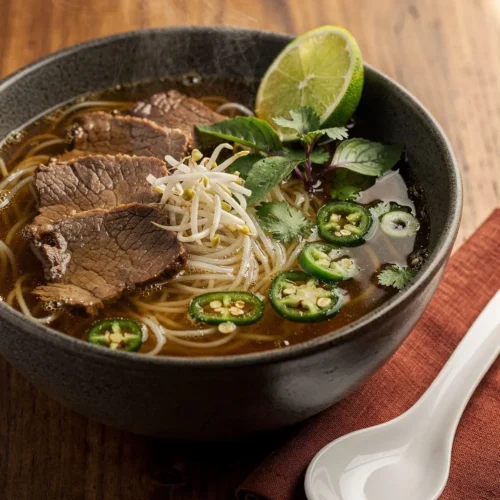
Keto Pho
Equipment
- Large stockpot heavy-bottomed
- Fine-mesh sieve or slotted spoon
- Nonstick skillet for drying the noodles
- Sharp knife for slicing the beef
Ingredients
For the broth
- 1 large yellow onion peeled and halved
- 3 inch fresh ginger halved lengthwise
- 5 star anise whole pods
- 3 cinnamon sticks 3-inch
- 4 whole cloves
- 2 green cardamom pods lightly cracked
- 1 tbsp coriander seeds
- 8 cups low-sodium beef broth
- 2 tbsp fish sauce plus more to taste
- 1 tbsp granulated monk fruit sweetener optional
- salt to taste
For the bowls
- 12 oz beef eye of round or sirloin, sliced paper-thin
- 2 packages shirataki noodles 8 oz each, drained
- 1 cup bean sprouts
- 1/2 cup Thai basil leaves
- 1/4 cup fresh cilantro leaves
- 2 green onions thinly sliced
- 1 jalapeño thinly sliced
- 1 lime cut into wedges
- sriracha optional, to serve
Instructions
Make the broth
- Char: Heat a large, dry stockpot over high heat. Set the yellow onion and fresh ginger halves in it cut side down and cook 4-5 minutes until charred black in patches, then turn and cook 2 minutes more. Lift them out.
- Toast: Lower the heat to medium. Toast the star anise, cinnamon sticks, whole cloves, green cardamom pods and coriander seeds in the dry pot, stirring, about 3 minutes until fragrant.
- Simmer: Add the low-sodium beef broth and the charred onion and ginger. Bring to a boil, then cover and simmer gently 30 minutes.
Prepare the bowls
- Slice: While the broth simmers, freeze the beef eye of round 15-20 minutes until firm outside, then slice it across the grain as thin as possible (about 1/8 inch). Refrigerate, covered.
- Noodles: Rinse the shirataki noodles under cold running water for 1 minute, shake dry, then stir in a dry nonstick skillet over medium heat 2-3 minutes. Divide among 4 large bowls. Slice the green onions and jalapeño, pick the Thai basil and fresh cilantro leaves, and cut the lime into wedges.
- Season: Strain the broth into a clean pot. Stir in the fish sauce and the monk fruit sweetener, if using, then taste and add salt as needed. Bring back to a rolling boil.
- Pour: Lay the raw beef in a single layer over the noodles. Ladle about 1 3/4 cups boiling broth over the beef in each bowl; it cooks as you pour.
- Serve: Top with the bean sprouts, Thai basil, cilantro, green onions and jalapeño. Serve with the lime wedges and sriracha on the side.
Notes
Keep cooking